Hawthorn – Harvesting and Processing
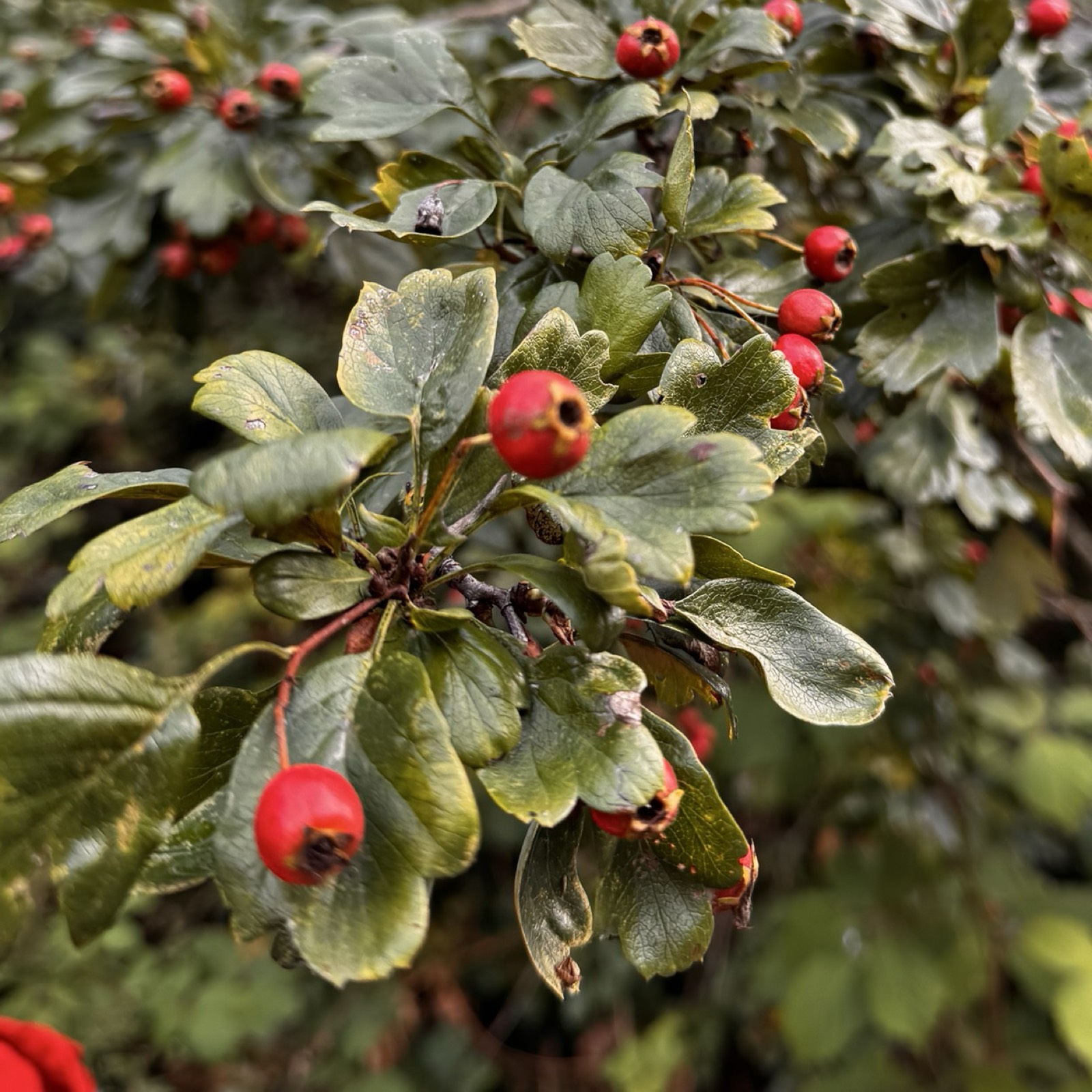
Hawthorn (Crataegus monogyna, Crataegus laevigata) is a sprawling, thorny shrub or small tree that stands in clouds of white blossom in spring and draws birds and foragers alike with red berries in autumn.
Identify
- White, sometimes faintly pink umbel-like flowers in May, with a somewhat harsh-sweet smell typical of many rose-family plants
- Deeply lobed leaves, sturdy sharp thorns on the branches
- Red, mealy-soft berries (botanically pomes) in September/October
- Watch out for: Blackthorn blooms similarly white but has unbranched thorns growing straight from the twig and blue-black, sour fruit – ripe fruit of the two is easy to tell apart. The same goes for the red berries in autumn: spindle (pink four-lobed capsules on thornless green twigs) and mezereon (red berries sitting tight against the twig) are poisonous. Hawthorn berries hang from thorny twigs with lobed leaves and hold hard stones – check several features together, and if in doubt leave them
Use
- Flowers (May) for tea – harvest just before full bloom, dry quickly
- Berries (September/October) taste rather mealy and bland raw; deseeded and pureed they make a good base for jelly, fruit leather, or jam mixed with tarter fruit like rosehip or apple
- Dried leaves, flowers and berries together as tea – traditionally the "heart herb" of monastery medicine
Traditional use
Hawthorn has been used as a medicinal plant in Europe for centuries – the EMA lists hawthorn leaf and flower as a traditional herbal medicinal product for temporary nervous heart complaints, but only after a doctor has ruled out serious causes, and for mild nervous tension and to aid sleep. If you have an existing heart condition or take medication (especially heart medication), check with a doctor first – hawthorn can interact with some drugs.
Harvest & drying
Strip berries off the clusters with a fork, harvest flowers with their small stem. Dry both in an airy spot out of direct sun; dried berries keep about a year, flowers are best used within a few months.
Notes from the EMA monograph
The European Medicines Agency (EMA) lists hawthorn leaf and flower as a traditional herbal medicinal product. For its use it states, among other things:
- for heart complaints not recommended for children and adolescents under 18
- not recommended during pregnancy and breastfeeding, as safety has not been established
- if symptoms last longer than 2 weeks, see a doctor
- with swollen ankles or legs, pain in the heart region or shortness of breath, get medical help immediately
The monograph applies to tested preparations – home-gathered herb is not dosed more precisely.
Gathering: what German nature conservation law allows
Anyone may carefully take wild herbs, flowers and fruits in small quantities for personal use from places not subject to an access ban (Section 39(3) BNatSchG). Protected areas often have stricter bans, and specially protected species have their own rules.
Sources
- European Medicines Agency (EMA): European Union herbal monograph on Crataegus spp., folium cum flore, as of EMA/HMPC/159075/2014, accessed 5 Oct 2026
- Federal Nature Conservation Act (BNatSchG): § 39, accessed 5 Oct 2026
The sources support individual statements in this article. The organisations named have neither reviewed nor endorsed it.