Wild Herbs All Year Round: Chickweed, Daisy & Ground Ivy
Wild Herbs All Year Round: Chickweed, Daisy & Ground Ivy
Wild herb season is not just in spring: some of the best plants to forage grow almost all year round – often right in your own garden, where they get pulled as "weeds". Three classics you can start gathering right now.
Chickweed (Stellaria media)
- Identifying it: Delicate, low-growing cushions with small oval leaves and tiny white star-shaped flowers. One key feature is the single fine line of hairs running along the stem, switching sides at each node
- Season: Year-round – it germinates and even flowers under snow
- Taste: Mild, reminiscent of young corn – perfect as a salad base, on bread, or in herb quark
- Yield: A bed edge often provides handfuls; simply "mow" it with scissors, it grows back
Daisy (Bellis perennis)
- Identifying it: Every child knows it – white ray florets around a yellow center, the leaves in a flat rosette on the ground; without flowers the rosettes can be confused with those of other daisy-family plants
- Season: Blooms almost all year, mainly spring through autumn; even mild winters bring flowers
- Using it: Flowers as an edible garnish and in herb butter, buds can be pickled like capers; young leaves in salad
- Taste: Mild and nutty, the buds slightly peppery
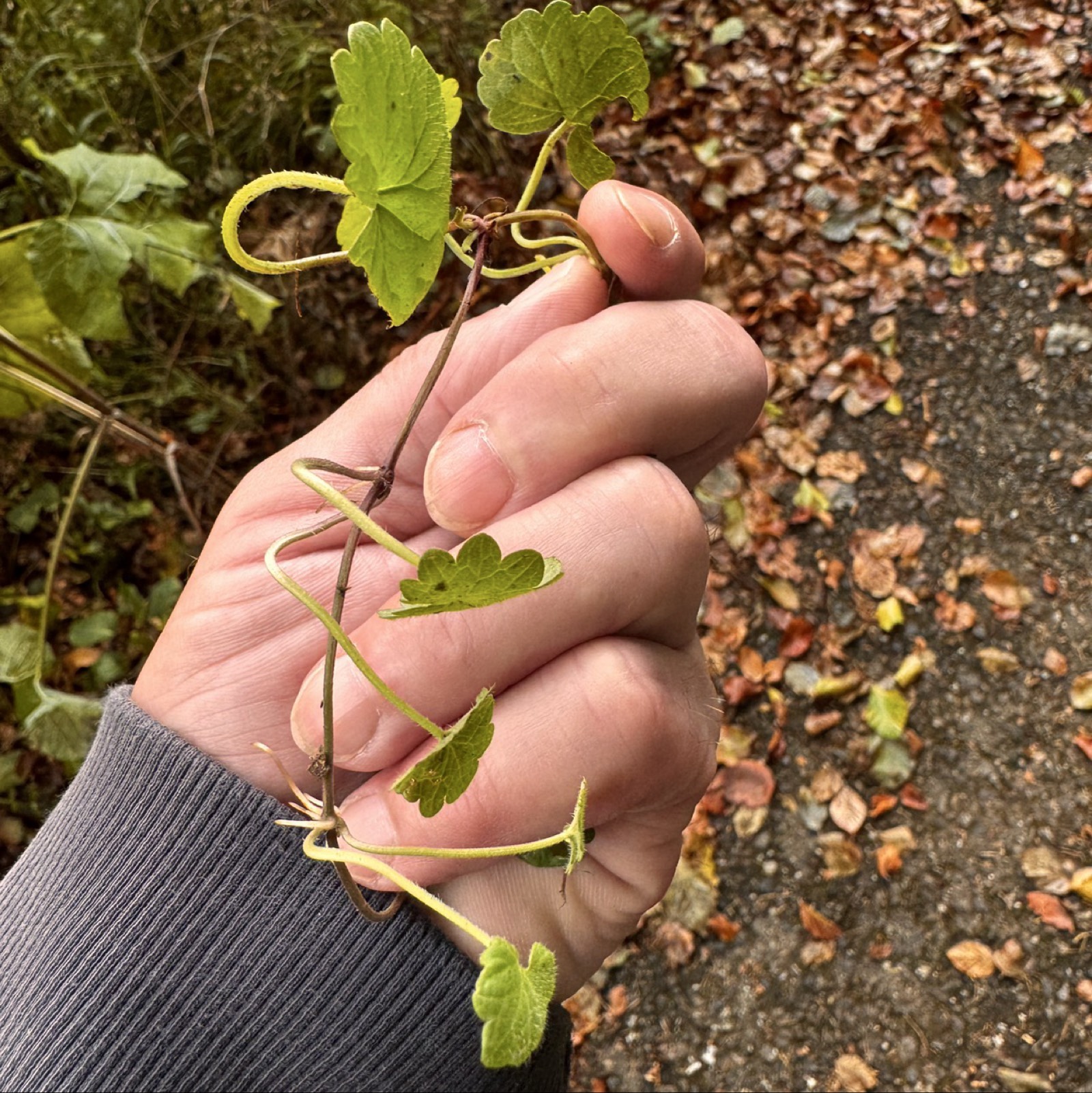
Ground ivy (Glechoma hederacea)
- Identifying it: Creeping runners with kidney-shaped, scalloped leaves and blue-violet lip-shaped flowers from April; smells spicy and pungent when rubbed. Ivy creeps through the same corners but has leathery, pointed-lobed leaves with pale veins and no scent when rubbed – and it is poisonous. Check several features together, and if in doubt leave the plant standing
- Season: Spring through autumn, leaves often stay green even in winter
- Using it: Use sparingly as a seasoning herb – pungent and minty, traditionally in herb soups (Maundy Thursday soup) and as "wild chocolate mint": leaves dipped in dark chocolate
- Important: A seasoning herb, not a salad herb – the dose makes the pleasure. It is toxic to horses and rodents, but safe for humans in culinary amounts
Basic foraging rules
- Only take what you can identify with certainty – chickweed's hair line, for example, is one distinguishing feature from the poisonous scarlet pimpernel, which can cause vomiting, diarrhea and skin irritation. Never rely on a single feature – check several together, and if in doubt leave the plant where it is
- Collect away from roads, dog-walking areas and sprayed land
- Never fully strip a stand – leave a third standing