Wild Garlic – Herald of Spring with a Deadly Look-Alike
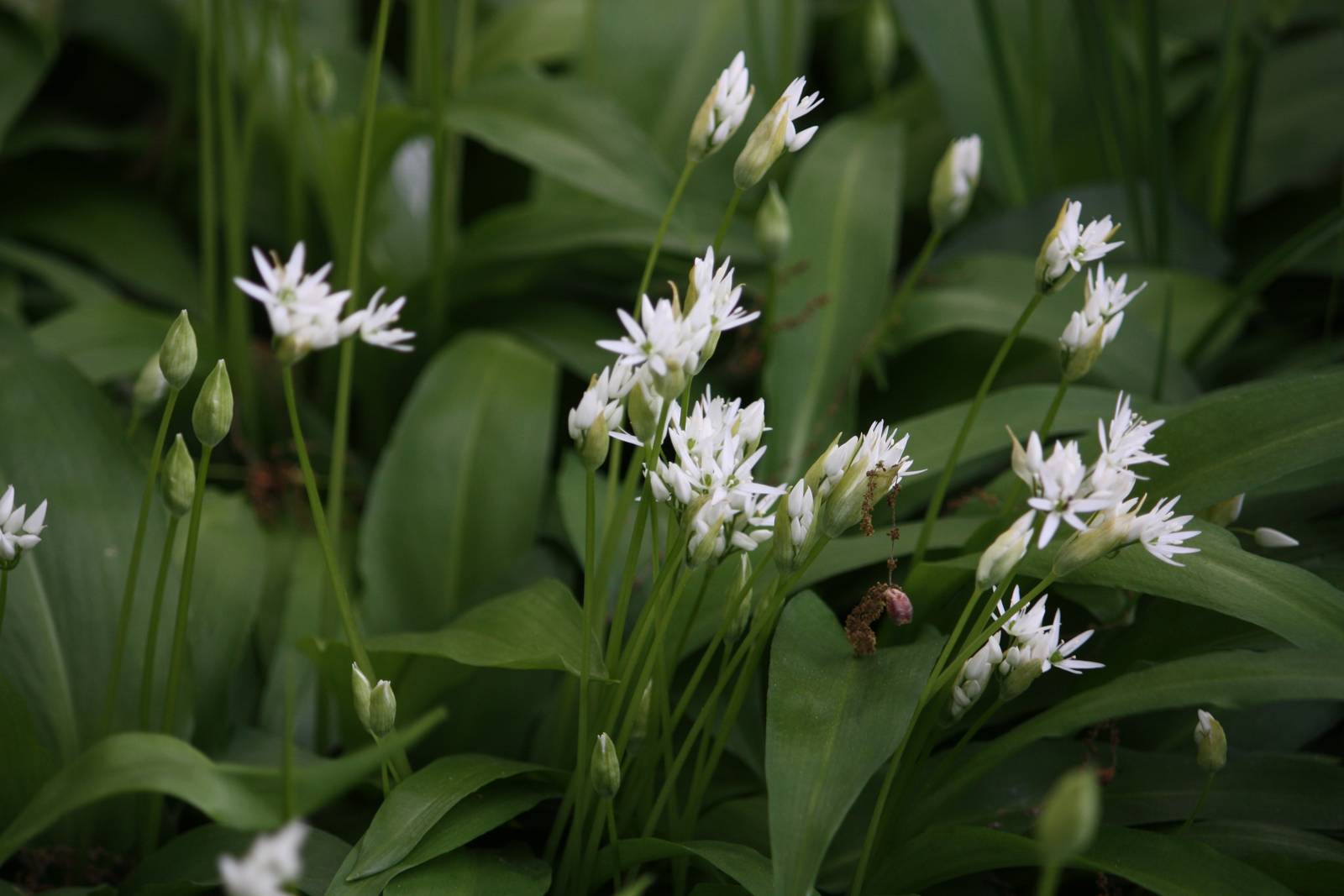
Wild garlic (Allium ursinum) is one of the first wild herbs of the year and a real taste sensation. But it has look-alikes that are deadly poisonous. This article is required reading before you forage for the first time.
Active Compounds and What They're Said to Do
Wild garlic contains:
- Allicin – antibacterial, blood-pressure-lowering (similar to garlic, but milder)
- Vitamin C – especially valuable as one of the first spring herbs
- Flavonoids – anti-inflammatory, antioxidant
- Sulfur compounds – detoxifying, support liver and gut
Traditional uses: spring detox, blood pressure, gut health, detoxification.
⚠️ Risk of Confusion – This Is Vital
There are three plants that dangerously resemble wild garlic, and all three are poisonous:
Lily of the Valley (Convallaria majalis)
- Often grows right next to wild garlic
- Leaves similarly shaped, but duller and firmer
- No garlic smell – this is the most important distinguishing feature
- All parts poisonous, can be fatal
Autumn Crocus (Colchicum autumnale)
- Leaves very similar in spring
- No garlic smell
- Contains colchicine – even small amounts can be fatal
- Especially dangerous because it's odorless
Cuckoo Pint / Lords-and-Ladies (Arum maculatum)
- Young leaves resemble wild garlic
- No garlic smell
- Poisonous, causes severe irritation
- Arrow-shaped leaves with net-like veining – wild garlic has parallel leaf veins
The Smell Test – Important, But Not Reliable on Its Own
Rub each leaf separately between your fingers. If it doesn't smell of garlic – leave it be. The reverse does not automatically follow, though: once you have held a wild garlic leaf, your fingers keep smelling of garlic and pass that scent on to every leaf after it.
So handle one leaf at a time, clean your fingers in between – and never let the smell be your only feature. Always check several features together, and if one of them doesn't fit, leave the plant where it is.
Other features you should check as well:
- Leaves emerge singly from the ground – not in pairs like lily of the valley
- Glossy upper side, matte underside
- Smooth leaf edge, no ribs like lily of the valley
When & Where to Harvest
Best harvest time: March to May – as soon as the leaves appear until shortly before flowering. After flowering the leaves become tough and lose their aroma.
Where: Moist deciduous forests, stream banks, shady north-facing slopes. Wild garlic usually grows in large carpets – but that is not a safety feature: lily of the valley spreads through rhizomes into stands just as dense and often grows right in among the wild garlic, and autumn crocus is at home in wild garlic stands too. A dense carpet does not mean every leaf in it is wild garlic – check each one.
Do not forage: Along roadsides, near dog-walking paths, or on fertilized land.
How: Pick leaves individually, never pull out the bulb – that destroys the population. Only harvest as much as you'll process right away, wild garlic wilts quickly.
⚠️ Never Forage If Unsure
If you're not 100% sure – leave it. No dish in the world is worth it. The first time, it's best to go with someone who knows wild garlic, or start at a known site where only wild garlic grows.
Use in the Kitchen
Don't heat wild garlic – heat destroys its aroma and active compounds. Always add raw or briefly at the end.
Wild garlic pesto – the classic: wild garlic + Parmesan + pine nuts + olive oil + salt. Keeps in the fridge for 1–2 weeks, frozen for several months.
Wild garlic butter – mix finely chopped with soft butter, roll up, chill. Perfect with bread or meat.
Soups & risotto – stir in just before serving, don't cook it in.
Salad – young leaves finely sliced as a salad addition.
Preserving
Freezing – the best method: wash leaves, dry, chop, freeze in portions. Keeps 6–12 months.
Freezing pesto – prepare without cheese, freeze, add cheese only after thawing.
Drying doesn't work – wild garlic loses almost all its aroma when dried.
Fermenting – put leaves in brine (2% salt), ferment for 1–2 weeks. Intense flavor, keeps a long time.