Spring wild herbs: sorrel, sweet woodruff and garlic mustard
⚠️ Before you forage
- Only pick what you can identify with certainty – if in doubt, leave it. Have unfamiliar plants shown to you by someone knowledgeable.
- According to the BfR, sorrel can be confused with the poisonous lords-and-ladies. According to the Bonn Poison Centre, lords-and-ladies is poisonous to very poisonous. The features below help to tell them apart but do not replace a proper identification.
- Sweet woodruff contains coumarin. According to the BZfE and the German consumer advice centre, use no more than 3 grams of fresh herb per litre of liquid.
- Do not pick next to busy roads, sprayed field edges or dog-walking meadows.
While the woods are still bare, the season has already begun on the ground. Three herbs are among the first worth picking: tangy sorrel, fragrant sweet woodruff and spicy garlic mustard.
Sorrel (Rumex acetosa)
Features: According to the BZfE, a perennial of damp meadows, woodland edges and banks with a furrowed stem and elongated, arrow-shaped leaves; the inconspicuous reddish-green flowers grow in panicles. The young leaves in particular taste refreshingly sour to lemony.
Lookalike with serious consequences: According to the BfR, edible sorrel can be confused with the poisonous lords-and-ladies. According to the Bonn Poison Centre, the leaves of lords-and-ladies (Arum maculatum) are spear- to arrow-shaped, long-stalked and often spotted. It grows mainly in shady, damp deciduous woods and under hedges – so in woodland rather than open meadows. According to the Bonn Poison Centre, even skin contact can cause strong irritation; after eating, nausea, vomiting and diarrhoea are possible. Tasting to check is therefore not an option, and wash your hands after touching unfamiliar plants (BfR).
According to the BZfE, sorrel can also be confused with other dock species; these are edible.
Use: Young leaves and shoot tips finely chopped in salads, pesto, quiche or egg dishes, as a soup or as a seasoning instead of lemon and vinegar; a classic ingredient of Frankfurt green sauce (BZfE). According to the BZfE, the harvest season lasts into late autumn; the leaves are most tender in spring.
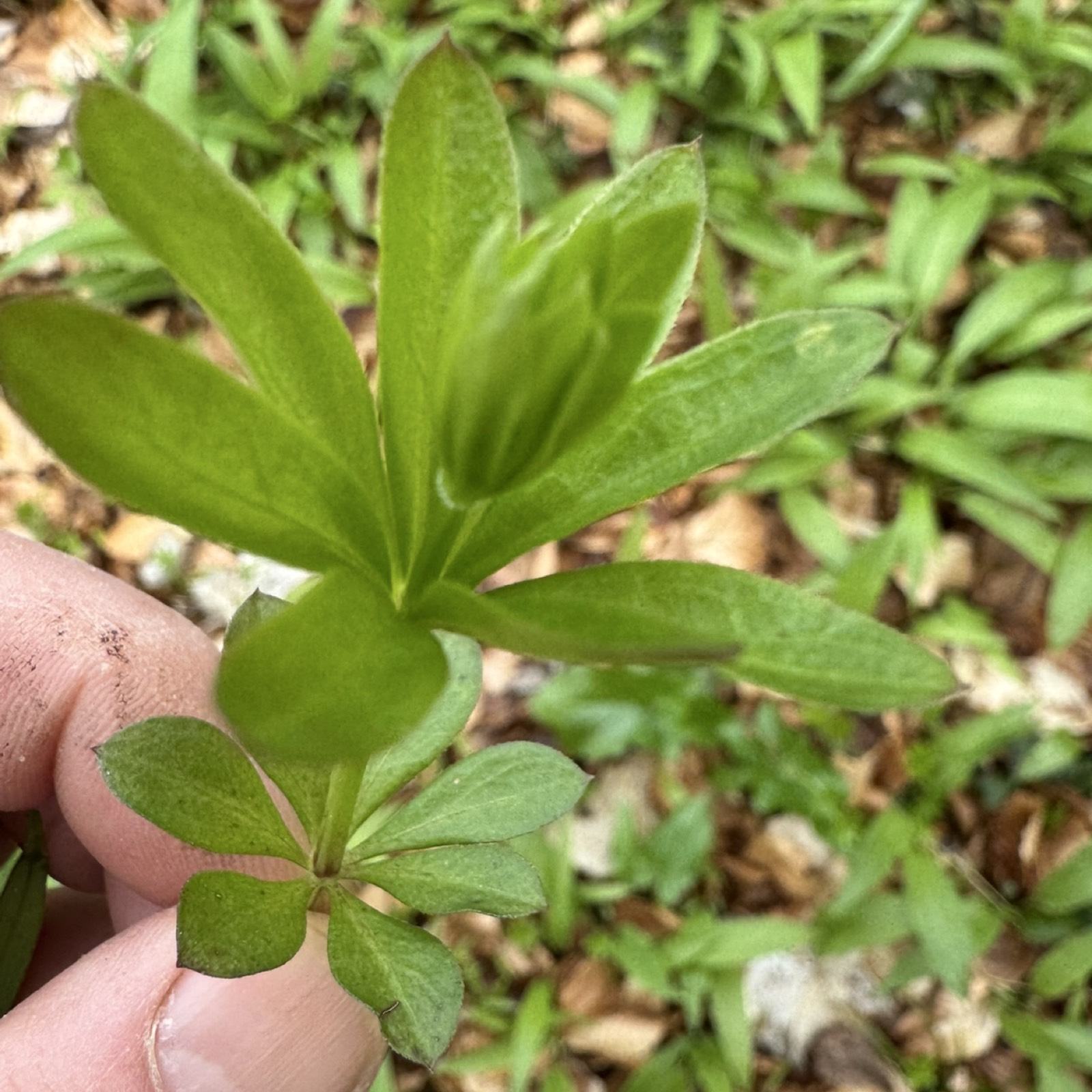
Sweet woodruff (Galium odoratum)
Features: According to the BZfE, sweet woodruff grows mainly in deciduous woods, reaches at most 50 centimetres and often forms dense mats in shady places. It can be recognised by its light-green, elongated leaves arranged in whorls – several leaves in a circle around the stem. It smells faintly of hay or vanilla.
Coumarin: The scent comes from coumarin. According to the BZfE, larger doses can cause nausea, headaches and even liver damage. Hence, according to the BZfE and the consumer advice centre: no more than 3 grams of fresh herb per litre of liquid.
Use: Traditionally for May wine punch, also alcohol-free, or for syrup and herb butter. According to the BZfE, tie the herb into a bunch and let it wilt overnight so that it develops its full aroma. Then hang it upside down in the liquid for about an hour – the cut ends should not reach into it – and take it out again.
Garlic mustard (Alliaria petiolata)
Features: According to the LfL Bavaria, garlic mustard grows in partly shaded to shady, nutrient-rich places such as woodland and hedge edges. The biennial plant forms kidney-shaped leaves in its first year and, in its second, an upright flowering stem up to 100 cm tall with heart-shaped, crenate leaves. It flowers white from April to June, the flowers arranged in clusters. Later the black seeds sit in pods that stick out from the stem.
About the smell: According to the LfL, the garlic smell only develops when the leaves are crushed or chewed. The smell is a clue, not proof: for wild garlic, the BfR warns that the leek smell of a previous sample can cling to your hands and lead to a false result. So always judge all features together.
Use: According to the LfL, leaves, flowers and seeds can be used as a seasoning for salads, vegetables, bread, spreads, mustard and other savoury dishes – for example young leaves finely chopped in herb butter or pesto.
Sources
- German Federal Centre for Nutrition (BZfE): Wildkräuterküche mit Sauerampfer, as of 3 Jul 2024, accessed 6 Oct 2026
- German Federal Institute for Risk Assessment (BfR): Giftpflanzen – Wie kann man sich schützen, und was ist bei einer Vergiftung zu tun? (FAQ), as of 14 Mar 2025, accessed 6 Oct 2026
- Poison Information Centre NRW / Bonn: Gefleckter Aronstab, accessed 6 Oct 2026
- German Federal Centre for Nutrition (BZfE): Frühlingsbote Waldmeister, as of 14 May 2025, accessed 6 Oct 2026
- Verbraucherzentrale (German consumer advice centre): Cumarin in Nahrungsergänzungsmitteln, as of 28 Aug 2025, accessed 6 Oct 2026
- Bavarian State Research Center for Agriculture (LfL): Essbare Wildkräuter: Knoblauchsrauke, as of Nov 2022, accessed 6 Oct 2026
- German Federal Institute for Risk Assessment (BfR): Odour test with pitfalls: What to look out for when collecting wild garlic (Press release No. 9/2025), as of 21 Mar 2025, accessed 6 Oct 2026
The sources support individual statements in this article. The organisations named have neither reviewed nor endorsed it.