Clearing, Filtering & Bottling Wine: The Last Step to a Finished Wine
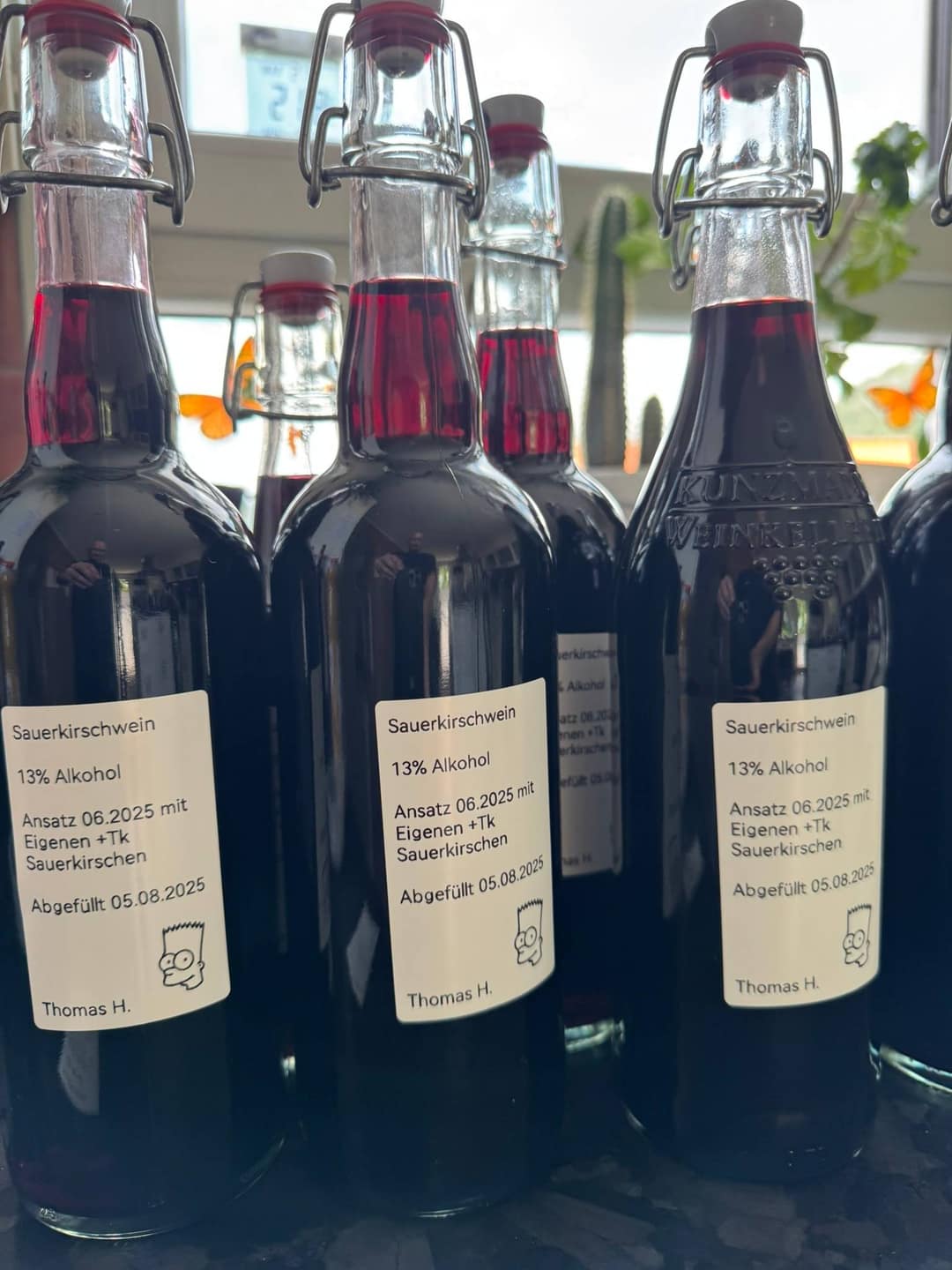
Clarifying and bottling wine
Why clarify?
A cloudy wine isn't bad – but a clear one looks better and keeps longer. Cloudiness comes from yeast residue, proteins, pectins and tartrate crystals.
Natural clarification
The simplest way: time and cold. Store the wine at 0–5 °C (cellar, refrigerator). Cloudy particles settle within 4–8 weeks. Then rack.
Fining agents
Bentonite – a clay mineral that binds proteins. 1–3 g/liter, let swell in water, stir in, wait 1 week, rack.
Gelatine + kieselsol – for tannic red wines. Gelatine binds to tannins and precipitates.
Pectic enzyme – an enzyme that breaks down pectin haze (especially in apple, quince wines).
Activated charcoal – only for strong browning or off-flavors, use sparingly.
Filtering
For crystal-clear wine: a pleated filter or wine filter machine (from approx. €50). Filter paper No. 1 (coarse) to No. 3 (fine).
Alternative: pour the wine through a fine sieve or cheesecloth.
Sulfiting before bottling
Potassium metabisulfite (Campden): 0.5–1 g/10 liters. Protects against oxidation and germs in the bottle.
Bottles & corks
- Wine bottles 0.75 liters made of glass (returnable bottles from the supermarket are ideal)
- Rinse bottles with a Campden solution
- Natural cork: needs a corkscrew, good for aging > 1 year
- Screw cap: practical, ideal for young wines that will be drunk quickly
- Crown cap (with a capping tool): inexpensive, essential for sparkling wine
Labeling & storage
- Cool (10–15 °C), dark, bottles lying down (to keep the cork moist)
- Red wine: let mature for at least 6–12 months
- Fruit wines: often best after 3–6 months
Tip: Fill a small tasting bottle – that way you can follow the aging process without opening a full bottle.