Storing, Labeling & Gifting Wine
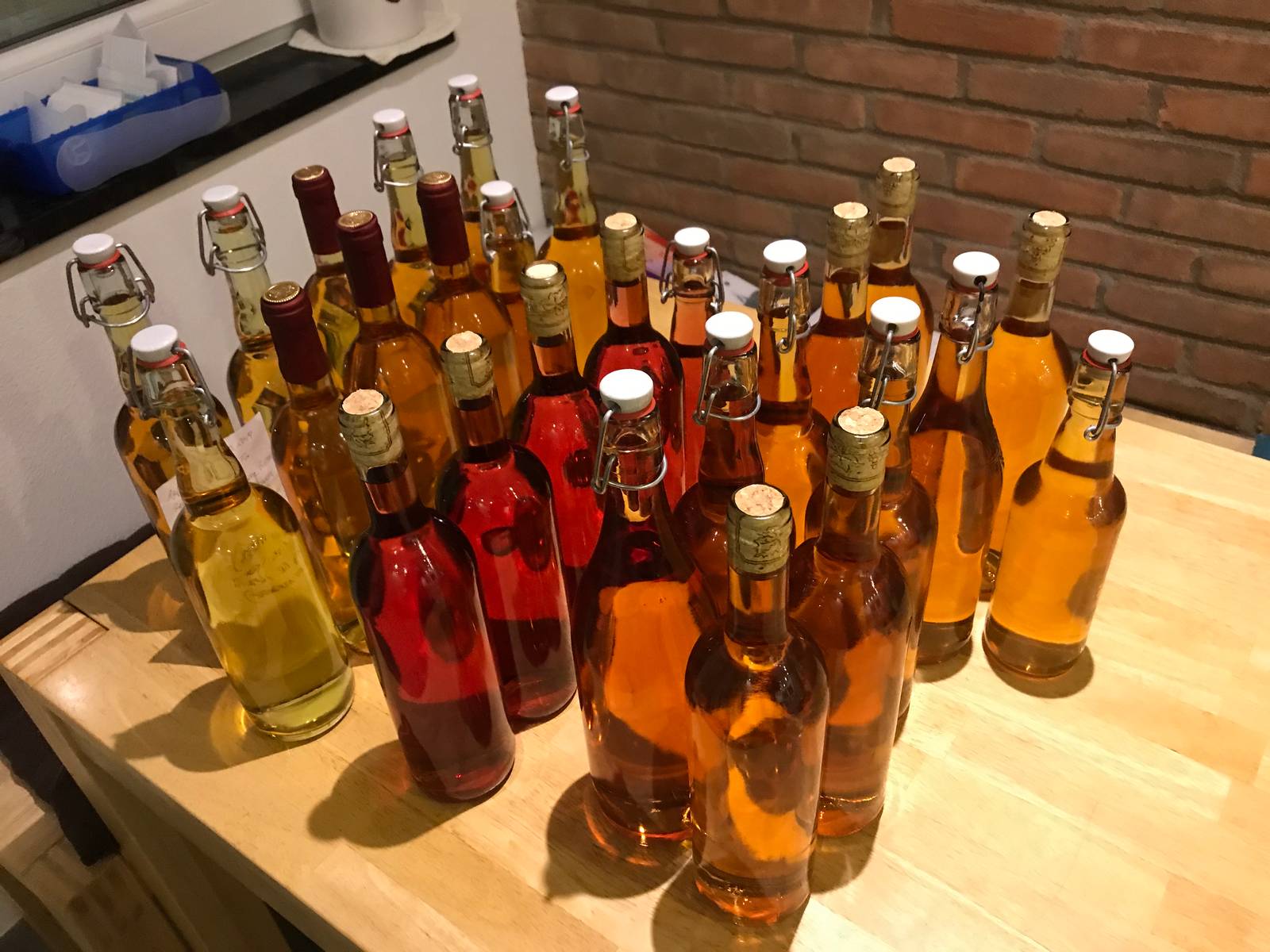
From the cellar to the shelf – storing wine properly
Homemade wine needs time and the right conditions to develop its full potential. Storage isn't a luxury, it's part of the production process.
The ideal storage conditions
| Factor | Ideal |
|---|---|
| Temperature | 10–14 °C (constant!) |
| Humidity | 60–80% |
| Light | dark (UV light damages the aroma) |
| Vibration | avoid |
| Position | lying down (with corks), standing (with screw caps) |
A wine cellar is ideal – but a cool cellar room, a storage closet, or even a dark corner under the bed also works well.
Choosing bottles & closures
- Glass bottles are best: flavor-neutral, airtight, reusable.
- Corks for wines that will age longer – store bottles lying down so the cork stays moist.
- Screw caps for wines that will be drunk young.
- Swing-top bottles are practical and look great – but not suitable for carbonation if they can't hold pressure.
Designing labels
A homemade label completes the wine. Important details:
- Name of the wine (e.g. "Currant Wine 2025")
- Producer
- Alcohol content (estimated or measured with a hydrometer)
- Volume (e.g. 0.75 l)
Tools: Canva, Word, or simply write by hand. Print labels on plain paper and stick them on with milk – the dried milk sticks well and comes off again easily when you soak the bottle.
Wine gift ideas
- A small wooden box with 2–3 different fruit wines
- Wine bottles with a handwritten recipe card
- Mead + a matching Viking-style label = the perfect Christmas gift
- A "wine subscription": friends get a bottle from the latest vintage every year
How long does homemade wine keep?
- Fruit wines (berries, cherries): 2–4 years with good storage
- Apple wine/cider: 1–2 years, better to drink young
- Mead: 5–10+ years, usually gets better with age
- Grape wine: 3–10 years depending on quality
Important: Don't compare fruit wines to grape wines – most aren't meant for long aging and should be drunk within their proper maturity window.