Winemaking for Beginners: Equipment & Basic Principles
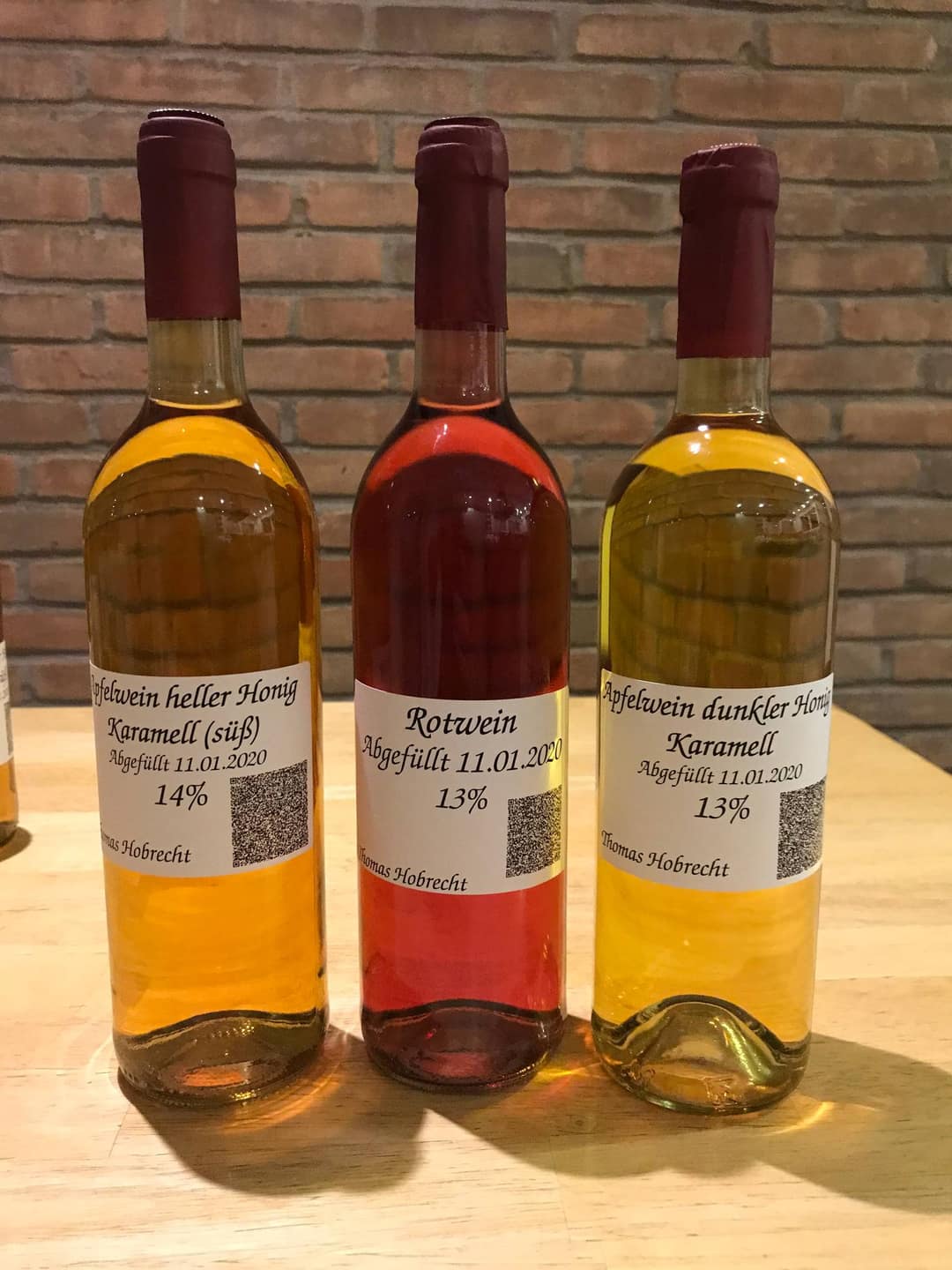
Making wine yourself – getting started
Homemade wine is easier than many people think. The basic principle: sugar is fermented by yeast into alcohol and CO₂.
The most important equipment
Demijohn (10–15 liters) – a glass carboy with a narrow neck, easy to clean, flavor-neutral. Plastic buckets work too, but are more prone to scratches (which harbor germs).
Airlock – sits in the lid/stopper, lets CO₂ escape, prevents oxygen from getting in. Costs about €1, absolutely essential.
Stopper with a hole – fits the neck of the demijohn, for the airlock.
Precision scale & thermometer – for accurate sugar and temperature measurement.
Hydrometer – measures the sugar content (Oechsle), so you know how much alcohol will result.
Siphon tube for bottling – for transferring (racking) without stirring up the sediment.
Hygiene is everything
The most common mistake in winemaking: insufficient hygiene. Disinfect all equipment with a sodium metabisulfite solution (Campden) – 2 g per 1 liter of water, let it act briefly, rinse.
The process in brief
- Press or crush fruit/grapes
- Measure the must with a hydrometer and add sugar if needed
- Sulfite (Campden tablet) – inhibits wild yeasts and bacteria
- Add pure-culture wine yeast
- Ferment (1–4 weeks) in the demijohn with an airlock
- Rack – separate the wine from the sediment
- Secondary fermentation and clarification (months)
- Bottle and age
Tip: Start with apple wine (must) or elderberry wine – both are forgiving and very aromatic.