Apple Wine & Apple Mead: From Orchard to Glass
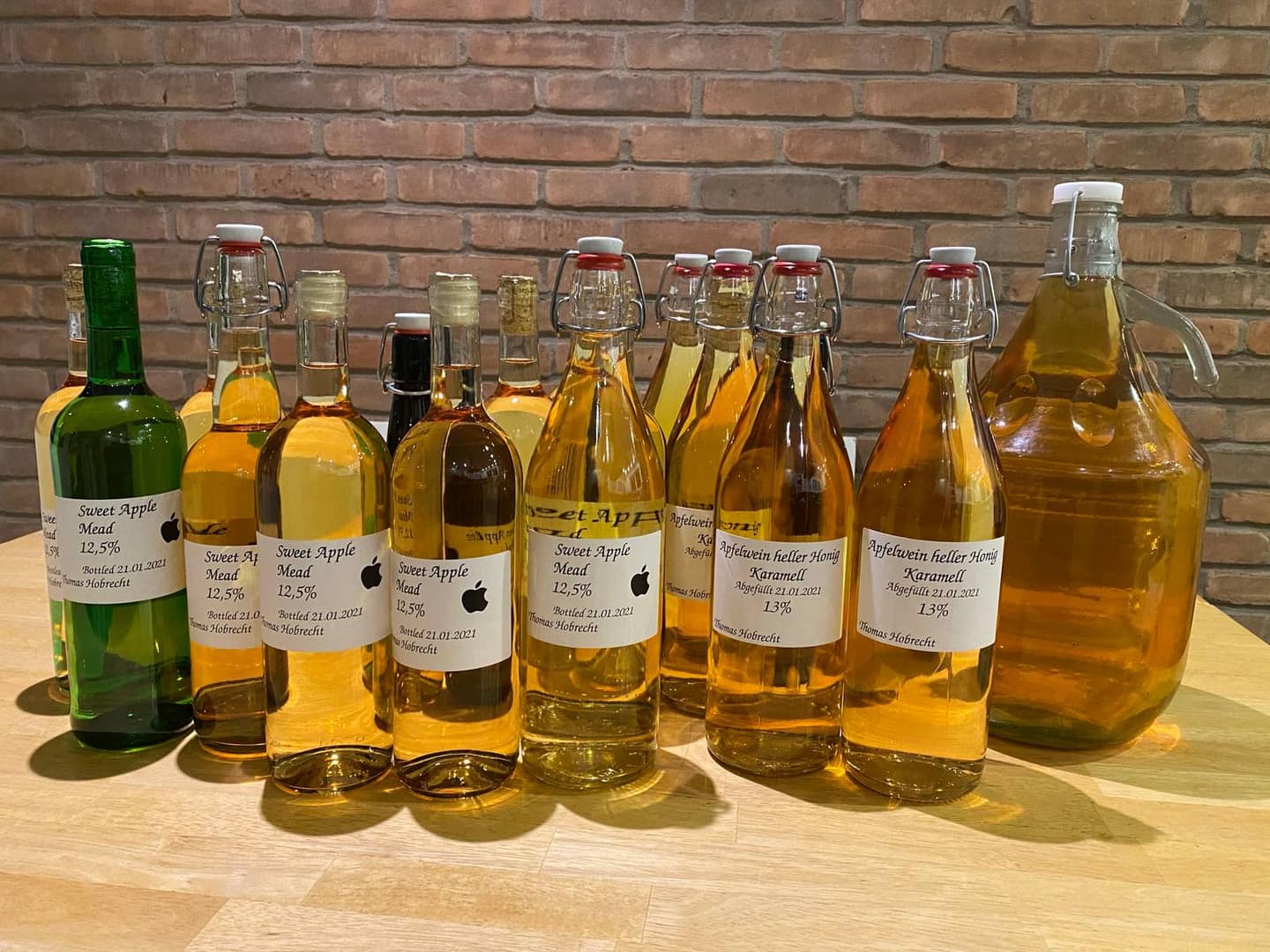
Apple wine – simple & delicious
Apple wine, also known as cider, is one of the most accessible homemade drinks. It doesn't need any exotic ingredients – just apples, some yeast and patience.
Apple wine (cider) – basic recipe for 5 liters
Ingredients:
- 5–6 kg mixed apples (the more sour, the better the cider)
- Sugar as needed (depending on the sweetness of the apples, approx. 200–500 g)
- 1 packet of cider or champagne yeast
- 1 Campden tablet
- Water to top up
Process:
- Wash the apples, cut out rotten spots with at least two centimetres to spare, as the consumer advice centre recommends – discard apples with brown rot completely, as they can contain a lot of patulin – press or grate and squeeze out the juice.
- Pour the juice into the fermentation bucket, add the Campden tablet, wait 24 h.
- Rehydrate the yeast and add it.
- Ferment for 1–2 weeks at 15–18 °C (cooler = better aroma).
- Transfer to a demijohn, clarify for another 4 weeks.
- Bottle once fermentation has finished. For a sparkling version with a little sugar in the bottle, only use pressure-resistant sparkling-wine bottles – normal bottles can burst. For comparison: under the EU wine market regulation, sparkling wine is under at least 3 bar of overpressure at 20 °C, semi-sparkling wine under 1 to 2.5 bar.
Apple mead – apples meet honey
A special variation: apple mead combines apple juice with honey instead of sugar. The result is more complex and aromatic.
Ratio: 250–400 g honey per liter of apple juice (depending on desired sweetness).
Don't boil the honey – stir it in lukewarm so the aromatic compounds are preserved.
Tips for better cider
- Mix several apple varieties – e.g. Boskoop (acidity) + Elstar (sweetness) + crab apples (tannins).
- Ferment cold at 12–15 °C for a finer aroma.
- Mature cider after 3–6 months is hard to beat.
Variations
- Pear cider (Perry): just like apple cider, but with pears.
- Ginger cider: let fresh ginger ferment along – gives a fiery note.
- Spiced apple wine: let cinnamon, cloves and star anise steep in the bottle.
Sources
- Consumer Advice Centre Bavaria: Kann man Fallobst noch verwerten?, accessed 5 Oct 2026
- European Union (EUR-Lex): Verordnung (EU) Nr. 1308/2013, Anhang VII Teil II, accessed 5 Oct 2026
The sources support individual statements in this article. The organisations named have neither reviewed nor endorsed it.