Currant Wine: Red & White Berries from Your Own Garden
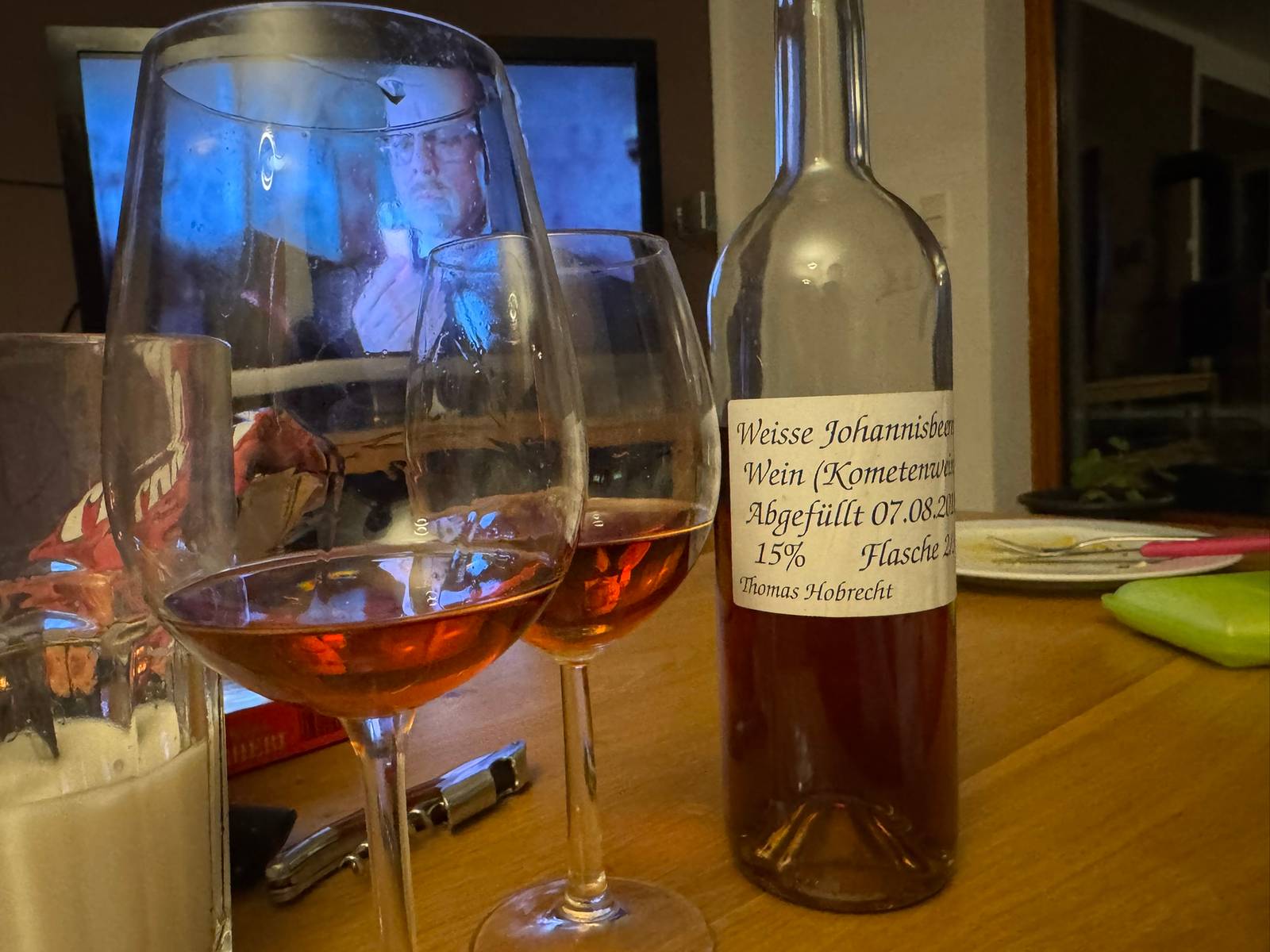
Currant wine – garden berries meet winemaking
If you have currant bushes in your garden, you can harvest several kilograms of berries in a good year. Some of it goes into jam – the rest makes a wonderful wine.
Difference between red & white
- Red currants bring intense color, strong acidity and a slightly tart flavor. The wine is reminiscent of a young red wine.
- White currants are milder and more aromatic, almost floral. The wine feels more elegant and works well as a white wine substitute.
Basic recipe (5 liters)
Ingredients:
- 1.5 kg currants (red or white)
- 1.1 kg sugar
- 4 l water
- 1 packet of all-purpose wine yeast
- 1 tsp yeast nutrient
- 1 Campden tablet
- Pectic enzyme (pectinase, optional – improves clarification)
Process
- Strip the berries – remove stems and leaves. Crush the berries or blend briefly.
- Make sugar water – boil water with sugar, let it cool.
- Sulfite – add the Campden tablet and pectic enzyme if using, let rest for 12–24 h.
- Pitch the yeast – after the waiting period, add the yeast and nutrient.
- Primary fermentation – 5–7 days at 18–22 °C, stir daily.
- Rack & secondary fermentation – transfer to a demijohn, 4–8 weeks.
- Bottle – fill into bottles after clarifying.
Acid correction
Currants are very high in acid. If the wine tastes too sour:
- Stir in calcium carbonate (chalk) – chemically reduces acidity.
- Alternatively: blend with a lower-acid wine.
Storage
Currant wine matures well. After 6 months it's noticeably more harmonious than freshly bottled – after a year it's often excellent.