Brewing Mead Yourself: Honey Wine Step by Step
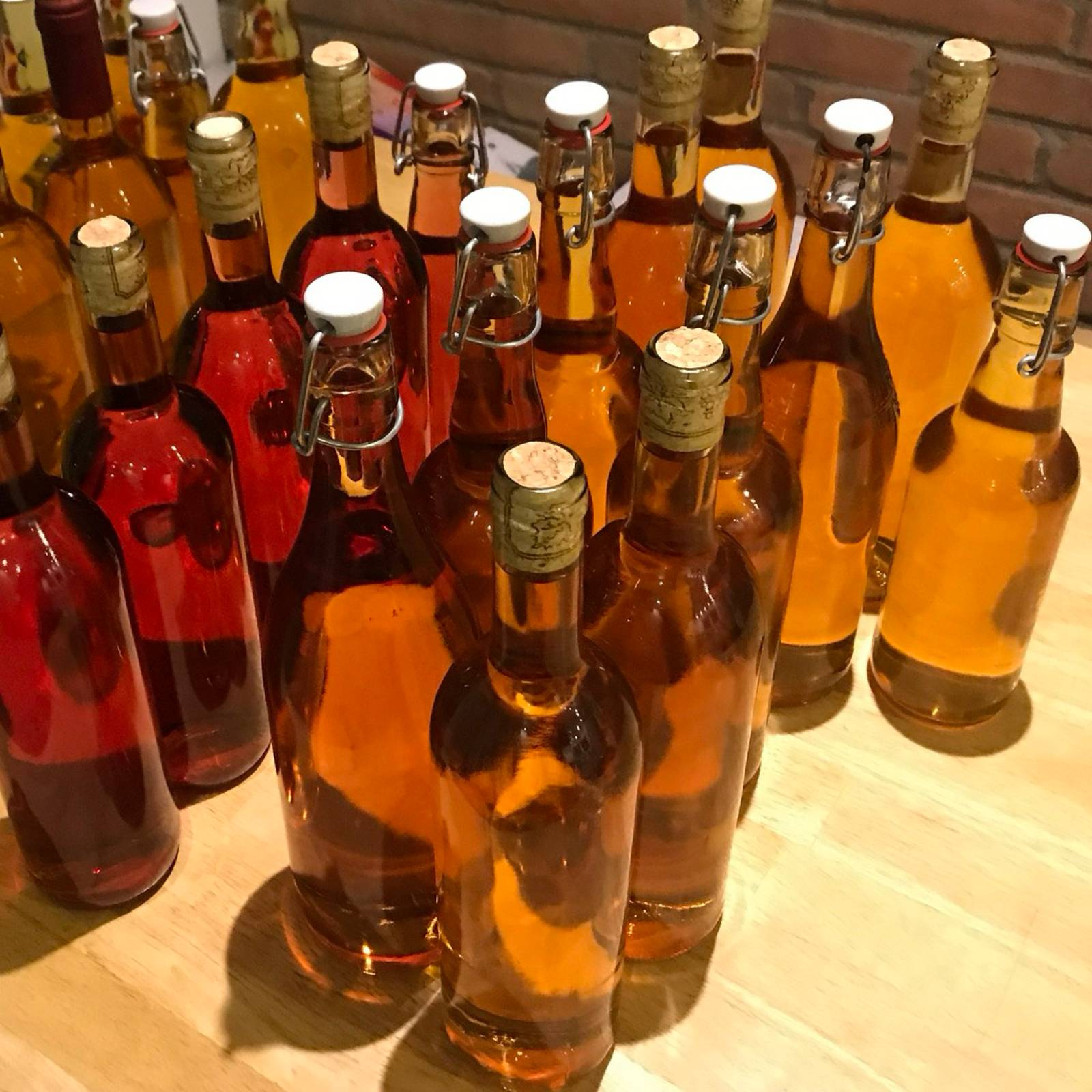
Mead – the oldest drink in the world
Mead (also known as honey wine) has been brewed for thousands of years. The basic ingredients couldn't be simpler: honey, water and yeast. The quality depends almost entirely on the quality of the honey.
Types of mead at a glance
- Traditional mead: just honey, water, yeast – pure and clear.
- Fruit mead (melomel): with fruits like currants, raspberries, cherries.
- Spiced mead (metheglin): with spices like cinnamon, ginger, vanilla, cloves.
- Cyser: honey with apple juice instead of water.
Basic recipe for traditional mead (5 liters)
Ingredients:
- 1.5 kg high-quality honey (blossom, linden or forest honey)
- 4 l water (unchlorinated or dechlorinated tap water)
- 1 packet of wine yeast (e.g. Lalvin 71B or EC-1118)
- 1 tsp yeast nutrient (nitrogen is important for good fermentation!)
- 1 Campden tablet
Instructions
- Warm the water to approx. 50 °C (don't boil it – honey's aromatic compounds are volatile!).
- Stir in the honey until fully dissolved. Let cool to room temperature.
- Add the Campden tablet, wait 12 hours.
- Pitch the yeast and add it to the must along with the nutrient.
- Primary fermentation: 1–2 weeks at 18–22 °C. Mead foams very little – that's normal.
- Secondary fermentation: 4–8 weeks in a demijohn with an airlock.
- Rack multiple times – mead often needs 2–3 rackings to become clear.
Feeding the yeast
Honey contains almost no nitrogen – the yeast can easily starve. Solution:
- Staggered Nutrient Addition (SNA): add yeast nutrient in several small portions over the first 4 days.
- This significantly improves fermentation and flavor.
Maturity & storage
Mead is a wine that rewards patience. Fresh, it's often rough and yeasty. After 6 months it starts to blossom, after a year it's usually excellent.
Store cool and dark – well-made mead keeps for many years.