Digging a Well: Water from Your Own Garden
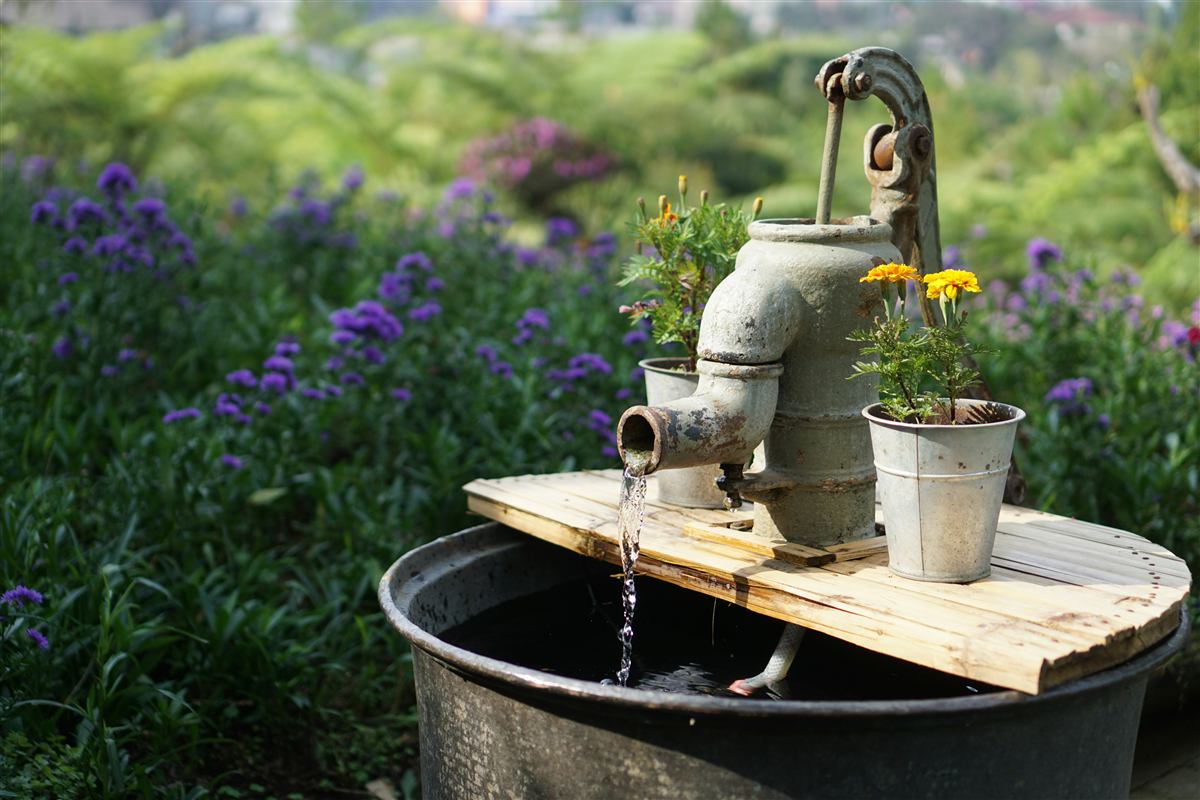
Your own garden well makes you less dependent on the mains water supply and saves significant water costs with intensive garden irrigation. Depending on the depth of the groundwater table, the project is even possible without an excavator.
Which Type of Well?
Driven Well (Well Point)
A pointed filter pipe is driven into the ground with a driving weight. Suitable down to approx. 7–8 m depth, only in sandy/gravelly soils. The simplest and cheapest method (materials: €100–250).
Drilled Well
An earth auger or drilling set bores a hole into which a well pipe is inserted. For depths of 15–30 m, also works in loamy soils. Cost: €300–800 for DIY, or €1,500–4,000 through a specialist company.
Dug Well
Masonry or concrete rings are stacked and sunk into the ground. For very shallow groundwater (<5 m), labor-intensive but high yield. Historically the most common form.
Finding Groundwater
Check before building a well:
- Geological map of your region (State Geological Survey, often free online)
- Ask neighbors – do they have a well? At what depth?
- Dowsing rod – unscientific, but still practiced in some regions
- Test bore with a 1-meter earth auger – if you feel moist sand/gravel, groundwater is within reach
Permit – Essential
Requires a permit in almost all German states! Water rights lie with the individual states:
- Apply at the relevant water authority (Wasserwirtschaftsamt) or the lower water authority
- Usually free or low fees (€20–80)
- Use for garden irrigation is generally approved without issue
- Important: Using it as drinking water is prohibited without a water analysis and treatment
Building a Driven Well – Step by Step
- Get materials – well point kit with driving lance, 1-meter pipe sections (DN 32 or DN 50), driving weight, water pump
- Drill a starting point – pre-drill approx. 1 m deep with a 60 mm earth auger
- Insert the filter pipe – insert the first pipe section with the well point filter
- Drive it in – place the driving weight (approx. 5–10 kg) on the pipe and drive it into the ground by lifting and dropping it
- Extend the pipe – connect additional sections with couplings and keep driving until you reach groundwater
- Test it – fill the pipe with water: if it drains quickly = groundwater connection established
- Connect the pump – attach a hand pump or electric garden pump (from 60 W)
Choosing a Pump
| Pump Type | Lift Height | Suitable For |
|---|---|---|
| Garden pump (suction pump) | up to 8 m depth | driven wells, shallow groundwater |
| Deep well pump | up to 30 m | drilled wells |
| Hand pump | up to 7 m | backup, no electricity needed |
Water Quality
- Do not use as drinking water without a chemical and bacteriological analysis (approx. €50–80 at a lab)
- Generally safe for garden irrigation
- Check the pH value – overly acidic water (pH < 6) corrodes pipes and harms some plants
- Annual visual inspection for discoloration or unusual odor
Maintenance
- Cover the well in winter or remove the pump (frost protection)
- Every 5 years: check the well pipe for deposits and flush with well cleaner if needed
- Seal any cracks or leaks in the shaft immediately