Growing Beans: Bush and Pole Beans for the Kitchen & Pantry
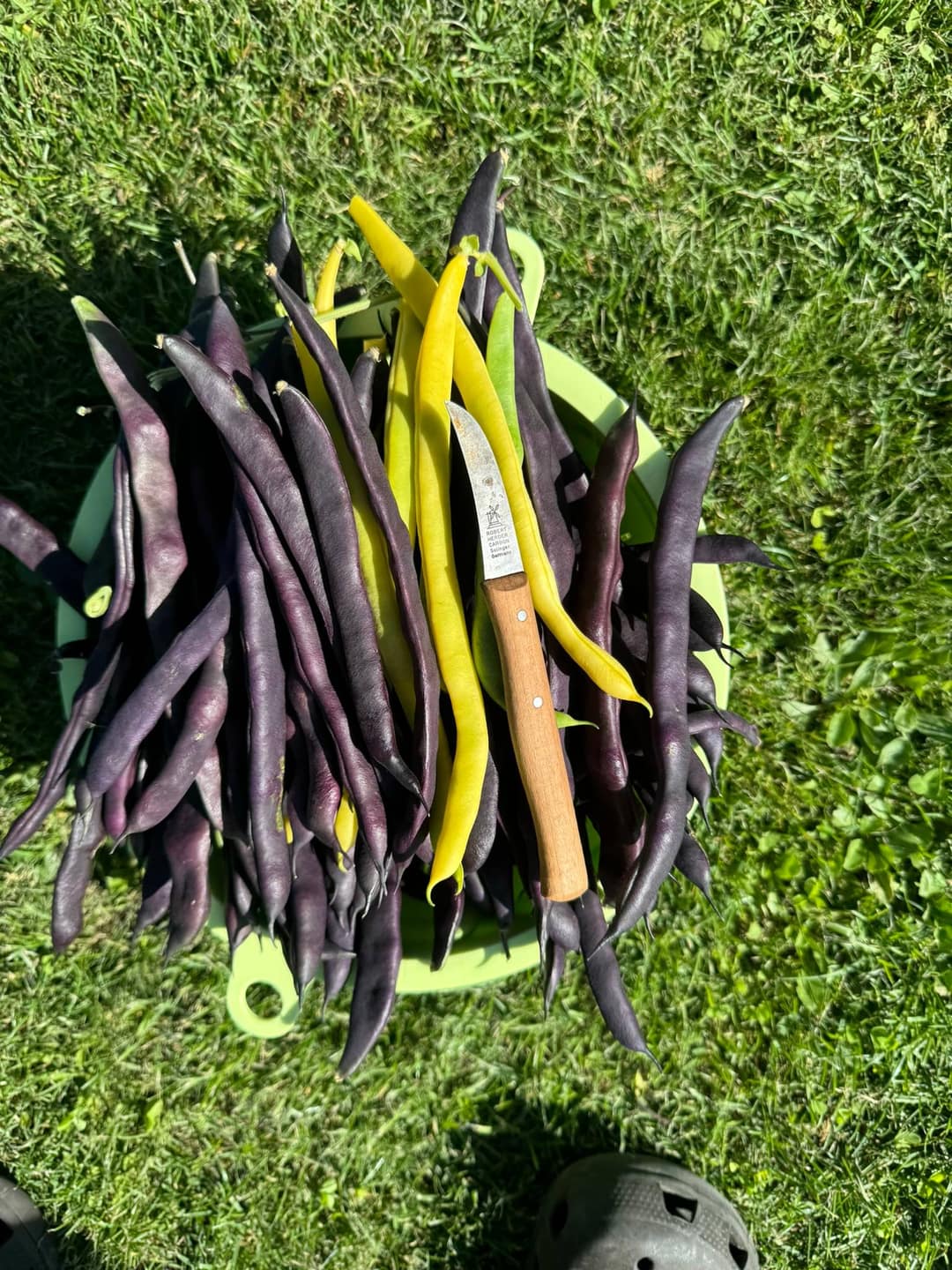
Beans – uncomplicated & productive
Beans are ideal vegetables for beginners: they germinate quickly, grow robustly, and produce new fruit for weeks on end. As legumes, they also enrich the soil with nitrogen.
Bush beans vs. pole beans
| Bush beans | Pole beans | |
|---|---|---|
| Height | 30–50 cm | 2–3 m |
| Support | none | poles/climbing net |
| Yield | one-time, concentrated | spread over weeks |
| Sowing | May–June | May |
| Harvest | approx. 50 days after sowing | from July until frost |
Sowing & planting
- Not before mid-May – beans are very sensitive to cold!
- Sow directly in the bed (no need to pre-grow): 4–5 cm deep, 10–15 cm apart
- Pole beans: drive in poles (2–2.5 m) before sowing
Good neighbors: carrots, cucumbers, corn, savory (protects against aphids!) Bad neighbors: onions, garlic, fennel
Care
- Hardly any fertilizing – beans fix airborne nitrogen themselves
- Water evenly, especially during flowering and pod formation
- Don't water over the leaves – wet foliage encourages fungal diseases such as anthracnose
Harvest
Harvest regularly – with pole beans every 2–3 days – otherwise the pods become tough and the plant stops producing new ones.
- Fresh beans: when pods are plump but the seeds are not yet visible through the skin
- Dried beans: let the pods ripen and dry until they rattle
Preserving
- Freezing: blanch 2–3 min., cool in ice water, freeze in portions
- Canning: beans are low-acid – safe only in a pressure canner (121 °C), otherwise heat to 100 °C twice and boil before eating (see "Safe Canning: Avoiding Botulism")
- Pickling: in a vinegar-herb brine as a sour preserve