Blackberries: Foraging, Taming & Preserving
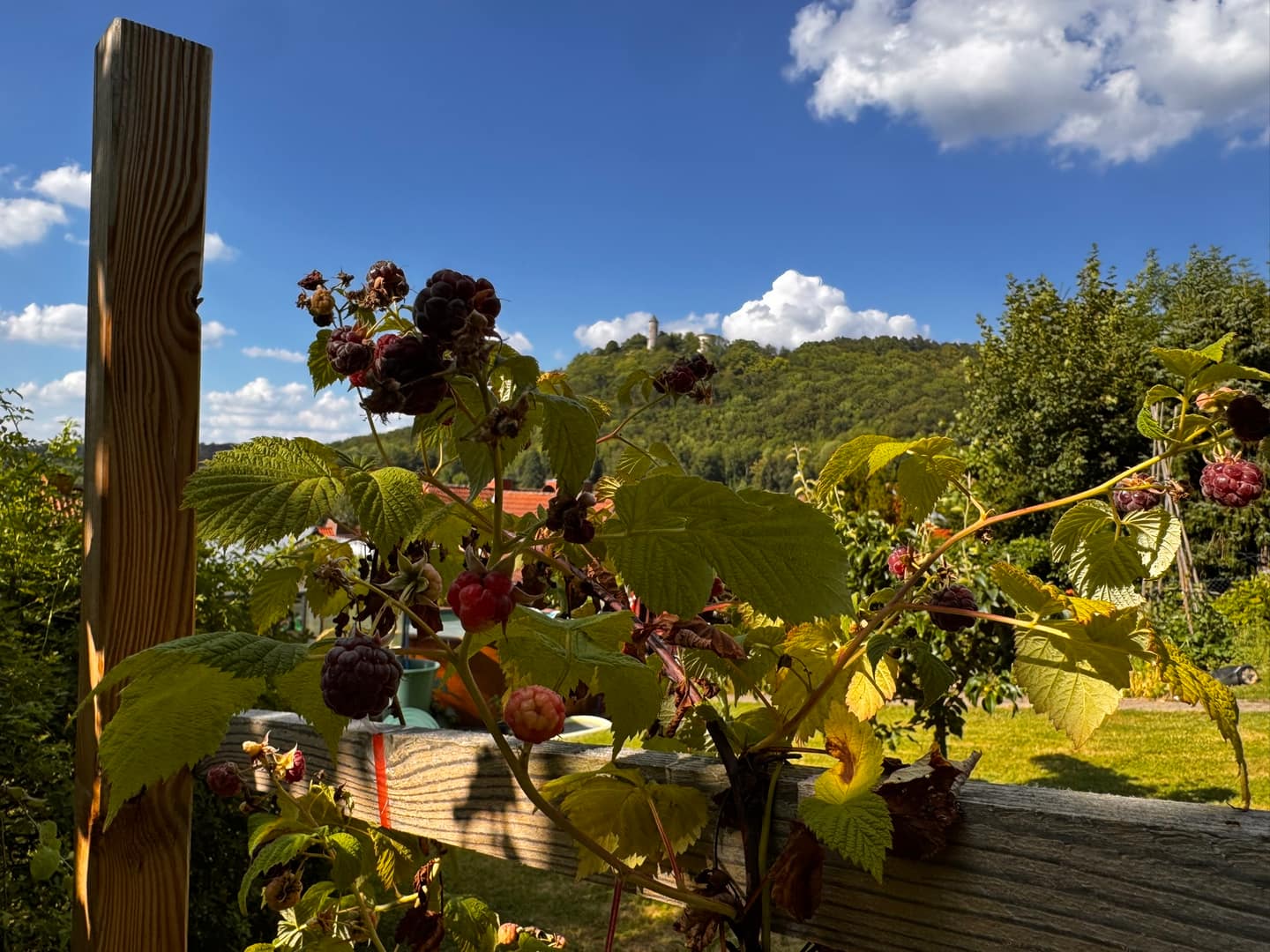
Few fruits come as freely given as the blackberry: in the wild it sprawls along forest edges and hedges, while in the garden it reliably bears fruit year after year on a trellis – on request even without thorns.
Foraging in the wild
- Season: late July to September – the berries on one cane ripen over several weeks, one after another
- Only pick deep black, easily detaching berries; red ones are unripe and won't ripen further
- Pick higher up: below knee height, wild animals may have left traces (keep fox tapeworm in mind). Washing rinses off dirt but does not reliably remove the eggs – only heating above 60 °C does. So pick berries you plan to eat raw from higher up
- Sturdy clothing: wild bushes fight back
- Remember good spots – a strong stand bears fruit every year
In the garden
- Thornless varieties (e.g. Navaho, Loch Ness) make harvesting a pleasure and spread less aggressively
- Trellis or fence: tie the canes up fan-shaped – this saves space and gives the berries sun
- Pruning is everything: blackberries bear fruit on second-year canes. Cut spent canes to the ground after harvest, tie up young canes for next year
- Location: sunny to partial shade, undemanding regarding soil
Harvest
- Fully ripe berries almost detach on their own – best to pick through every 2–3 days
- Blackberries don't ripen further once picked and stay fresh only 1–2 days: process or freeze quickly
Using the harvest
- Jam & jelly: the classic – because of the seeds, the strained jelly version is worthwhile
- Freezing: pre-freeze on a tray, then bag up – keeps them separable
- Syrup, liqueur, vinegar: from the last, smaller berries of the season
- Young blackberry leaves, dried, make a mild tea base