Building Your Own Irrigation System: From Drip Line to Timer
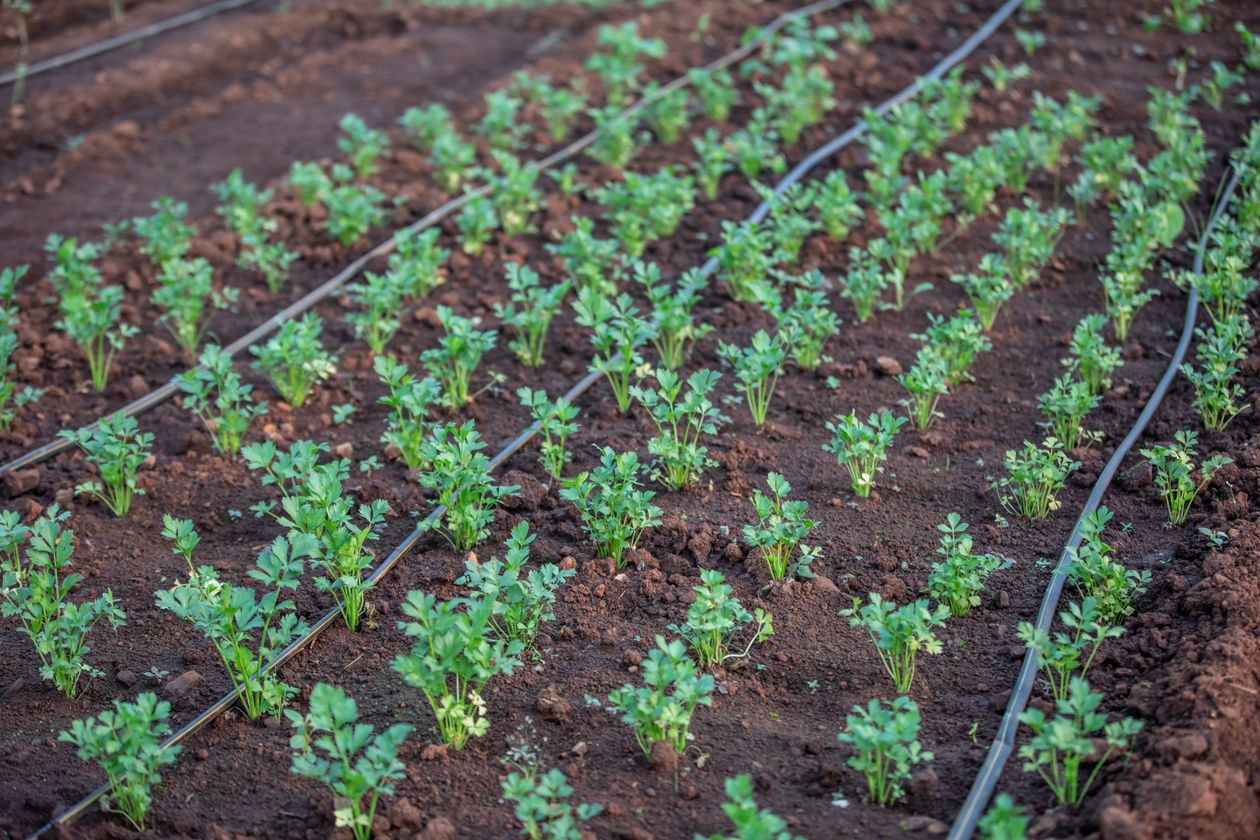
Anyone who has ever cut a vacation short because the tomatoes were wilting – or who trudges through the garden daily with a watering can – knows: automatic irrigation pays off. With a little planning and not much material, a DIY system is quickly installed.
Which Type Suits You?
Drip Irrigation
Individual drippers or drip lines directly at the base of the plant. Ideal for: vegetable beds, raised beds, tomatoes, peppers. Advantage: minimal water use, no wet foliage (fewer fungal diseases).
Sprinklers
Circular distribution over an area. Ideal for: lawns, larger flower beds. Disadvantage: higher water use, wet foliage.
Ollas (Clay Pot Irrigation)
Unglazed clay pots are buried and filled with water. The water seeps slowly through the pores directly to the roots. Ideal for: individual plants, dry areas, very low water use.
Irrigation Computer
Not a standalone system, but a timer for the tap. Can be combined with any of the systems above.
Planning
Clarify before buying:
- Water flow in liters per hour (l/h) per zone
- Water pressure at the connection (normal: 2–4 bar – too much floods the drippers, too little means no pressure)
- Length of the main line and branch lines
- Number of plants/zones
Rule of Thumb for Water Amounts:
| Plant | Daily Need |
|---|---|
| Tomato | 1.5–2 l |
| Cucumber | 2–3 l |
| Lettuce | 0.5–1 l |
| Bell pepper | 1–1.5 l |
Installation Step by Step
- Lay the main line – run 16 mm PE pipe or 3/4-inch hose from the water connection through the garden
- Install a pressure reducer – reduce to 1.5–2 bar so drippers run evenly
- Add a filter – prevents dripper clogging
- Branch lines (4 mm) – run from the main pipe to each plant zone
- Insert drippers – choose 1–4 l/h drippers depending on plant needs
- Connect the irrigation computer – set the schedule (morning 5–7 am or evening, never at midday)
- Test and adjust – observe the first run to check all drippers work evenly
Smart Extensions
- Soil moisture sensor – prevents unnecessary watering after rain
- Rain sensor – automatically interrupts irrigation during rainfall
- Smartphone control – via WiFi-enabled irrigation computers (e.g. Gardena, Netro)
Tips
- Never water at midday – evaporation is too high, risk of leaf scorch from wet foliage
- Drip irrigation saves up to 50% water compared to sprinklers
- Drain the main line completely in autumn (frost protection)
- Check drippers annually for clogs and soak in vinegar