Hawthorn – Harvesting and Processing
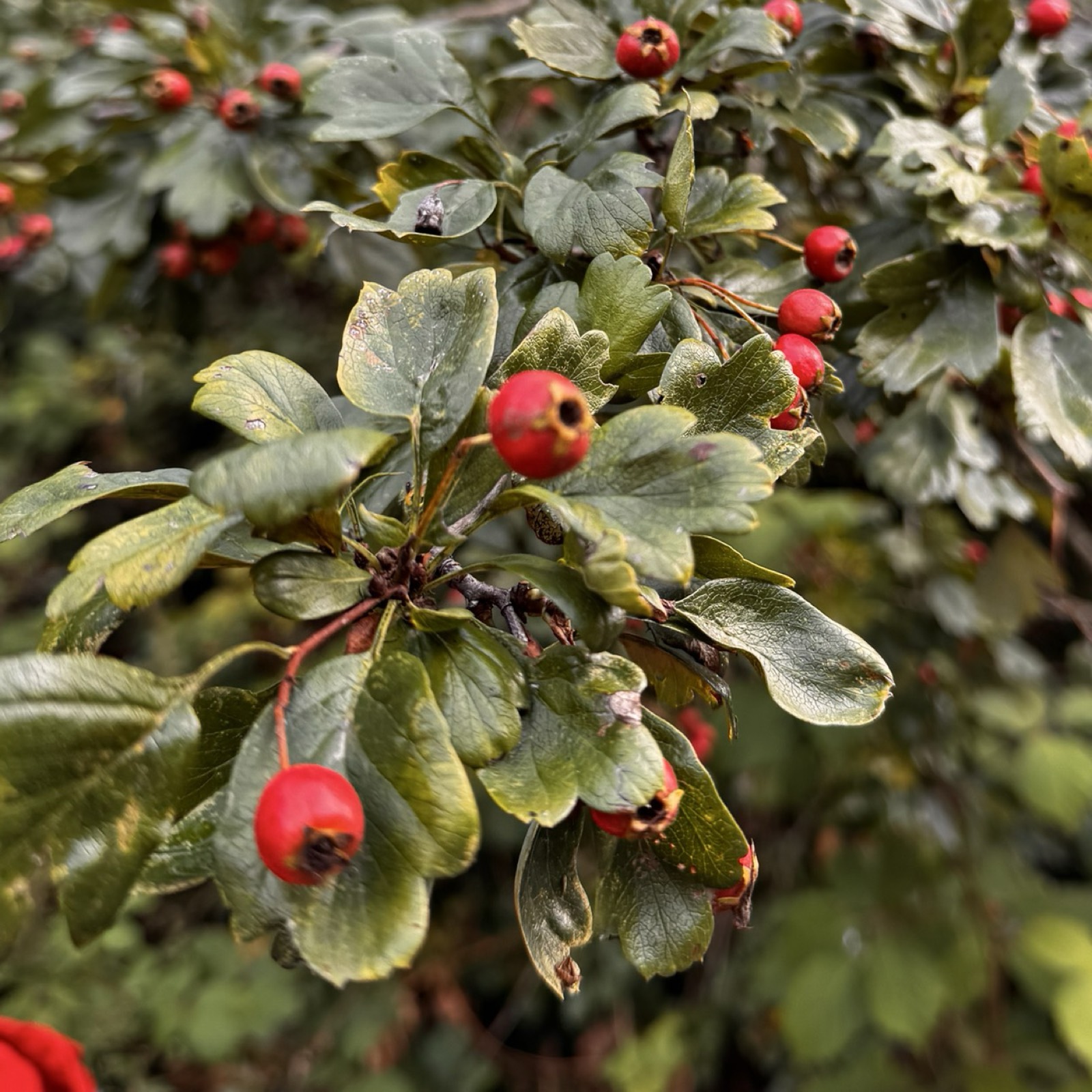
Hawthorn (Crataegus monogyna, Crataegus laevigata) is a sprawling, thorny shrub or small tree that stands in clouds of white blossom in spring and draws birds and foragers alike with red berries in autumn.
Identify
- White, sometimes faintly pink umbel-like flowers in May, with a somewhat harsh-sweet smell typical of many rose-family plants
- Deeply lobed leaves, sturdy sharp thorns on the branches
- Red, mealy-soft berries (botanically pomes) in September/October
- Watch out for: Blackthorn blooms similarly white but has unbranched thorns growing straight from the twig and blue-black, sour fruit – ripe fruit of the two is easy to tell apart. The same goes for the red berries in autumn: spindle (pink four-lobed capsules on thornless green twigs) and mezereon (red berries sitting tight against the twig) are poisonous. Hawthorn berries hang from thorny twigs with lobed leaves and hold hard stones – check several features together, and if in doubt leave them
Use
- Flowers (May) for tea – harvest just before full bloom, dry quickly
- Berries (September/October) taste rather mealy and bland raw; deseeded and pureed they make a good base for jelly, fruit leather, or jam mixed with tarter fruit like rosehip or apple
- Dried leaves, flowers and berries together as tea – traditionally the "heart herb" of monastery medicine
Traditional use
Hawthorn has been used as a medicinal plant in Europe for centuries and is comparatively well studied pharmacologically: its flavonoids and oligomeric procyanidins are traditionally used to support healthy circulation. If you have an existing heart condition or take medication (especially heart medication), check with a doctor first – hawthorn can interact with some drugs.
Harvest & drying
Strip berries off the clusters with a fork, harvest flowers with their small stem. Dry both in an airy spot out of direct sun; dried berries keep about a year, flowers are best used within a few months.