Preserving Tomatoes: 5 Methods Compared
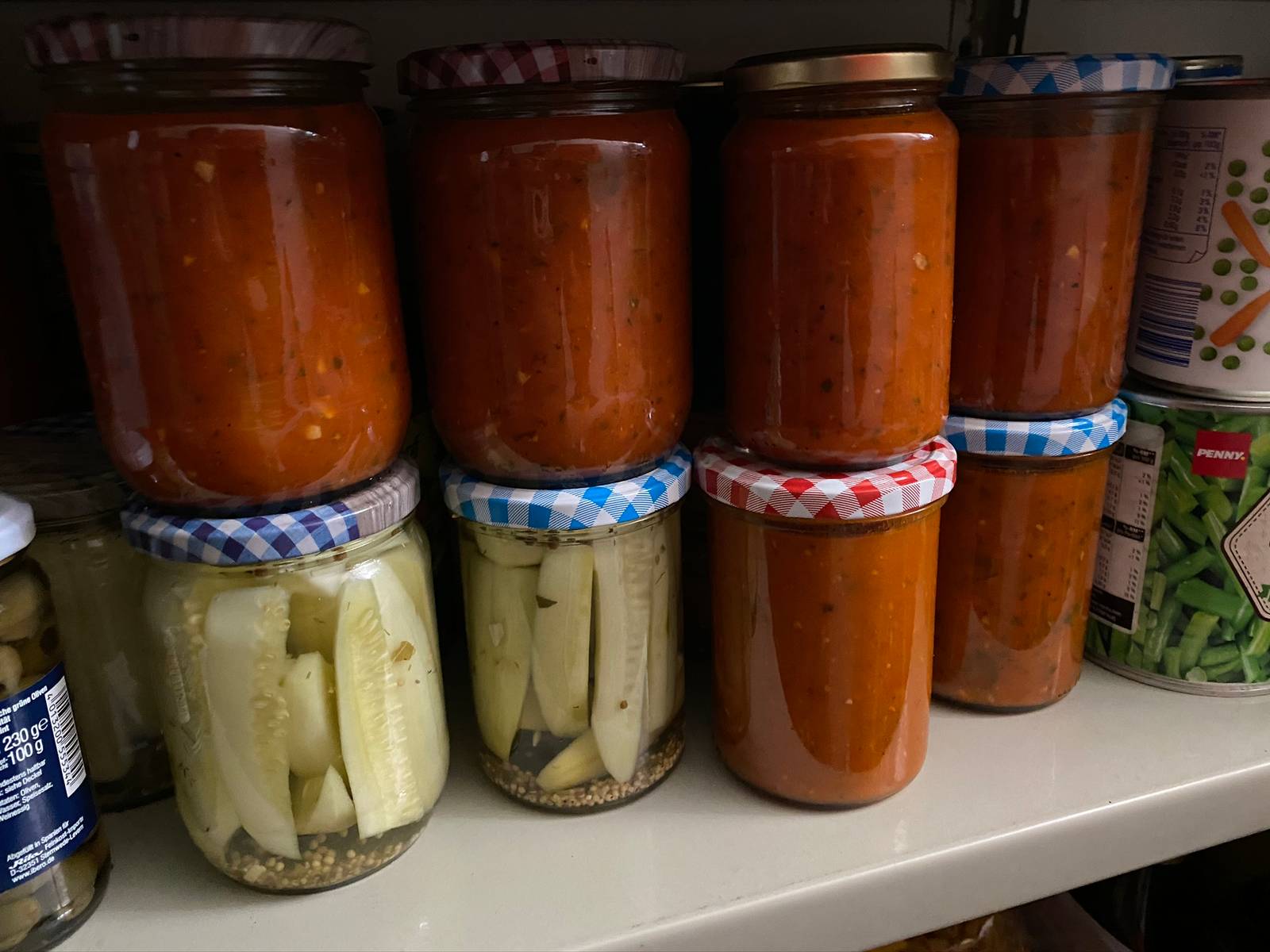
When tomatoes ripen faster in August than you can eat them, it's time to preserve them. Five methods – each with its own strengths.
1. Canning as Sugo
Blanch the tomatoes, peel, purée. Adding acid is mandatory: 1 tbsp lemon juice or 1/4 tsp citric acid per liter, that is 1 tbsp per 500 ml jar. Then process in sterilized jars 30 minutes at 100 °C in a water bath. There is no way around the acid: tomatoes sit right at the pH threshold, modern varieties sometimes above it, and at 100 °C low-acid produce does not become spore-free – the rules are in "Safe Canning: Avoiding Botulism". Result: a ready-made sauce base for winter. Shelf life: 1–2 years.
2. Freezing
The fastest method. Dice or purée the tomatoes, freeze in portions. There's texture loss after thawing – suitable only for sauces, not salads.
3. Oven Drying
6–8 hours at 80 °C fan/convection. Place halves on parchment paper, cut side up. The flavor becomes extremely concentrated – ideal for antipasti and pasta.
4. Preserving in Oil
Layer dried tomatoes with herbs into olive oil and always keep them fully covered. Store in the fridge and use them up promptly, rather than letting them stand for months: oil excludes oxygen, and the layer of oil protects against mould, not against botulism. The BfR advises against preserving and storing vegetables in oil altogether.
5. Fermenting
Submerge in a 2% salt brine, let ferment at room temperature for 5–7 days. The result is lacto-fermented, complex, tangy, and very flavorful.