Making Dried Meat: Beef Jerky & Biltong
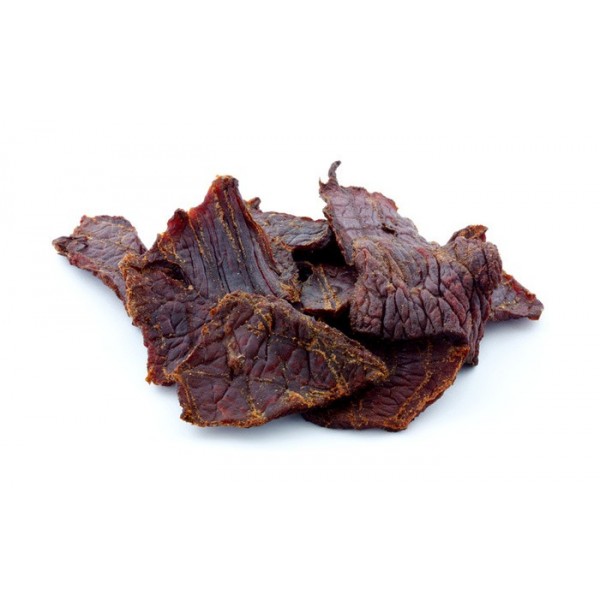
Dried meat is the ancestor of all pantry staples: long before refrigerators and canning jars, people preserved meat by drying it. Homemade jerky beats any gas-station bag by a mile – you control the meat quality, seasoning, and salt content. And it's easier than many people think, as long as you follow a few rules.
Choosing the Right Meat
The golden rule: as lean as possible. Fat doesn't become shelf-stable when dried – it goes rancid, and it determines how long the jerky will keep.
- Beef is the classic choice: top round, bottom round, or braising cuts are ideal
- Game (venison, deer) works beautifully – naturally lean and flavorful
- Poultry and pork should only be processed fully cooked through (see safety below) – for your first attempt, it's better to stick with beef
- Only use fresh meat of the best quality – ask your butcher for a lean cut "for jerky"
Slicing: Freeze the meat for 1–2 hours first, then it can be cut into even, 5 mm thin strips. Cutting across the grain = a more tender bite, cutting with the grain = the classic chewy texture.
Safety First
Meat is more delicate than fruit – these points are non-negotiable:
- Hygiene: clean boards and knives, keep the meat chilled throughout preparation
- The 70-degree step: before drying, briefly heat the marinated strips in the oven to an internal temperature above 70 °C (about 10 minutes at 120 °C fan/convection) – this kills off germs that pure low-temperature drying might not
- Dry all the way through (see the bend test) and, when in doubt, throw out any leftovers
The Marinade – Basic Recipe
For about 1 kg of meat strips, marinate in the fridge for at least 6 hours (overnight is even better):
- 100 ml soy sauce
- 2 tbsp Worcestershire sauce
- 1 tbsp honey
- 1 tsp salt, 1 tsp coarse pepper
- 1 tsp paprika (smoked), ½ tsp garlic powder
- For more heat: chili flakes
Afterward, pat the strips dry well with paper towels – the drier they go into the dehydrator, the better.
Drying
- Lay the strips on the racks without overlapping
- Dry at 60–70 °C: 4–6 hours in a dehydrator, 4–8 hours in the oven (door slightly ajar)
- Turn once partway through (oven method)
- Bend test: finished jerky bends, cracks with visible fibers showing, but doesn't snap completely apart, and is no longer moist and glassy inside
A Detour: Biltong
Jerky's South African cousin: thicker strips, cured in vinegar and a spiced salt rub (coriander is key!), then traditionally air-dried for days rather than warm-dried. A great project once you've got some experience – for beginners, the dehydrator is the safer route.
Storage
Because of its residual fat, dried meat keeps for a shorter time than dried fruit:
- Airtight and dark: stays good for 2–4 weeks
- Vacuum-sealed: several months
- If you notice a rancid smell or any mold: throw it away
Conclusion
Homemade jerky is the perfect project for anyone who wants more than sweets out of their dehydrator: protein-rich provisions for hunting trips, fishing, and hikes – one kilo of meat yields about 400 g of dried meat, and the quality is entirely in your hands.