Starting a Sourdough Starter from Scratch
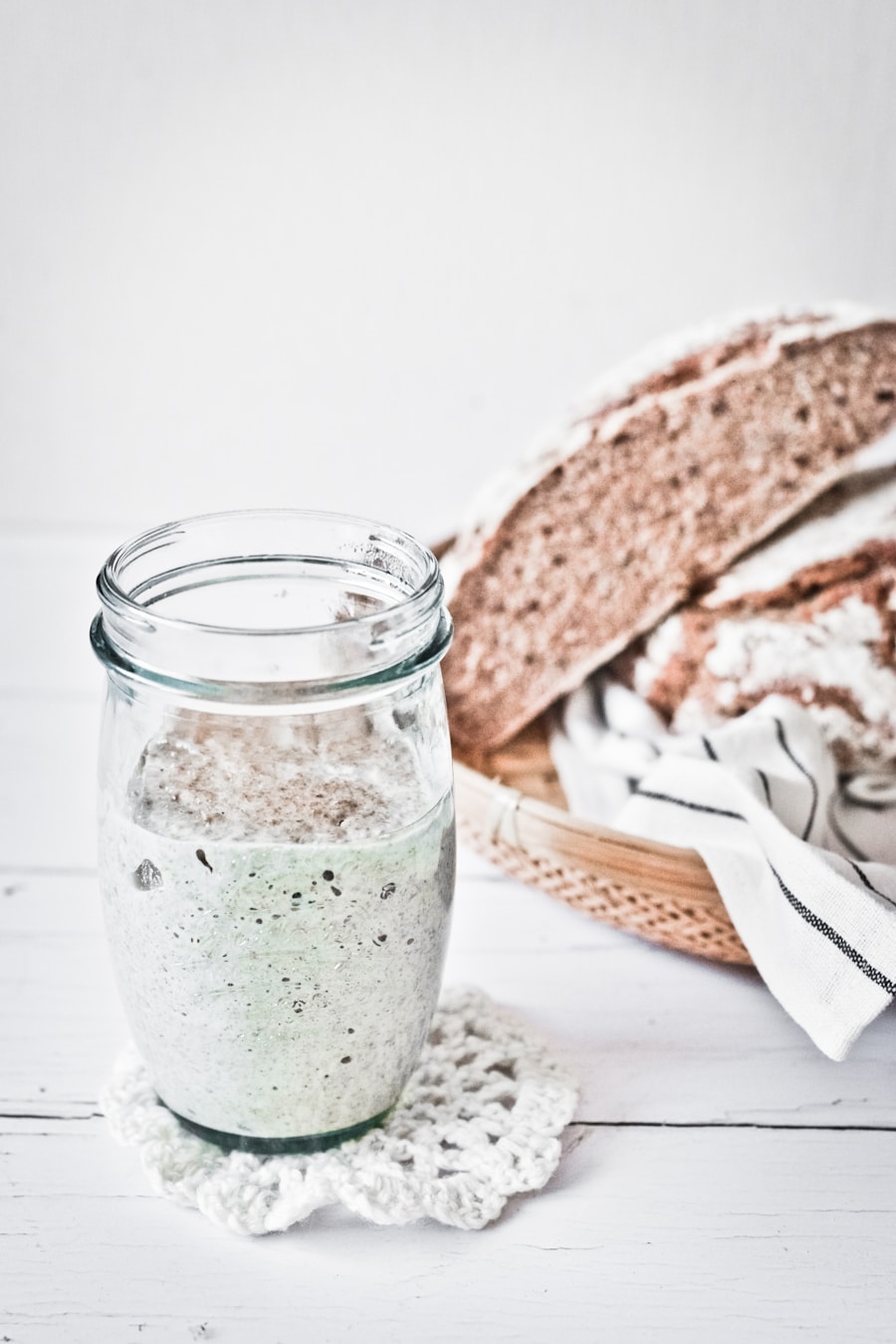
Starting a sourdough starter is easier than its reputation suggests. All you need: flour, water, time – and a bit of patience in the first few days, when not much seems to be happening.
What You Need
- Flour: rye flour type 1150 or whole grain rye (contains more wild yeasts than white flour)
- Water: lukewarm, about 25–28 °C – tap water is fine; if you suspect chlorine sensitivity, let it sit for a bit first
- Container: a 500 ml screw-top jar, clean but not sterile
Days 1–7
Day 1
Stir together 50 g rye flour + 50 g water. Cover loosely (not airtight), let sit at room temperature.
Day 2
Barely any activity visible yet – that's normal. Don't add anything, just observe.
Day 3
First bubbles, a slightly sour to cheesy smell. Now: stir in 50 g flour + 50 g water.
Days 4–5
Noticeable bubble formation, the starter rises and falls back. The smell becomes more pleasant, sour-fruity. Feed daily: keep 50 g of starter, bake with or discard the rest. + 50 g flour + 50 g water.
Day 6
The starter should double within 4–8 hours of feeding. That's a good sign.
Day 7 – Ready-to-Bake Test
Drop a teaspoonful of starter into a glass of water. Floats → ready to bake. Sinks → feed for 1–2 more days.
What Smell and Appearance Tell You
| Sign | Meaning |
|---|---|
| Sour-fruity smell | Good – lactic acid bacteria active |
| Sharp, cheesy smell | Normal in the first few days |
| Bubbles + volume increase | Yeasts are working |
| Dark liquid on top | "Hooch" – not a problem, stir in or pour off |
| Pink/orange coating | Discard immediately – mold |
Common Beginner Questions
Too warm or too cold? Below 20 °C everything runs very slowly, above 30 °C it gets too sour. Ideal: 24–26 °C.
How long does it keep? An active starter keeps well for about 2 weeks in the fridge without maintenance. After that, reactivate it briefly.