Storing Bread & Keeping It Fresh
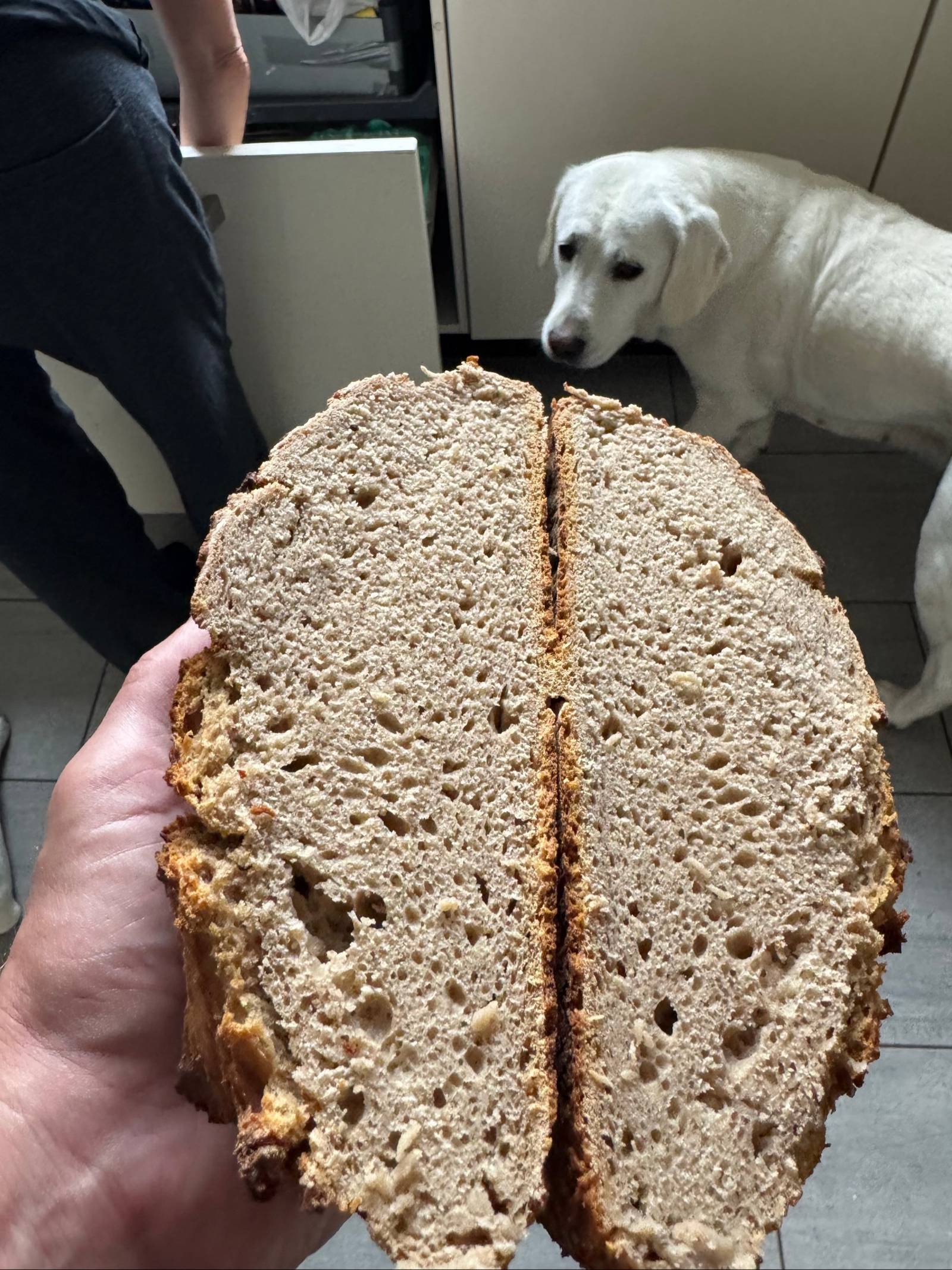
Bread box, linen cloth, or paper bag – what actually works. Homemade bread without additives goes stale faster than store-bought bread. But with the right storage, it stays fresh, crisp, and full of flavor for much longer.
Why Bread Goes Stale
Bread deteriorates for two reasons:
- Drying out (staleness): Moisture escapes from the crumb – the bread becomes dry and hard
- Starch retrogradation: Starch molecules rearrange and recrystallize – this makes the crumb firm and crumbly (even if it hasn't dried out)
Both processes happen fastest between 0–4 °C – in other words, in the fridge. Paradoxical but true: the fridge is the worst place for bread.
The Golden Rule: Never in the Fridge
The fridge speeds up starch retrogradation many times over. Bread stored in the fridge becomes as stale in 12–24 hours as it would otherwise in 3–4 days.
Exception: Bread with lots of moist fillings (cheese, ham, fresh herbs) or in very warm, humid climates where mold is a risk.
Method 1: Bread Box
The bread box is the classic, recommended method for bread that should stay fresh for 3–5 days.
How it works: The box maintains moderate humidity, prevents excessive drying out, and protects against light.
What it can't do: Completely airtight containers (e.g. plastic boxes) can build up condensation – which promotes mold.
Ideal bread boxes:
- Made of wood (naturally regulates moisture)
- Made of clay/ceramic (similar properties)
- With air vents, or not sealed hermetically
Tips:
- Place the bread cut-side down – the crust protects the crumb
- Wipe out the bread box weekly with vinegar water – inhibits mold
Method 2: Linen Cloth or Baker's Linen
Linen cloths are ideal for rustic loaves with a thick crust. The linen lets the crust "breathe" – it stays crisp while the crumb stays moist.
How to wrap: Wrap the bread loosely – not too tight, air needs to circulate.
When it's suitable:
- Loaves with a thick, crackly crust (Dutch oven breads)
- When you deliberately want to keep the crust crisp
- In a cool, dry environment (cellar, cool kitchen)
Shelf life: 2–4 days, depending on the type of bread and ambient temperature
Method 3: Paper Bag
Paper bags are a good short-term solution (1–2 days), especially for baguettes and other crusty breads with a thin crust.
Advantage: Paper lets some moisture escape – the crust stays crisp longer than in plastic Disadvantage: Bread dries out faster than in a bread box
Tip: Put the paper bag inside a plastic bag (crust stays crisper, crumb stays moister) – the combination beats either one alone.
Method 4: Plastic Bag / Plastic Wrap
For soft breads (sandwich bread, toast bread, milk bread), plastic is the right choice – these breads aren't meant to have a crackling crust and shouldn't dry out.
For sourdough breads with a crust: Only for the first few hours after cutting, to protect the cut surface. After that, leave it open again.
Method 5: Freezing
Freezing is the best long-term solution. Properly frozen, bread keeps almost all of its flavor.
How to freeze:
- Let the bread cool down completely (at least 2 h after baking)
- Slice it (so you can thaw it portion by portion)
- Put it in a freezer bag – with as little air as possible
- Keeps in the freezer for up to 3 months
Thawing:
- At room temperature (30–60 minutes for slices)
- In the oven at 180 °C for about 10 minutes – makes the crust crisp again
- Straight into the toaster (slices)
Don't let it sit half-thawed: Passing through the cold zone (0–4 °C) is unavoidable during thawing, but keep it short.
When to Rescue Bread, When to Toss It
Refreshing hard bread
- Warm it in the oven at 180 °C, lightly sprayed with water, for 10 minutes
- Starch retrogradation is partially reversible with heat!
Using up dry bread
- Bread dumplings (Semmelknödel): the classic leftover recipe
- Panzanella: Italian bread salad
- Bread soup / ribollita
- Croutons: cube it, toast in butter/oil
- Breadcrumbs: grate or blend, freeze
When to throw it away
With mold: throw away the whole loaf – don't just cut out the moldy spot. Mold spores are invisible and spread throughout the entire loaf.
Storage by Bread Type
| Bread type | Best method | Shelf life |
|---|---|---|
| Rye mixed bread | Bread box, once cut | 5–7 days |
| Wheat bread / baguette | Linen cloth / paper bag | 1–2 days |
| Toast / sandwich bread | Plastic bag | 3–5 days |
| Whole grain bread | Bread box | 4–6 days |
| Frozen (all types) | Freezer bag | up to 3 months |
Conclusion
Homemade bread without preservatives deserves good storage. With a simple bread box or a linen cloth, it stays fresh much longer than in the fridge. And whatever isn't quite fresh anymore can be rescued with heat – or turned into the base for a new dish. Goes well with:
Rye bread (in the Ernterei app)