No-Knead Bread
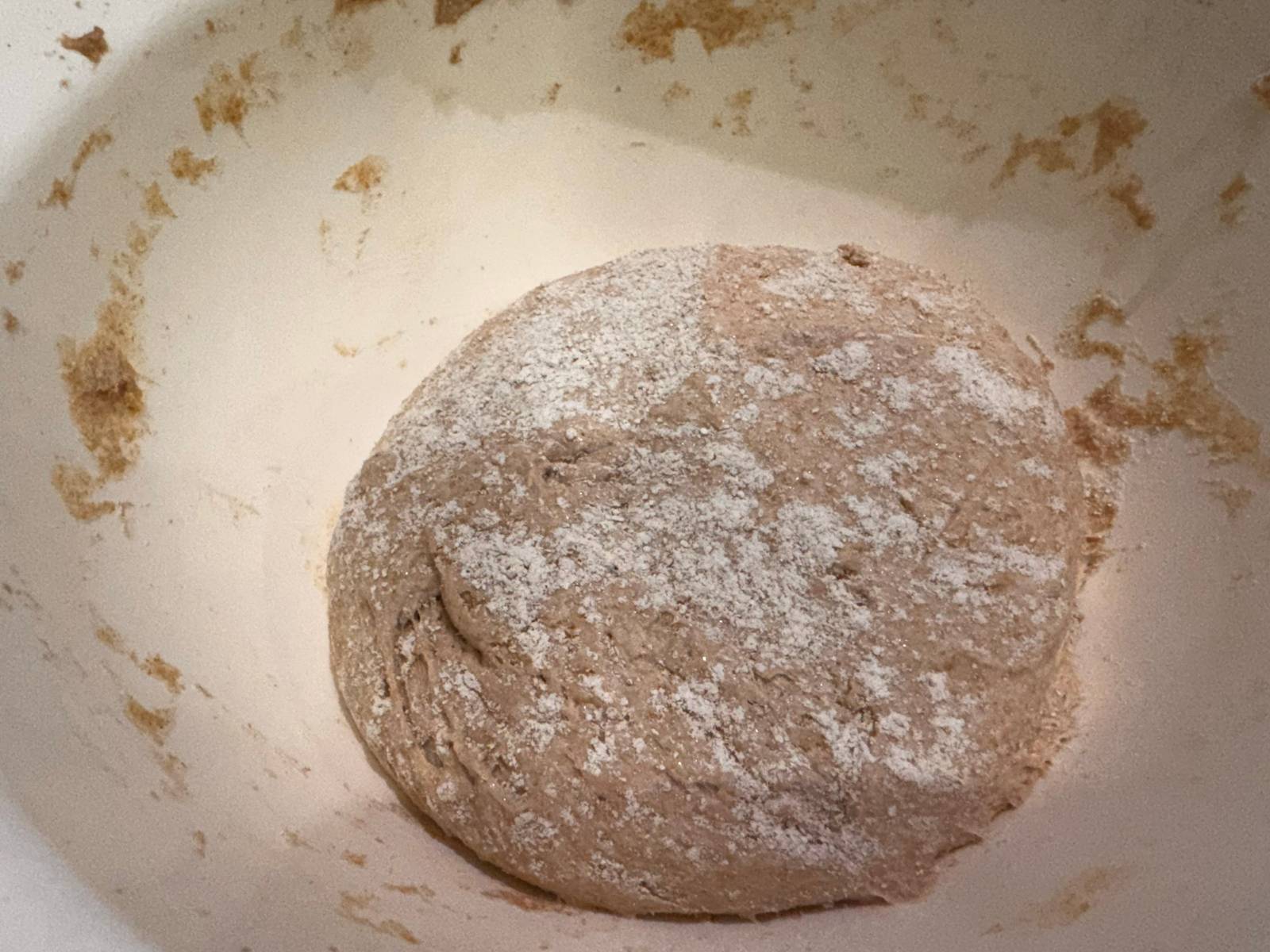
No-Knead Bread
The no-knead method revolutionized bread baking for home bakers: few ingredients, no kneading, no stand mixer – and yet a loaf with an open crumb and a shatteringly crisp crust. The key lies in the long, cold rest in the fridge, which develops gluten and builds flavor at the same time.
The Physics Behind It
Why does resting time replace kneading?
Kneading does two things: it develops the gluten network and distributes yeast/sourdough evenly through the dough. Time achieves both – just more slowly. During a long soak (autolyse), gluten molecules link up on their own, and during a slow proof (8–14 hours, 4–6 °C), the microorganisms work evenly through the entire dough.
Bonus: A long, cold proof develops significantly more flavor complexity than a quick, warm one.
The Classic No-Knead Bread (after Jim Lahey)
This recipe became famous through the New York Times in 2006 – and has since convinced millions of people to bake bread.
Ingredients (1 loaf, about 900 g)
- 430 g wheat flour, type 550
- 1 g dry yeast (just a small amount!)
- 10 g salt
- 345 g water (room temperature)
Method
The evening before:
- Mix flour, yeast, and salt dry
- Add the water and stir roughly with a spoon – 1–2 minutes, until no dry flour is visible
- Cover the bowl with plastic wrap or a plate
- Let it sit at room temperature for 12–18 hours
On baking day: 5. The dough has risen and is full of bubbles – sticky, that's correct 6. Flour the work surface well, tip the dough onto it (don't tear it) 7. Fold it in once from all four sides – like folding a letter 8. Let it rest, covered, for 30 minutes (bench rest) 9. Shape: shape the dough into a tight round, place it on a floured cloth or floured baker's linen 10. Final proof: 1–2 hours at room temperature or covered in the fridge for up to 18 hours
Baking: 11. Preheat a Dutch oven (pot with lid) for 30–45 minutes at 250 °C 12. Turn the dough piece into the hot pot, put the lid on 13. Bake covered for 30 minutes 14. Remove the lid, bake for another 15–20 minutes until deep brown
No-Knead with Sourdough
The same technique works with sourdough instead of yeast – with more flavor and better keeping quality.
Adjustments
- Leave out the yeast
- Use 80–100 g active wheat starter
- Slightly reduce the amount of water (sourdough adds moisture)
- Extend the proof to 12–16 hours at room temperature or 16–24 hours in the fridge
Sourdough No-Knead Recipe
- 400 g wheat flour, type 550
- 50 g whole wheat flour
- 90 g active wheat starter
- 9 g salt
- 320 g water
Mix everything, wait 1 hour, stretch and fold once, then 14–18 h in the fridge.
Variations and Additions
Rye blend (more rustic)
- 300 g wheat flour type 550 + 130 g rye flour type 1150
- Slightly less water (rye absorbs more)
- Longer proof (16–20 h)
Seeds and grains
Sunflower seeds, sesame, flaxseed, pumpkin seeds – mix into the base recipe (up to 20% of the flour weight). Or: roll the shaped dough piece in seeds.
Cheese and herb variation
- Work 100 g grated parmesan or gruyère into the dough
- Chopped rosemary or thyme
- Sprinkle a bit more cheese on top of the shaped dough piece
The Role of the Dutch Oven
The closed pot is essential for no-knead breads. It:
- Traps steam: the dough's own moisture stays in the pot → the crust can expand before it tears
- Provides even heat: cast iron stores heat and releases it evenly
- Gives oven spring: high initial temperature makes the dough jump
No Dutch oven? Alternative: baking stone + steam (a cup of boiling water on the oven floor when you load the bread, remove after 10 min).
No-Knead Whole Wheat Bread
Whole wheat flour makes no-knead breads denser, more flavorful, and more filling.
- 300 g whole wheat flour + 130 g wheat flour type 550
- A bit more water (whole wheat absorbs more): 370 g
- Proof 14–18 h
- Bake as in the base recipe
Tip: Wheat bran weighs down the gluten network. A 50/50 mix of whole wheat and white flour is a good compromise for light, airy whole wheat breads.
Common Problems
Dough is extremely sticky, won't shape → Normal for no-knead! Wet hands, plenty of flour on the work surface, and working quickly help. Use a dough scraper.
Bread spreads flat instead of rising → Dough was over-proofed or had too little tension when shaped → use a cold proof in the fridge, shape it tighter
Crust doesn't get properly crisp → Dutch oven wasn't preheated long enough → allow at least 45 minutes
Conclusion
No-knead is the most democratic of all bread-baking methods: no stand mixer, no elbow grease, no deep knowledge required – just patience. The result can surprise even experienced bakers. Once you've baked a no-knead loaf, you'll wonder why you ever baked any other way.