Spelt & Wheat Sourdough Bread
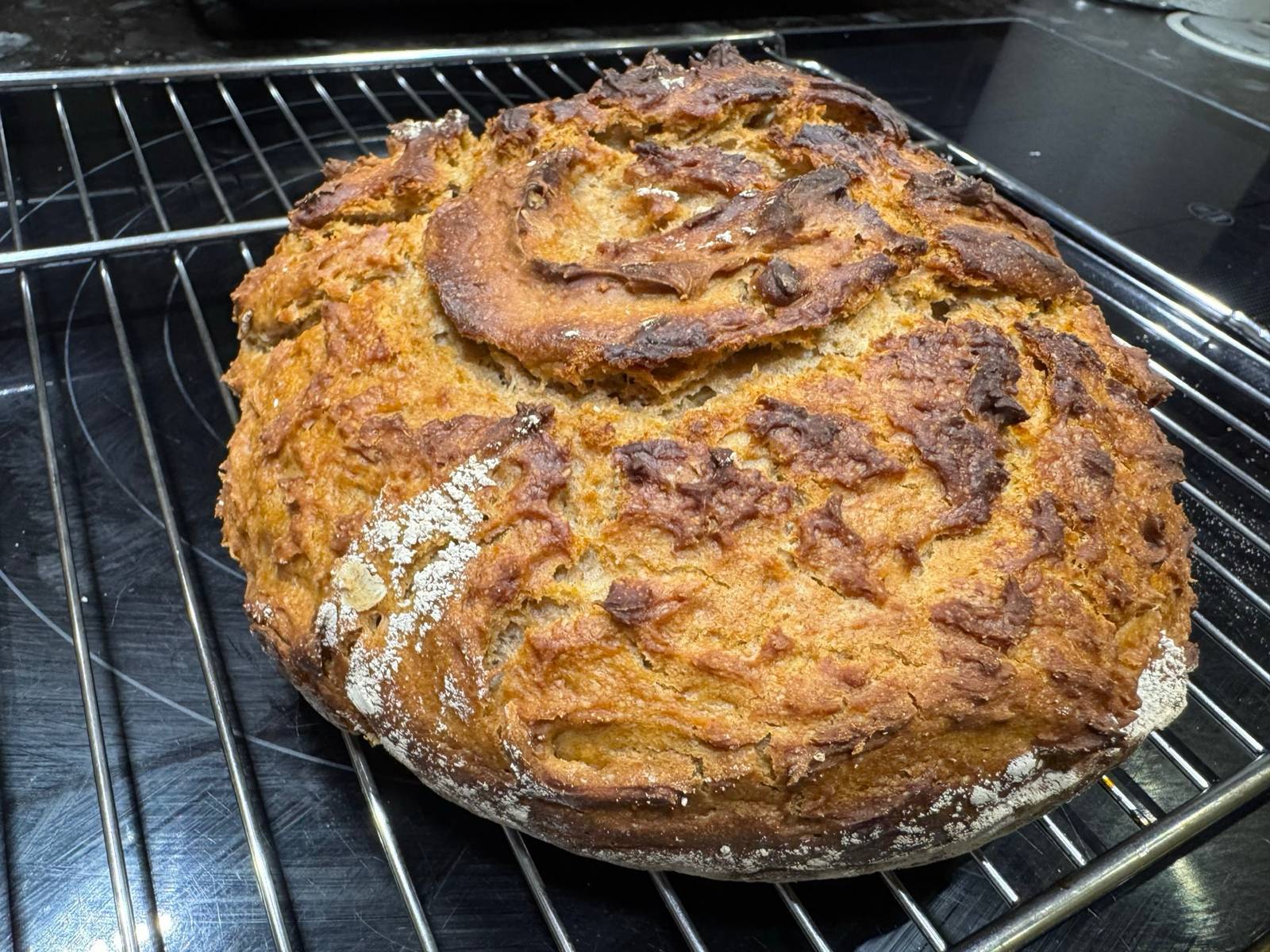
Spelt and Wheat with Sourdough
Anyone comfortable with rye sourdough eventually wants to try spelt and wheat loaves. They're airier, have a more open crumb, and a thinner, shatteringly crisp crust. But they're more demanding: wheat sourdough needs to be more active, the dough needs more attention – and timing is critical.
The Difference from Rye
Wheat flour and spelt flour form a gluten network – which makes them completely different from rye:
- Rye: barely any gluten, the dough is sticky and holds its shape thanks to mucilage (pentosans)
- Wheat/spelt: lots of gluten, the dough can be folded, stretched, and shaped
- Wheat sourdough is less sour than rye sourdough – milder in flavor
What this means in practice: wheat and spelt doughs want to be folded, not kneaded. And over-proofing comes faster and is more damaging than with rye.
Building a Wheat Starter
If you've only worked with rye starter so far, you can convert your starter to wheat – or maintain a wheat starter alongside it.
Converting:
- 1 tbsp rye starter + 50 g wheat flour type 550 + 50 g water
- Feed fresh daily, for 2–3 days
- From day 3–4 onward, wheat microbiology dominates
Wheat levain (preferment): Many bakers use a special "levain" – a well-active wheat preferment used shortly before its peak. Produces a milder, more complex flavor.
Basic Recipe for Wheat Sourdough Bread (1000 g dough)
Levain (8–12 h before baking)
- 10 g wheat starter
- 50 g wheat flour type 550
- 50 g water (28 °C)
Mix, let ripen for 8–12 h at 22–26 °C – it must be active and risen.
Autolyse (30 min before mixing)
- 350 g wheat flour type 550 or 812
- 50 g whole wheat flour
- 280 g water (30 °C)
Mix flour and water roughly, let rest for 30–60 minutes. Autolyse develops gluten without any mechanical energy.
Main Dough
- Add the levain to the autolyse mixture, knead briefly
- Add 9 g salt + 10 g water, work it in
- Folds instead of kneading (see below)
Folding Instead of Kneading: The Technique
Wheat dough doesn't need intensive kneading – it's strengthened through regular stretching and folding.
Coil fold (the simplest method)
- Grip the dough from underneath with wet hands and lift it up
- Fold it forward, turn the bowl
- Work all 4 sides = 1 round
- 4 rounds in the first 2 hours, every 30 minutes
Lamination (for open crumb)
- Stretch the dough out on a dampened work surface (very thin)
- Fold it up like a letter
- Do this once during bulk fermentation
After folding: the dough noticeably tightens and becomes less sticky. That's the gluten network.
Spelt: Special Considerations
Spelt is delicate and popular – but its gluten is weaker and tears more easily than wheat's.
Important rules for spelt:
- Don't overknead: the gluten network tears under too much mechanical handling
- Use less water than with wheat (spelt dough tolerates about 5–10% less hydration)
- Shorter bulk fermentation – spelt over-proofs faster
- Cold proofing recommended for more control
Good spelt flours:
- Spelt flour 630 – light loaf, mild
- Spelt flour 1050 – more flavor, a bit more rustic
- Whole spelt flour – maximum flavor, denser crumb
Crumb Structure: Why Some Loaves Are Airier
An open crumb (large, irregular holes) is the goal for most home bakers. It comes from:
- An active sourdough – not overripe, but well active
- High hydration (75–80% for wheat)
- Careful folding – a good gluten network
- Good shaping – tension in the dough piece
- Baking in a Dutch oven – traps moisture for better oven spring
Final Proof and Baking
Cold proofing (recommended)
- Put the shaped dough piece into the floured proofing basket
- Cover and refrigerate for 10–16 hours
- Go straight from the fridge into the hot Dutch oven
Baking in the Dutch Oven
- Preheat to 250 °C, at least 45 minutes
- Score the dough piece (important for wheat/spelt – see the article "Shaping & Scoring Bread")
- 20 min with the lid on → 20–25 min without the lid at 220 °C
Typical Mistakes with Wheat/Spelt
Dough spreads flat → Too little tension when shaping, or over-fermentation → proof for a shorter time, shape it tighter
Crust is pale and soft → Baking temperature too low, or opened too early → keep the Dutch oven closed longer
Dense, gummy crumb → Sourdough not active enough, or taken out of the oven too early → check the internal temperature (must reach 96–98 °C)
Conclusion
Wheat and spelt sourdough loaves take a bit more attention than rye breads – but they reward you with a spectacular crust, open crumb, and a mild, layered flavor. Once you understand the technique, you'll want to bake them again and again.