Shaping & Scoring Bread
Shaping & Scoring Bread
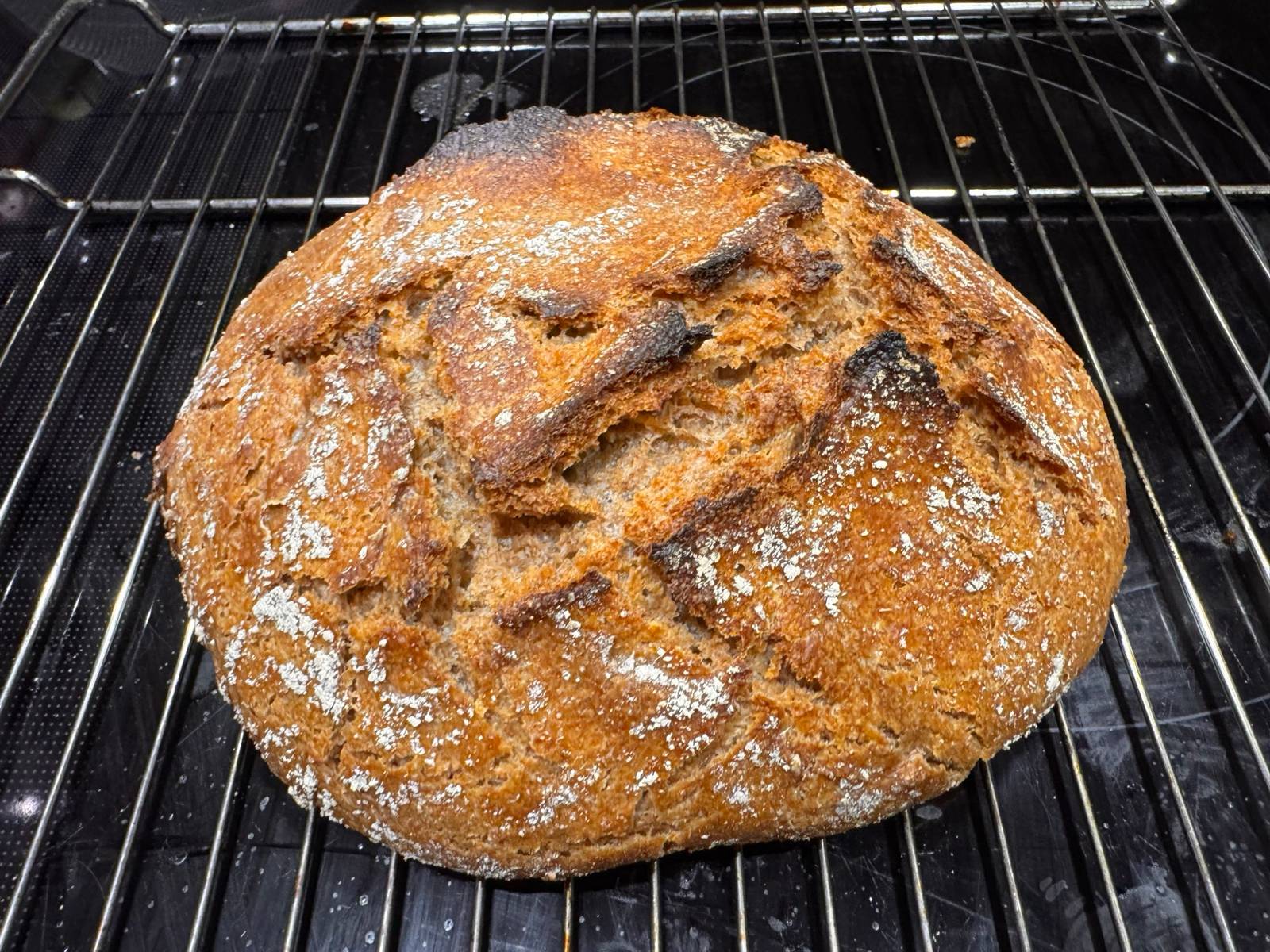
Building tension, shaping round or oblong, using the proofing basket correctly – this phase decides whether the bread grows upward or spreads sideways. And scoring is more than decoration: it controls where the bread opens up and how the oven spring unfolds.
Why Shaping Matters So Much
Shaping has two goals:
- Even structure: The dough is distributed evenly, and air bubbles from bulk fermentation are trapped uniformly
- Surface tension: A taut, tight dough skin makes sure the bread rises upward in the oven – not sideways
A poorly shaped loaf often has irregular crumb structure, spreads flat, and opens up in unwanted places.
Preparation: The Work Surface
Dry or damp? Wheat and spelt doughs: dry work surface with a light dusting of flour (or none at all) – some grip helps you build tension Rye doughs: wet hands and a wet surface – rye dough sticks too much to shape on a dry surface
A dough scraper is the most important tool – it helps you drag the dough piece along the work surface and build tension.
Preshaping
Before the final shaping comes preshaping. It gives the dough an initial basic structure and is followed by a rest (20–30 minutes) so the gluten can relax.
Round preshape (boule)
- Tip the dough out of the bowl onto the lightly floured or dry work surface
- Fold from all sides toward the middle – like folding a letter
- Flip it over so the seam is on the bottom
- Run both hands under the dough piece and drag it across the work surface toward you – this builds tension
- Let it rest, covered, for 20–30 minutes
Final Shaping: Round (Boule)
- Flip the preshaped dough piece over (seam up)
- Fold the top edge to the middle, then the left, right, and bottom sides
- Flip it over, seam down
- Use the dough scraper and your hands to shape it into a tight round – the dough piece needs noticeable tension
- Place it into the proofing basket right away (seam facing up)
Tip: The dough piece shouldn't smooth out immediately. If it stays soft and slack: either over-fermentation or too little gluten development.
Final Shaping: Oblong (Bâtard / Batard)
Oblong loaves have a higher crust-to-crumb ratio and a beautiful, elongated scoring pattern.
- Flip the preshaped dough piece over
- Fold the top third to the middle, press down lightly
- Fold the side edges to the middle
- Roll up the rest of the dough tightly – seal the seam with the heel of your hand
- Place seam-up into an oblong proofing basket
Using the Proofing Basket Correctly
Proofing baskets (bannetons) hold the shape during the final proof. Without one, the dough piece spreads flat.
Flouring
Flour a new proofing basket before first use and let it dry. Every time you bake: dust generously with a 50/50 mix of rice flour and wheat flour (rice flour doesn't stick to the bread).
Bowl and kitchen towel as an alternative
No proofing basket? Line a bowl with a floured kitchen towel – works well for cold proofing.
Turning out
To turn the dough out of the basket: place a cutting board or parchment paper on top of the basket, flip both together – the dough piece falls out. Transfer it straight into the Dutch oven or onto the baking stone.
Scoring: The Art of the Ear
While baking, the dough expands suddenly (oven spring). Without a score, it tears open uncontrolled at its weakest point. With the right cut, you decide where and how the bread opens up.
Tools
- Bread lame: curved blade for sweeping cuts, gives the score the optimal angle
- Razor blade holder (an affordable alternative)
- A sharp kitchen knife works too – but is less precise
Basic cut: a single straight score (batard)
- Hold the blade at a 30–45° angle to the surface (not vertical!)
- Cut quickly and confidently in one motion
- Depth: about 1–1.5 cm
Double score (classic bâtard)
Two parallel, slightly offset cuts along the long axis – gives a striking, double ear.
Cross score (boule)
On round loaves: cut a simple cross or a square.
No scoring for rye breads
Rye doughs have too little gluten structure for a controlled ear – they naturally tear open at undefined spots. That's intentional.
Common Mistakes
Knife drags the dough instead of cutting → Blade isn't sharp enough, or the dough is too soft (over-fermentation) → Moisten the blade with water
Bread doesn't open at the score → Cut too shallow or too steep (not at 45°) → Sourdough wasn't active enough (no oven spring)
Dough piece sticks in the basket → Too little flour, or basket too damp → Use rice flour, keep the basket drier
Conclusion
Shaping and scoring are the craft skills of bread baking. You can't learn them from a book – only through repetition. After five or six loaves, your hands develop a feel for the tension a dough piece needs. And the score becomes more and more confident.