Spring Inspection: Taking the First Look Inside the Hive
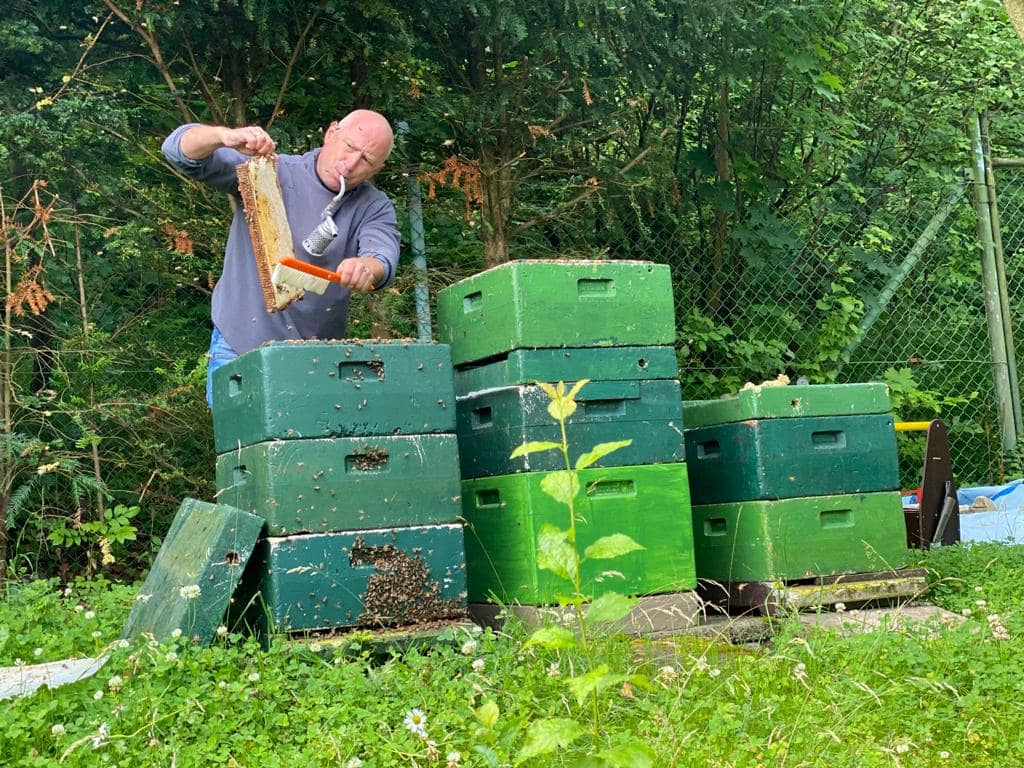
The spring inspection is the first thorough check after winter. It tells you how your colonies are doing and lays the foundation for a successful season.
When is the right time?
Only once temperatures are consistently above 12–14 °C and the bees are flying calmly. In Central Europe: March to early April, depending on the weather.
Never open the hive in cold, wind or rain – the brood cools down immediately.
What gets checked?
Colony strength
- How many comb spaces are covered with bees?
- At least 4–5 well-covered spaces for a colony capable of developing
Queen and brood
- Can you see eggs and young larvae? (Use a magnifying glass)
- Is the brood nest even and solid?
- Patchy, irregular brood is a sign of disease or a poor queen
Food stores
- Is there still at least 3–4 kg of food left?
- If food is short, top up right away with fondant (Apifonda)
Combs and hive
- Remove damaged or blackened old combs
- Clean the floor insert, check the mesh floor
- Read the varroa infestation level from the natural mite drop
Steps after the inspection
- Unite weak colonies or build them up with fondant
- Add the first extra space once all the combs are covered
- Plan the varroa treatment (formic acid after the harvest)
- Prepare for swarm control starting in May