Your First Honey Harvest: Step by Step
Your first honey harvest: step by step
Your first own honey harvest is a special moment. If you go into it well prepared, you will harvest calmly – without getting stung and without wasting honey.
When is honey ready to harvest?
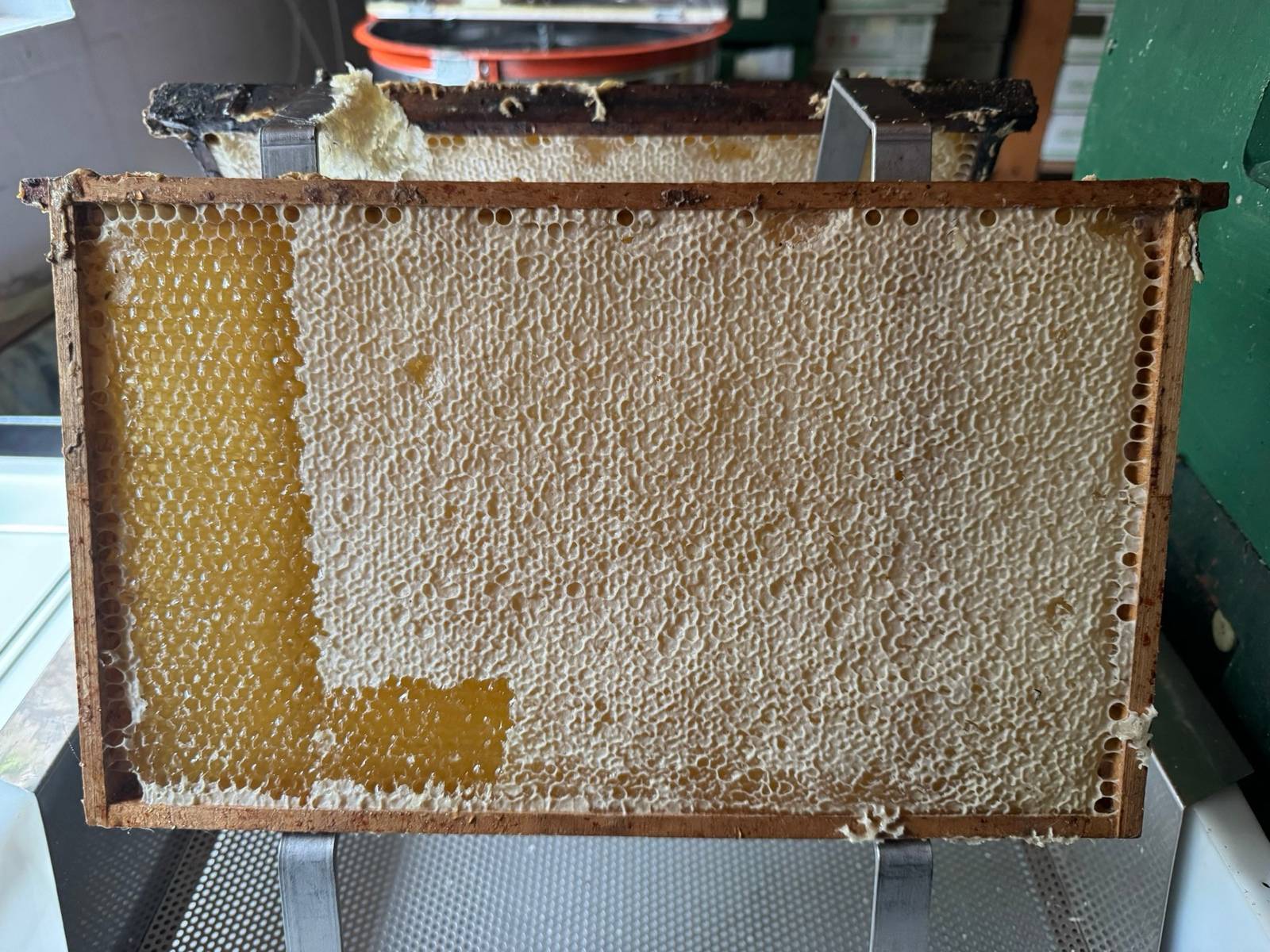
The water content decides. Honey with more than 20% water content ferments and spoils. Ripe honey is capped – the cells are sealed with a layer of wax.
Rule of thumb: harvest once at least ¾ of a comb is capped.
Refractometer: if you want to be sure, measure the water content. Under 18% is ideal, up to 20% is still fine.
Equipment
- Beekeeping suit and gloves
- Bee brush or bee escape (an escape board that lets the bees pass in one direction only)
- Uncapping fork and uncapping tray
- Honey extractor (your own, borrowed, or from the club)
- Sieve (double, 0.5 mm), bottling tap, food-grade honey bucket
Step 1: Clear the bees from the honey supers
The day before the harvest, fit a bee escape between the brood chamber and the honey super. The bees move downward and can not get back up. By the next day, the honey super is nearly bee-free.
Alternative: remove combs one at a time and brush the bees off with a bee brush.
Step 2: Uncapping the combs
In a clean, warm room (20–25 °C makes the honey more fluid):
- Hold the comb upright over the uncapping tray
- Scrape off the wax with an uncapping fork or an electric knife
- Uncap both sides
The cappings wax still contains plenty of honey – do not throw it away. Give it back to the bees to lick clean, or rinse it out.
Step 3: Extracting and bottling
Hang the uncapped combs evenly in the extractor. Start slowly, then speed up, turn the combs over, and spin again.
The honey runs through a double sieve into the settling tank. Let it settle for 24–48 hours – air bubbles and foam rise to the top. Then bottle it and label the jars (harvest date, variety).
Storage
Honey keeps almost indefinitely when stored somewhere dry, cool and protected from light. Crystallization is normal and not a sign of poor quality – rapeseed honey crystallizes within a few weeks, while acacia honey stays liquid for months.