Look-Alike Dangers & Poisonous Mushrooms: What You Need to Know
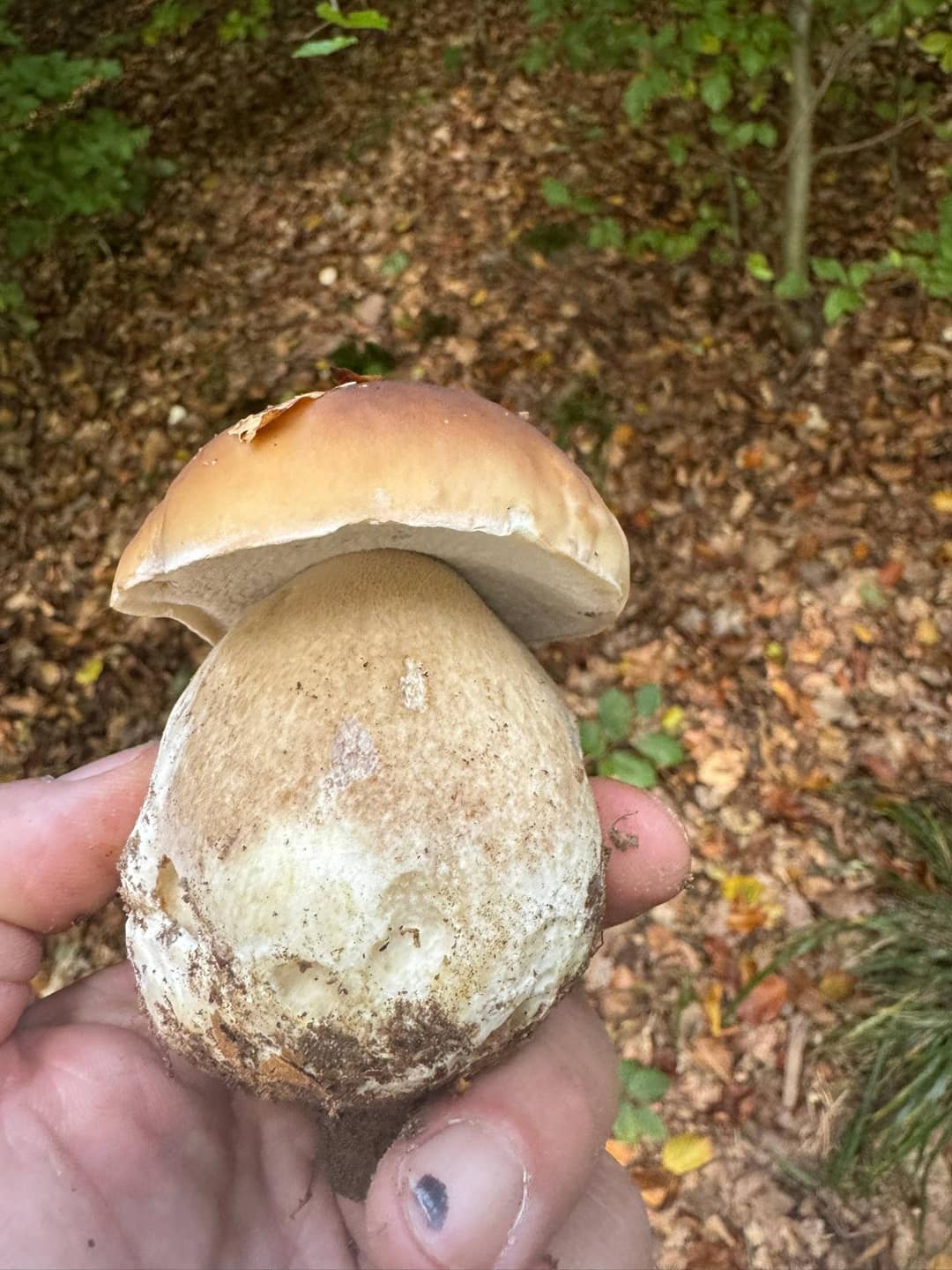
Knowing Poisonous Mushrooms – Protecting Life
The Three Most Dangerous Mushrooms
Death Cap – responsible for 90% of all fatal mushroom poisonings. Greenish cap, white gills, a ring on the stem and a bulbous base that sits in a membranous sac. Confused with: field mushrooms. Mature field mushrooms have pink-brown gills, but young ones are still pale, so gill color alone is not enough. Field mushrooms also have no membranous sac at the base. So dig the mushroom up whole and check all the features together; if one of them doesn't fit, leave it standing.
Spring False Morel – brain-like wrinkled, reddish-brown cap. Confused with: morels. Morels have honeycomb-like pits and are completely hollow when cut lengthways – cap and stem form one continuous cavity. False morels are irregularly wrinkled and chambered inside. Here too: check the cap shape and the cut surface together, never just a single feature.
Panther Cap – brown cap with white flecks, white gills, ring and bulbous base. Confused with: the Blusher (edible). The blusher stains reddish where slugs have nibbled it and inside the stem, its ring is grooved lengthways, and its bulb has no sharply defined rim. The panther cap never reddens, its ring is smooth, and its bulb carries a distinct rolled rim, like a sock rolled down. Check the features together; if one of them doesn't fit, the mushroom stays where it is.
Key Identification Features
- Bulbous base on the stem = always suspicious
- White gills on a brown cap = be careful
- Sweetish smell despite an unremarkable appearance = be careful
First Aid
- Call emergency services (112) immediately
- Keep mushroom remains as evidence (photo or sample)
- Do NOT induce vomiting
Poison control hotline: 030 19240 (Berlin) – look up the number for your specific German state!