Morels & Rare Edible Mushrooms: Delicacies Right Outside Your Door
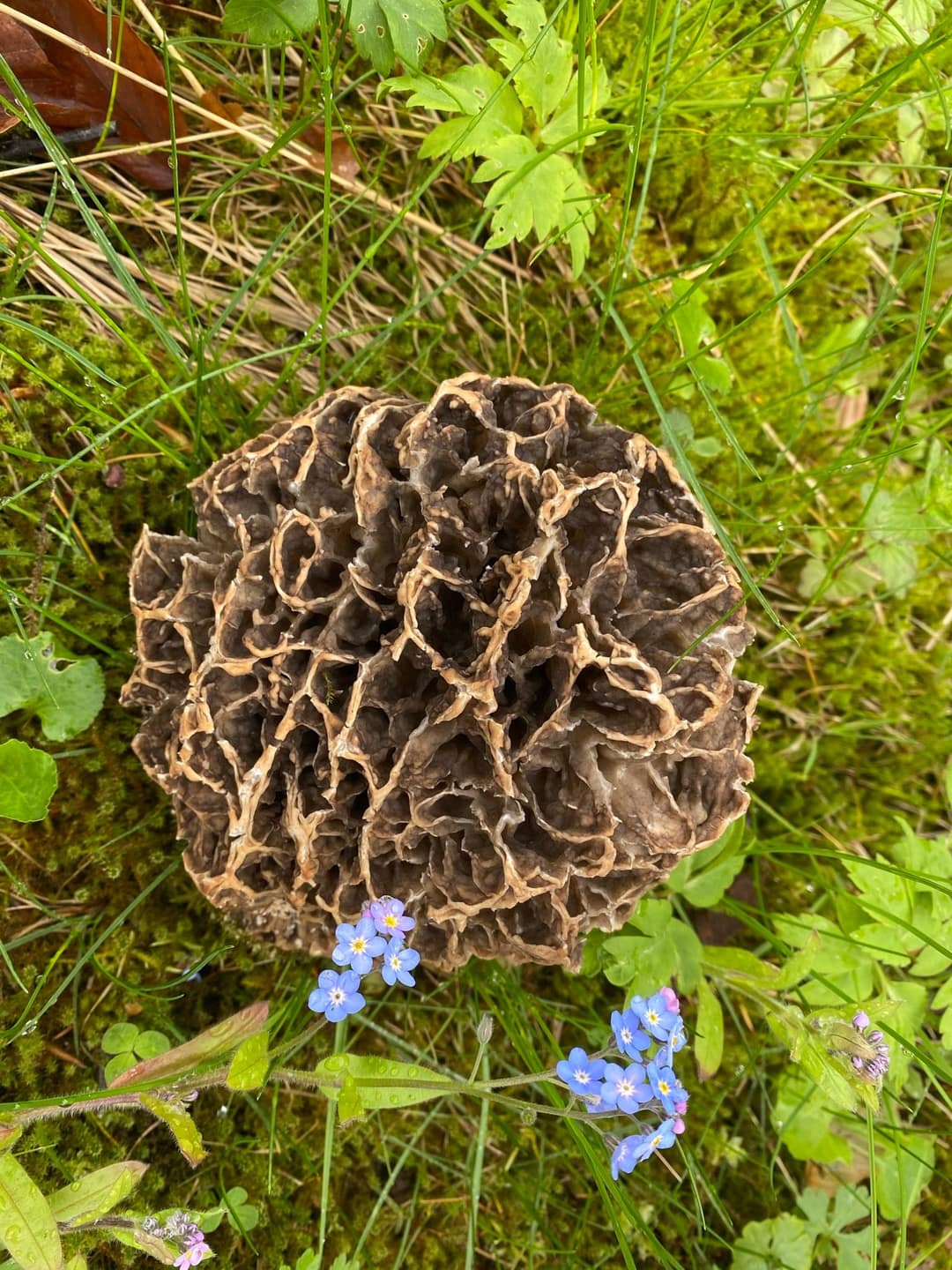
Morels – the Gold Among Edible Mushrooms
Morels are the most sought-after spring mushrooms in Europe. In restaurants they cost a fortune – but if you know a good spot, you can harvest them for free.
Species & Identification
Common Morel (Morchella esculenta):
- Appears March–May, depending on location and weather
- Honeycomb-like, irregularly lobed cap
- Color: ochre-yellow to light brown
- Cap and stem are hollow (a cross-section shows this immediately)
Black Morel (Morchella conica):
- Pointed, cone-shaped cap with elongated chambers
- Appears earlier than the common morel (March)
- More common in gardens and parks
Important: Risk of Confusion False morels look similar to morels but are poisonous! The difference: false morels have an irregular, brain-like cap that is not honeycombed. A lengthwise cut does not reliably tell them apart: according to the Bonn Poison Centre, the stem of the spring false morel is hollow too. The spring false morel is deadly poisonous (toxin: gyromitrin). Never rely on a single feature; check several together, and if in doubt have your find checked by a mushroom expert or leave it where it is.
Typical Locations
Morels prefer to grow:
- In gardens after new planting (bark mulch, freshly laid beds!)
- Under apple trees, ash, elm, aspen
- On forest edges with limestone subsoil
- On burned or disturbed ground
- Near compost heaps
Harvesting & Preparation
Harvesting: Cut morels at the base with a knife, don't pull them out. In Germany, morels are specially protected under the Federal Species Protection Ordinance, but may be gathered in small quantities for personal use (Section 2 BArtSchV).
Cleaning: Morels are often sandy – rinse thoroughly in lukewarm water, then cut lengthwise (check inside for slugs).
Never eat them raw! According to Tox Info Suisse, raw or undercooked morels can cause severe symptoms, in rare cases life-threatening ones. Always boil them for at least 20 minutes – fresh, dried (after soaking) and thawed morels alike (Tox Info Suisse, 21 Apr 2026). Pour away the cooking water (Bonn Poison Centre). For freshly prepared morels, Tox Info Suisse advises portions of no more than 100 grams. Even properly cooked, larger amounts can trigger temporary neurological symptoms – dizziness, tremor, unsteady walking (morel syndrome).
Preparation
Classic in Butter:
- Halve the morels, rinse briefly, drain well
- First boil for at least 20 min., pour away the cooking water, drain well
- Then fry in plenty of butter over medium heat
- Finish with salt, pepper, chives and a splash of cream
- Serve with pasta, risotto or fried eggs
Morel Sauce for Game or Steak:
- Deglaze fried morels with red wine, add game stock, reduce
- Swirl in cold butter for shine and body
Drying for Storage
Morels dry excellently:
- In a dehydrator at 50 °C for approx. 6–8 hours
- Strung on thread in a warm, airy spot
- Soak dried morels in lukewarm water for 20–30 min. before use
- Pour away the soaking water and then boil the morels for at least 20 minutes (Tox Info Suisse)
Sources
- Tox Info Suisse: Vorsicht beim Genuss von Morcheln!, as of press release of 21 Apr 2026, accessed 5 Oct 2026
- Poison Information Centre NRW / Bonn: Speisemorchel, accessed 5 Oct 2026
- Poison Information Centre NRW / Bonn: Frühlingslorchel (Gyromitra esculenta), accessed 5 Oct 2026
- Federal Species Protection Ordinance (BArtSchV): § 2, accessed 5 Oct 2026
The sources support individual statements in this article. The organisations named have neither reviewed nor endorsed it.