Foraging Mushrooms: What Is Allowed in Germany
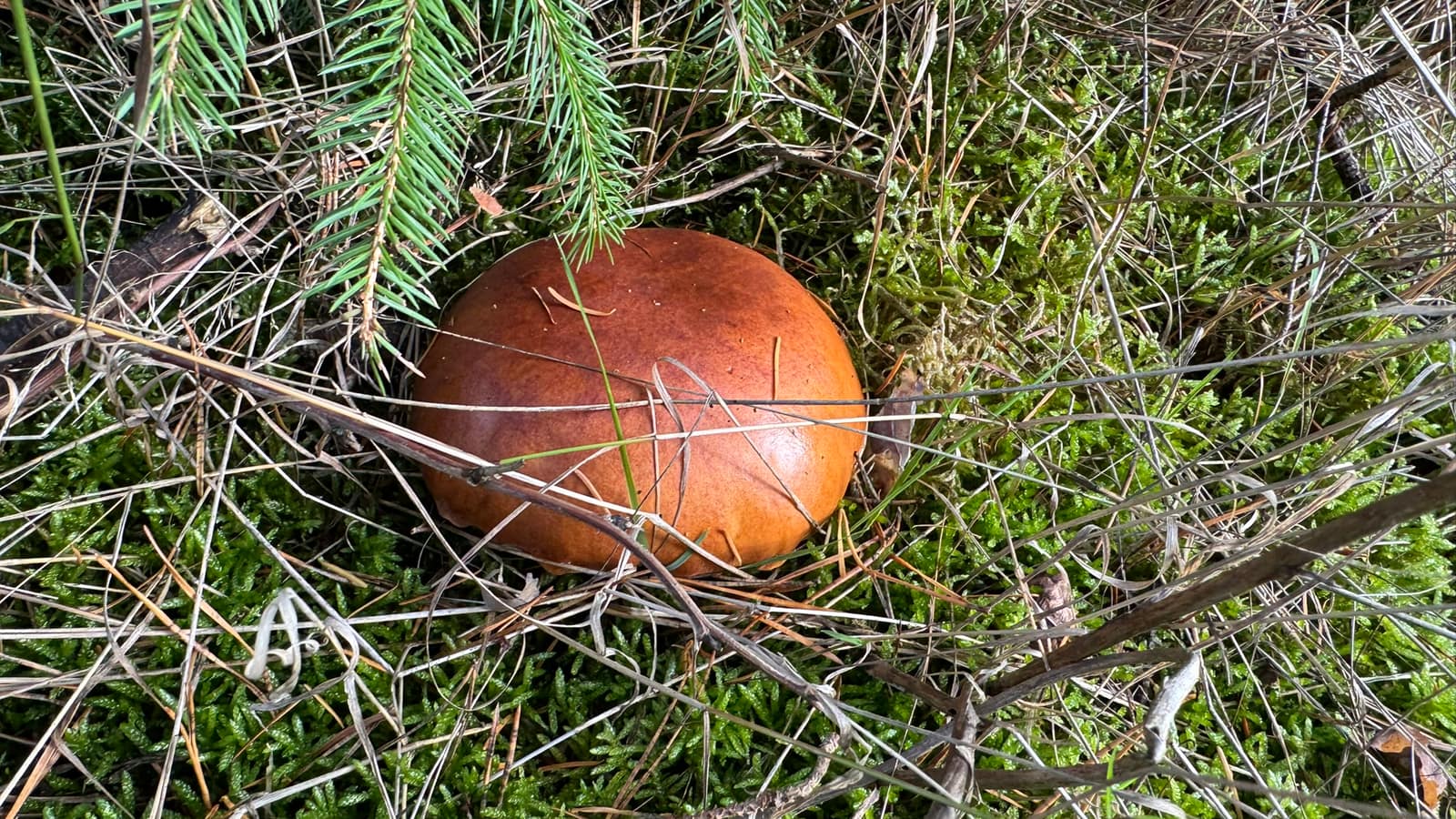
Few subjects in the woods attract as many half-truths as foraging law. One kilo per person, people say. Or two. Or that porcini are banned outright. The truth is messier, but easy to remember once you take it in the right order.
And that order is: first the place, then the species, then the quantity. Work through it that way and most problems are settled before the first mushroom goes into the basket.
One note up front: this is about law only. Nothing in this article says anything about whether a mushroom is edible.
What does the law allow in principle?
The Federal Nature Conservation Act (Bundesnaturschutzgesetz) permits anyone to take wild mushrooms carefully and to keep them – in small quantities and for personal use (Section 39(3) BNatSchG). This is known as the Handstraußregel, the "handful rule".
Alongside it stands the Federal Species Protection Ordinance (Bundesartenschutzverordnung), which places certain species under special protection. Both sets of rules apply at the same time, and most of the confusion comes from exactly that overlap.
Where may you forage – and where not?
Nature reserves and national parks are off limits. Individual protected areas have their own ordinances, which can go further still.
In private forest the owner decides. If a sign prohibits foraging, that applies. The key sentence: a right of access is not a right of appropriation. You may enter the forest for recreation, but that gives you no claim to what grows there.
Fenced areas and places with active logging are off limits too – the latter for reasons that have nothing to do with nature conservation.
This check takes two minutes and settles more potential legal trouble than any set of scales.
Which mushrooms are protected?
This is the point most foragers do not know.
A number of well-known edible species are listed in Annex 1 of the Federal Species Protection Ordinance as specially protected. For some of them, however, Section 2 of the ordinance contains an explicit exemption: they may be gathered in small quantities for personal use.
Covered by the exemption: porcini, chanterelle, birch bolete, red-capped scaber stalk, pig's ear, weeping milk cap and morels.
Not covered, and therefore not to be taken at all: native truffle species, Caesar's mushroom, waxcaps and several protected boletes, among them the bronze bolete.
From this follows the rule that actually matters: specially protected does not automatically mean an exemption comes with it. Anyone who only knows that porcini are permitted despite their protected status will quickly assume the same for species where it does not apply.
The exemption is also tied firmly to personal use. It creates no right to commercial foraging.
How much may you pick?
The honest answer: no nationwide limit in kilograms appears in any law.
Federal law speaks of small quantities for personal use, without naming a figure. What that means in practice is interpreted by the lower nature conservation authorities – the district or regional administration. In practice their figures range from around 500 grams to two kilograms per person per day.
The much-quoted one-kilo rule is therefore administrative practice, not a legal norm. As a cautious guideline it works; as an argument with a forest warden it does not.
If you want certainty, ask the responsible nature conservation authority. If you would rather save yourself the call, stick to the original idea behind the handful rule: as much as makes one or two meals.
What does a violation cost?
Excessive quantities can draw fines in the four-figure range, depending on the federal state. For species with no foraging exemption it gets considerably more expensive.
Anyone wanting to sell, or to forage on a larger scale, needs a permit from the lower nature conservation authority. That applies even when no money changes hands: larger quantities intended as gifts no longer count as personal use.
And what applies in Austria and Switzerland?
Both countries regulate foraging quite differently from Germany – this article covers Germany.
In Austria, mushrooms belong to the landowner; foraging can be prohibited outright, and individual federal states set their own quantity limits and seasons. In Switzerland the matter is governed at cantonal level, in places with fixed closed seasons and quantity limits that differ from canton to canton.
If you forage there, check with the responsible local authority beforehand. The German rules do not carry over.
Foraging ethics: beyond the law
What is legally permitted is not always sensible. A few habits that have taken hold, and for good reason:
Take only what you will actually use. Leave old and past-their-prime fruiting bodies standing; they provide for the next generation. Do not clear a spot completely. And treat the ground gently – the mycelium beneath the leaf litter is the actual organism, the fruiting body only its visible part.
None of this appears in any law. But it decides whether the spot still yields anything in five years.
This article reflects German federal law and is no substitute for legal advice. State law and individual protected-area ordinances may differ – when in doubt, ask your lower nature conservation authority.
The provisions in full (in German): Section 39, Federal Nature Conservation Act · Section 2, Federal Species Protection Ordinance