Ribwort Plantain – The Cough Herb from the Roadside
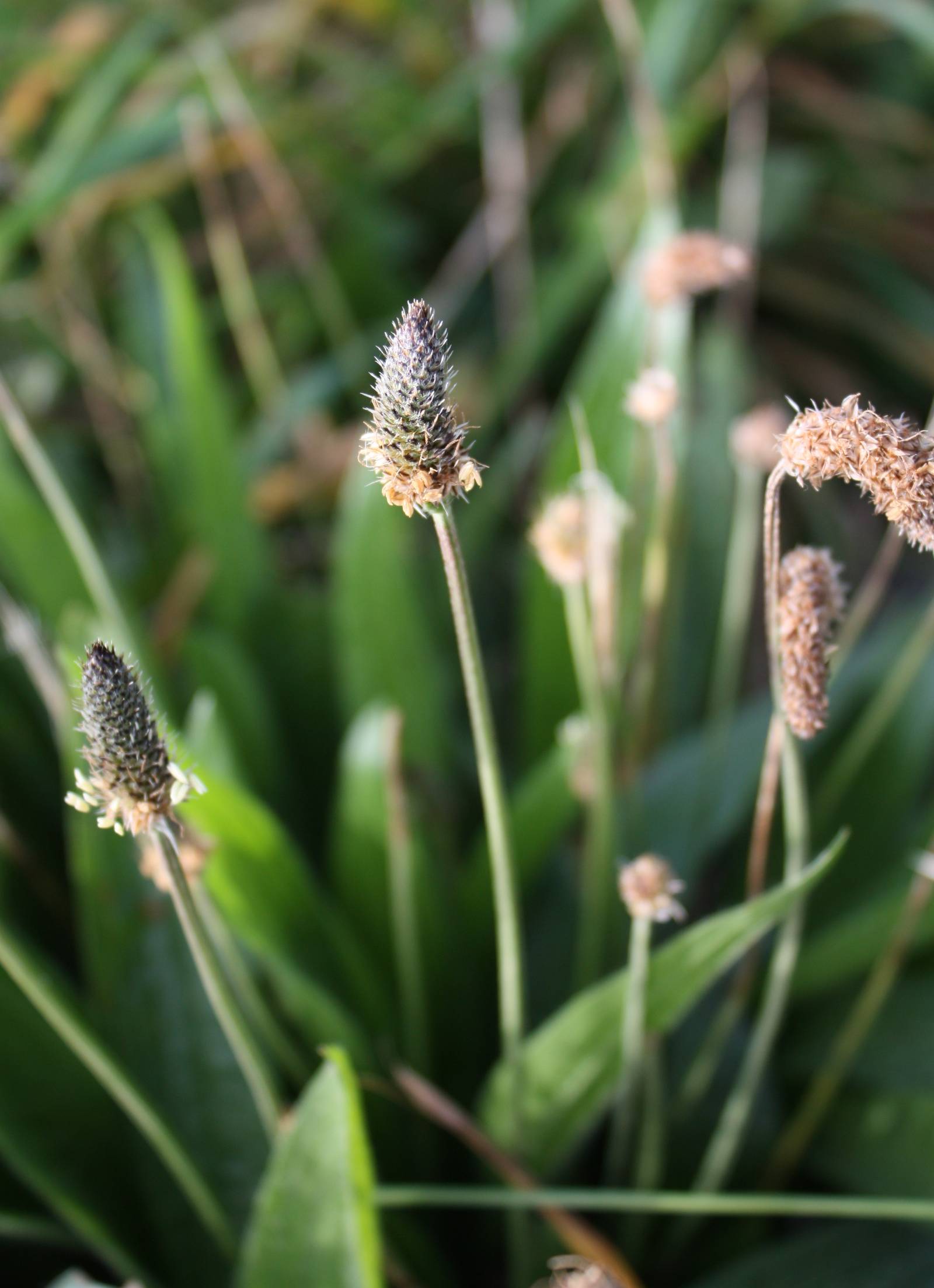
Ribwort plantain (Plantago lanceolata) grows on almost every lawn, every roadside, every meadow – and most people walk right over it every day. Yet it is one of the best-known cough herbs in folk medicine – its leaves have traditionally been used for irritated coughs.
Active compounds and their traditional uses
The properties in the following list are traditionally attributed to these compounds. They are not proven healing effects, and the list is not a recommendation for use.
Ribwort plantain contains:
- Aucubin & catalpol – anti-inflammatory, antibacterial
- Mucilage – forms a protective layer over irritated mucous membranes
- Tannins – astringent, promotes wound healing
- Silica – strengthens mucous membranes and connective tissue
- Flavonoids – antioxidant, anti-inflammatory
Traditional uses: coughs, irritated cough, bronchitis, sore throat, insect bites, small wounds, skin irritation.
What to look for
Typical features of ribwort plantain:
- Lance-shaped leaves with characteristic parallel longitudinal ribs (5–7 of them)
- Leaves form a ground-level rosette
- When torn apart, the ribs pull out like threads – a typical feature of the plantains
- Flower stalk: a long stem with a cylindrical flower head
Broadleaf plantain (Plantago major) looks similar and is traditionally used in the same way – you can treat both alike.
Careful with young rosettes: The ground-level rosette of young plants can be mistaken for that of foxglove (Digitalis purpurea) – a highly poisonous plant whose cardiac glycosides can be fatal. According to the Bonn Poison Centre, foxglove leaves are crenate and grey-felted underneath – and just 2 to 3 dried leaves can be fatal for adults; and they lack the parallel longitudinal ribs with their pull-out threads. The thread test is one feature, not a free pass – always check several features together, and leave standing anything you cannot place with certainty.
When & how to harvest
Best harvest time: April to October, young leaves in spring are the tenderest and mildest.
What to harvest: Young, medium-sized leaves – not the oldest outer ones (tough) and not the very smallest inner ones (spare the plant). Only take a few leaves per plant.
Where: Meadows, roadsides, gardens. Not directly next to busy dog-walking paths or roads.
Use as a medicinal herb
Making cough syrup
Cold infusion (the gentlest method):
- Wash fresh leaves and pat dry
- Chop the leaves finely or pass through a meat grinder
- Layer them with brown sugar or honey in a jar (1:1)
- Seal the jar, let it steep in the fridge for 2–4 weeks
- Strain – done
Shelf life: Several months in the fridge with sugar, 3–6 months with honey.
Usual amount: 1 tsp several times a day (No honey for children under 1 year – BfR. According to the EMA, ribwort plantain taken by mouth is not recommended for children under 3.).
Quick version: Briefly boil the leaves in water, strain, sweeten with honey. Keeps only a few days in the fridge.
For insect bites
Crush a fresh leaf and place it directly on the bite – an old household trick that is said to ease itching and swelling.
If there are signs of an allergic reaction – difficulty breathing, swelling in the mouth or throat, dizziness or hives all over the body – this is no longer a case for home remedies: call the emergency services straight away.
Tea for cough and sore throat
1–2 tsp dried leaves, steep covered for 7–10 minutes. Drink several times a day.
Applied externally to small wounds
Place fresh, crushed leaves on small wounds, grazes or skin irritation.
Use in the kitchen
Young leaves are edible – slightly bitter, nutty:
- Finely chopped into herb quark or salad
- In wild herb smoothies
- Briefly steamed as a wild vegetable
Drying & storage
Dry the leaves individually or in thin layers at max. 40°C. Do not stack them too thick – they mold easily.
Stored dark and dry: keeps 1 year.
Tip: dried ribwort plantain loses some of its potency – for cough syrup, use fresh leaves whenever possible.
Notes from the EMA monograph
The European Medicines Agency (EMA) lists ribwort plantain leaf as a traditional herbal medicinal product. For its use it states, among other things:
- do not use with hypersensitivity to ribwort plantain or its pollen
- taken by mouth not recommended for children under 3, some preparations only from 12
- not recommended during pregnancy and breastfeeding, as safety has not been established
- if symptoms last longer than 1 week, see a doctor
The monograph applies to tested preparations – home-gathered herb is not dosed more precisely.
Gathering: what German nature conservation law allows
Anyone may carefully take wild herbs, flowers and fruits in small quantities for personal use from places not subject to an access ban (Section 39(3) BNatSchG). Protected areas often have stricter bans, and specially protected species have their own rules.
Sources
- Poison Information Centre NRW / Bonn: Fingerhut, Roter, accessed 5 Oct 2026
- European Medicines Agency (EMA): European Union herbal monograph on Plantago lanceolata L., folium (Rev. 1), as of EMA/HMPC/887979/2022, accessed 5 Oct 2026
- German Federal Institute for Risk Assessment (BfR): Rare but avoidable: questions and answers about botulism, as of 12 Nov 2025, accessed 5 Oct 2026
- Federal Nature Conservation Act (BNatSchG): § 39, accessed 5 Oct 2026
The sources support individual statements in this article. The organisations named have neither reviewed nor endorsed it.