Thyme: Medicinal Herb, Spice, and Bee Pasture in One
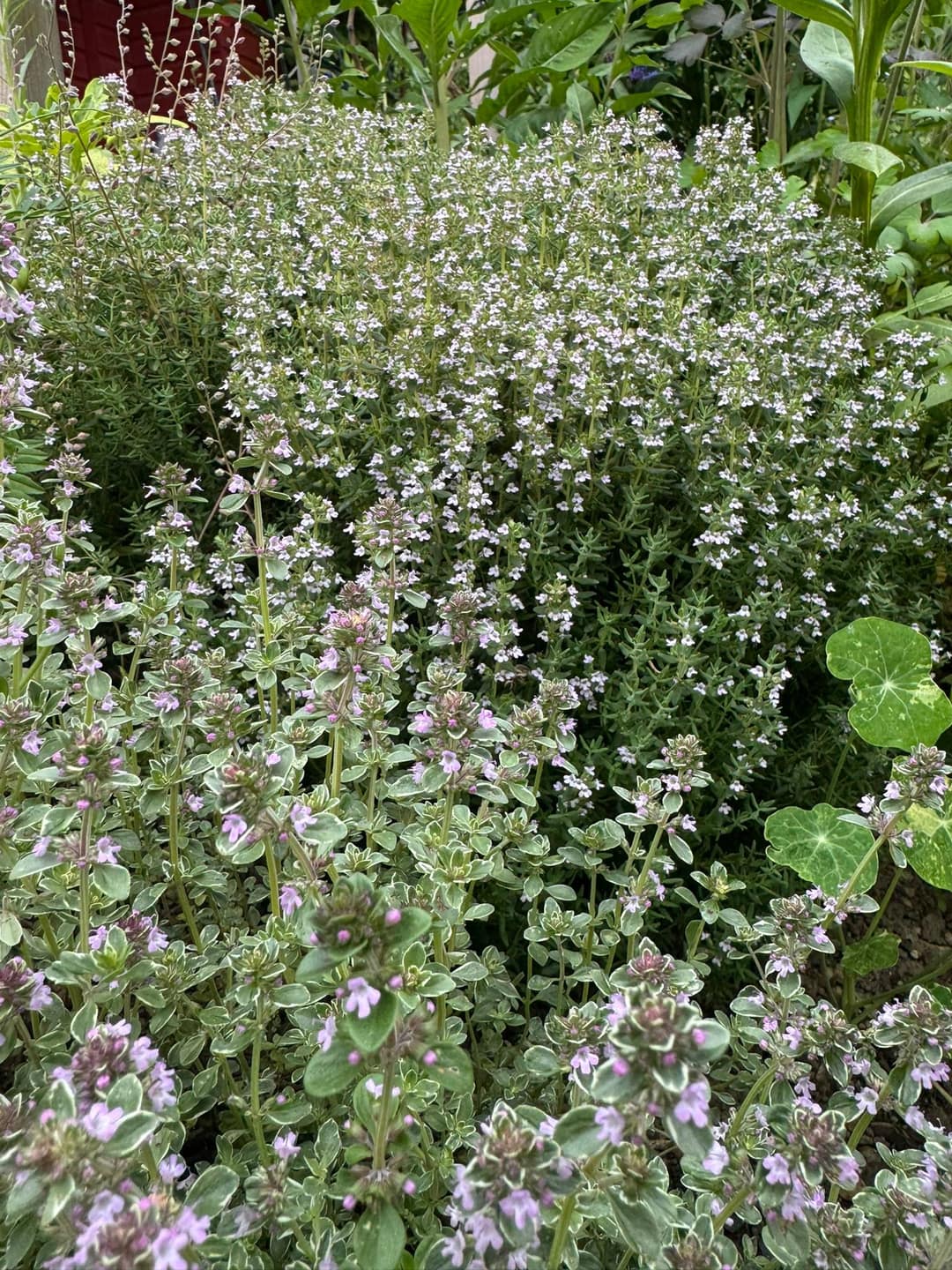
What makes thyme so special?
Thyme (Thymus vulgaris) is one of the oldest medicinal herbs in Europe. The Romans already used it as a disinfectant and tonic. Its best-known compound is the essential oil thymol, which has traditionally been credited with germ-inhibiting properties.
For self-sufficient growers, thyme is especially valuable because it:
- needs almost no care
- is perennial and winter-hardy
- attracts bees and bumblebees
- can be used fresh, dried, or as a tincture
Growing in the garden
Thyme loves sun and dry, calcareous soil. It originally comes from the Mediterranean and does not tolerate waterlogging.
Location and soil
- Full sun, at least 6 hours of sunlight a day
- Well-draining, sandy soil – work in sand for heavier soils
- pH ideally between 6.5 and 7.5
Sowing and planting
Thyme can be started on a windowsill from March. The tiny seeds need light to germinate – do not cover them! Plant outside from mid-May, spacing about 30 cm apart.
Easier options are dividing older plants in spring or buying young plants from a nursery.
Care
- Water sparingly – better too dry than too wet
- Cut back after flowering to keep the plant bushy
- Renew every 3–4 years, as older plants become woody
Harvest and drying
The best harvest time is just before or during flowering (May to July) – that is when the essential oil content is highest.
Cut the shoots back by about a third. Never cut into old wood, it will not sprout again.
Drying
- Tie into small bundles
- Hang upside down in an airy, shaded spot
- Dry after 2–3 weeks and store in the dark
- Shelf life: up to 2 years in a sealed jar
Traditional uses
Thyme is traditionally credited with expectorant, antibacterial and antispasmodic properties. It is one of the longest-established home remedies in Europe.
Thyme tea – an old household remedy for coughs
Pour 200 ml boiling water over 1 tsp dried thyme Steep covered for 5 minutes Sweeten with honey if desired
In folk medicine the tea is drunk for a cold-related cough. A persistent or severe cough should be checked by a doctor.
Thyme honey
Fill a jar of honey with fresh thyme sprigs and let it steep for 4 weeks. A traditional remedy for sore throats – and for beekeepers, a doubly useful combination.
Thyme oil for the skin
Infuse dried thyme in olive oil (4 weeks, in a dark place). The oil is traditionally used for small wounds, insect bites and blemished skin.
Thyme in the kitchen
Thyme belongs in:
- Meat dishes, especially lamb and poultry
- Tomato sauces and ratatouille
- Homemade herb butter
- Pickled vegetables and vinegars
Dried thyme is more intense than fresh. Rule of thumb: 1 tsp dried = 1 tbsp fresh.
Thyme as a bee pasture
For beekeepers, thyme is a valuable nectar plant. The small pink-purple flowers appear from June to August and are visited intensively by honeybees, bumblebees and wild bees.
A 2–3 m² bed of thyme can attract hundreds of bees on a sunny day. Combine it with lavender, oregano and marjoram for continuous summer blooms.
Conclusion
Thyme is the perfect herb for self-sufficient growers: robust, low-maintenance, versatile, and on top of that an asset to any bee pasture. Once planted, it stays with you for many years.