Sage – A Kitchen Herb with a Long Healing Tradition
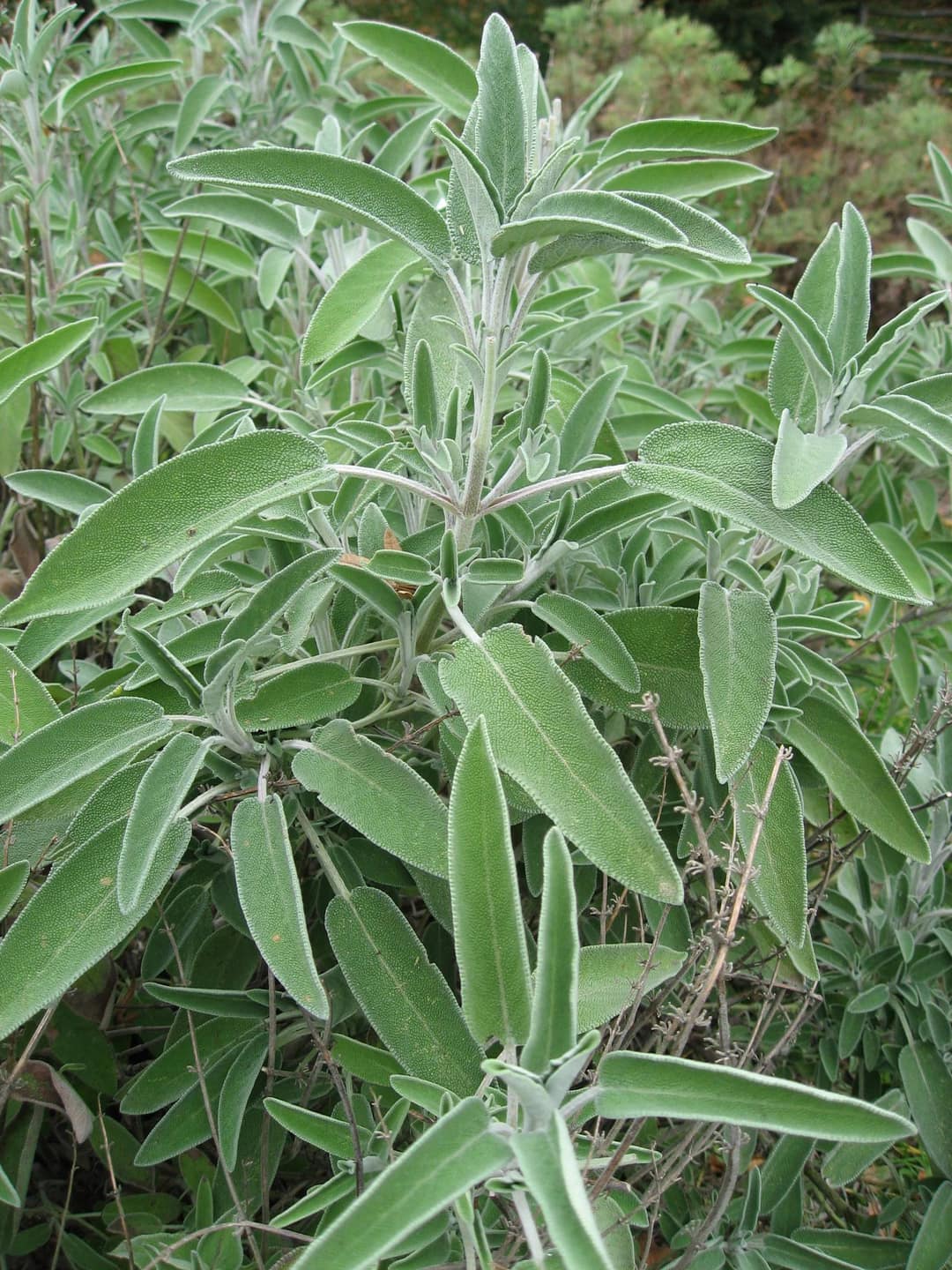
Sage (Salvia officinalis) is one of the oldest medicinal plants in Europe. Its name comes from the Latin salvare – to heal. In folk medicine it is regarded as antibacterial, anti-inflammatory and sweat-reducing all at once.
Active compounds and their traditional uses
Sage contains:
- Thujone – antibacterial, but toxic in large amounts (more on that below)
- Rosmarinic acid – strongly anti-inflammatory, antioxidant
- Cineole – expectorant, supports the airways
- Tannins – astringent, traditionally used for sore throats
Traditional uses: sore throat, inflammation of the mouth and throat, excessive sweating, digestive problems, menopausal symptoms.
⚠️ Important: Thujone – do not overdose on sage
Sage contains thujone, which in large amounts can burden the nervous system. This means:
- As a culinary spice: completely safe
- As tea: max. 1–2 cups a day, do not drink it daily over several weeks
- Pregnancy: avoid sage tea – thujone can stimulate contractions
- Breastfeeding: sage inhibits milk production – this can be used deliberately when weaning, otherwise avoid
When & how to harvest
Best harvest time: April to September, just before flowering is when the active compound content is highest.
The most common mistake: harvesting too late. Many people wait until the plant is large – but young shoots are more aromatic and effective than old, leathery leaves.
How: Harvest the soft shoot tips (10–15 cm), never cut into old wood – it barely sprouts again. Harvest in the morning after the dew.
Pruning: Cut back hard after flowering – this keeps the plant bushy and prevents it from becoming woody.
Growing & location
Location: Full sun, very well-draining soil. Waterlogging is the most common cause of death.
Winter hardiness: More robust than rosemary, tolerates down to about -15°C. But: older plants become woody and less aromatic – renew every 3–4 years.
Pot: Works well, at least 20 cm deep, with a drainage layer.
Propagation: Cuttings in summer (the easiest method) or sowing in spring.
Use in the kitchen
Sage is intense – use it sparingly.
Classics: Saltimbocca, butter sauce for pasta or gnocchi (briefly fry the leaves in butter), poultry, veal.
Sage butter – fry the leaves in butter until crisp. Simple and incredibly aromatic.
Sage oil – steep fresh leaves in olive oil for 2–3 weeks.
Use as a medicinal herb
Tea for sore throats – 2–3 fresh or dried leaves, steep covered for 5–7 minutes so the essential oils are preserved. Once cooled, it is also traditionally used as a gargle.
Mouth rinse – gargle with cooled tea for inflammation of the mouth and throat.
For heavy sweating – traditionally taken as tea, for example during menopause. Regularly, but not continuously: because of its thujone content, sage tea is not harmless in large amounts or over long periods (see above).
Drying & storage
Bundle the sprigs and dry them hanging upside down in a dark, airy spot – not in the sun, or the essential oils will evaporate. Dry individual leaves in a dehydrator at max. 35°C.
Stored dark and dry: keeps 1–2 years.
Tip: dried sage is more intense than fresh – use less of it when cooking.