Yarrow – Medicinal Plant and Bee Forage
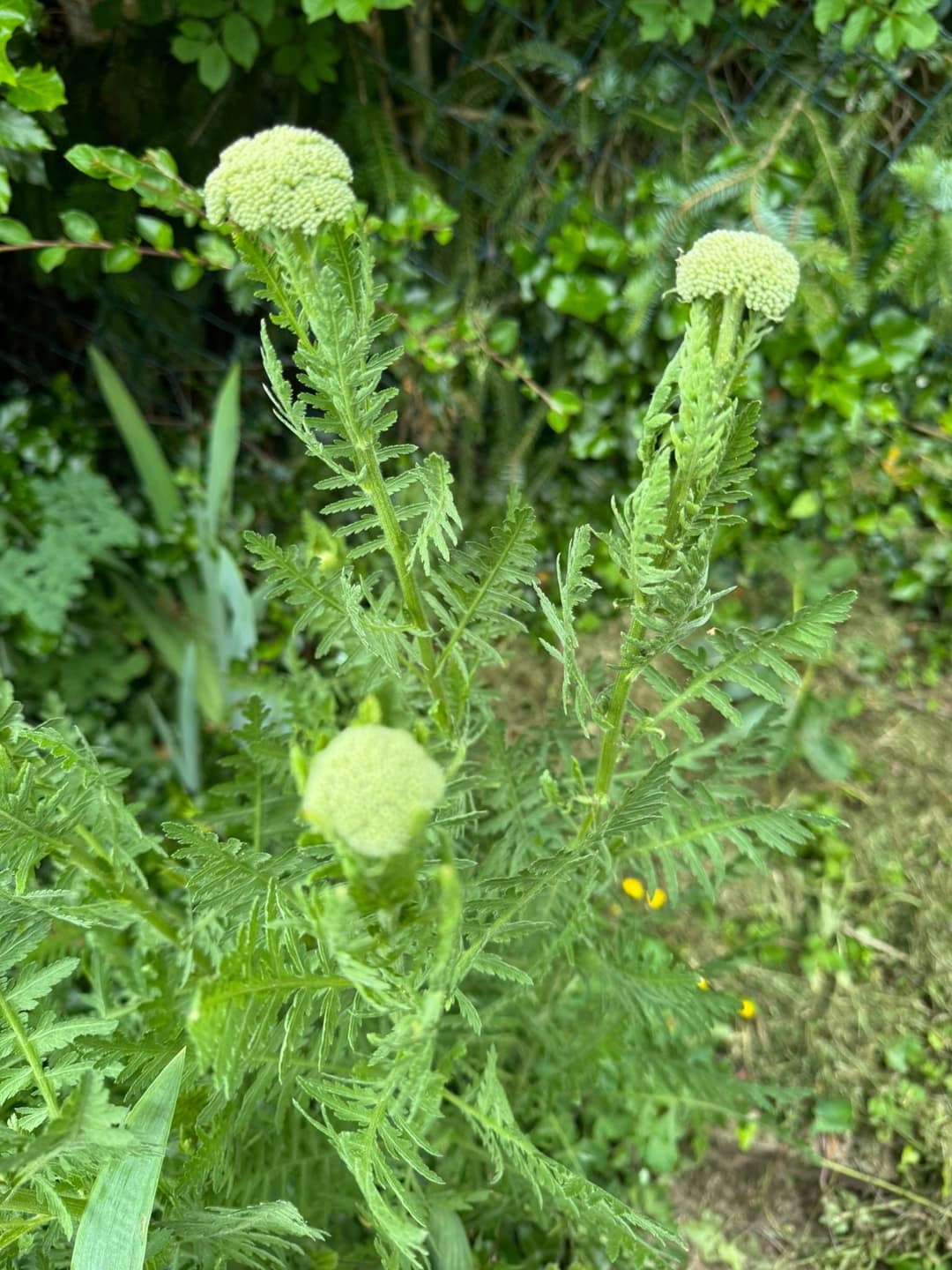
Yarrow (Achillea millefolium) grows in almost every meadow and barely gets noticed – yet it is one of Europe's oldest and most widely used medicinal plants. Its Latin name recalls Achilles, who according to legend used it to treat his soldiers' wounds.
Active compounds and their traditional uses
Yarrow contains:
- Achillin & achillicin – antispasmodic, anti-inflammatory
- Chamazulene – as in chamomile, anti-inflammatory
- Flavonoids – antioxidant, strengthens blood vessels
- Tannins – stops bleeding, promotes wound healing
- Bitter compounds – aids digestion, stimulates the liver
Traditional uses: wounds and bleeding, menstrual complaints, digestive problems, inflammation, fever.
⚠️ Notes
- Yarrow can trigger contact allergies in some people – anyone allergic to daisy-family plants (chamomile, arnica) should be cautious
- Pregnancy: avoid yarrow – it can stimulate contractions
- Do not confuse it with poison hemlock (Conium maculatum) – it is deadly poisonous and also has finely feathered leaves, which is exactly why the two get mixed up. So check several features together: yarrow has narrow, very finely divided leaves, usually in a basal rosette, and a hairy stem that is filled with white pith inside. Hemlock has a hairless, hollow stem with red to purple blotches – those blotches are the most reliable feature – and smells unpleasant and mouse-like when crushed. If even one feature does not fit, do not pick it
What to look for
Typical features of yarrow:
- Finely feathered, almost fern-like leaves – narrow and usually in a basal rosette
- Hairy stem, filled with white pith inside – not hollow, no red blotches
- Flat white (rarely pink) flower clusters
- Spicy, aromatic scent when rubbed
- Grows on dry meadows, roadsides, embankments
These features only count together. Several umbellifers look similar to yarrow at first glance, and some of them are poisonous. So always check leaf, stem, flower and scent – and leave the plant where it is if even one of them does not fit.
When & how to harvest
Best harvest time: June to September, when the plant is in full bloom – that is when the active compound content is highest.
What to harvest: The top 10–20 cm with flowers and leaves. Leaves alone can also be harvested earlier.
Where: Dry meadows, roadsides, embankments, low-nutrient grassland. Not on fertilized intensive meadows – yarrow barely grows there and contains fewer active compounds.
For beekeepers: Yarrow is a valuable late-season nectar source – its long flowering period from June to September makes it a reliable bee pasture when many other plants have already finished blooming.
Use as a medicinal herb
For small wounds – placing crushed fresh leaves on a small wound is regarded as one of the oldest first-aid tricks in herbal medicine. Use leaves only from clean spots, wash them first and work with clean hands. Larger, heavily soiled or poorly healing wounds need proper dressing and a doctor.
Tea for digestive complaints – 1–2 tsp dried herb, steep covered for 7–10 minutes. It is traditionally credited with stimulating bile flow and digestion.
Tea for menstrual complaints – valued in folk medicine as antispasmodic and circulation-promoting; traditionally started a few days before your period.
Sitz bath – add a strong tea infusion to the bathwater; an old home remedy for discomfort in the pelvic area. Inflammation should be checked by a doctor.
Wound ointment – infuse yarrow in olive oil (like St. John's wort oil), then simmer with beeswax into an ointment.
Fever tea – together with elderflower and peppermint; in folk medicine this mix is credited with promoting sweating. Fever is a warning sign: see a doctor if it is high or persistent, with children, or if other symptoms come with it.
Use in the kitchen
Yarrow is bitter-spicy and should be used sparingly:
- Young leaves finely chopped into herb quark or salad
- As a seasoning herb in soups and stews
- In herb butter together with other wild herbs
Drying & storage
Bundle the stems and dry them hanging upside down in an airy, shaded spot. Or dry the flowers and leaves separately in a dehydrator at max. 40°C.
Stored dark and dry: keeps 1–2 years.