Ribwort Plantain – The Cough Herb from the Roadside
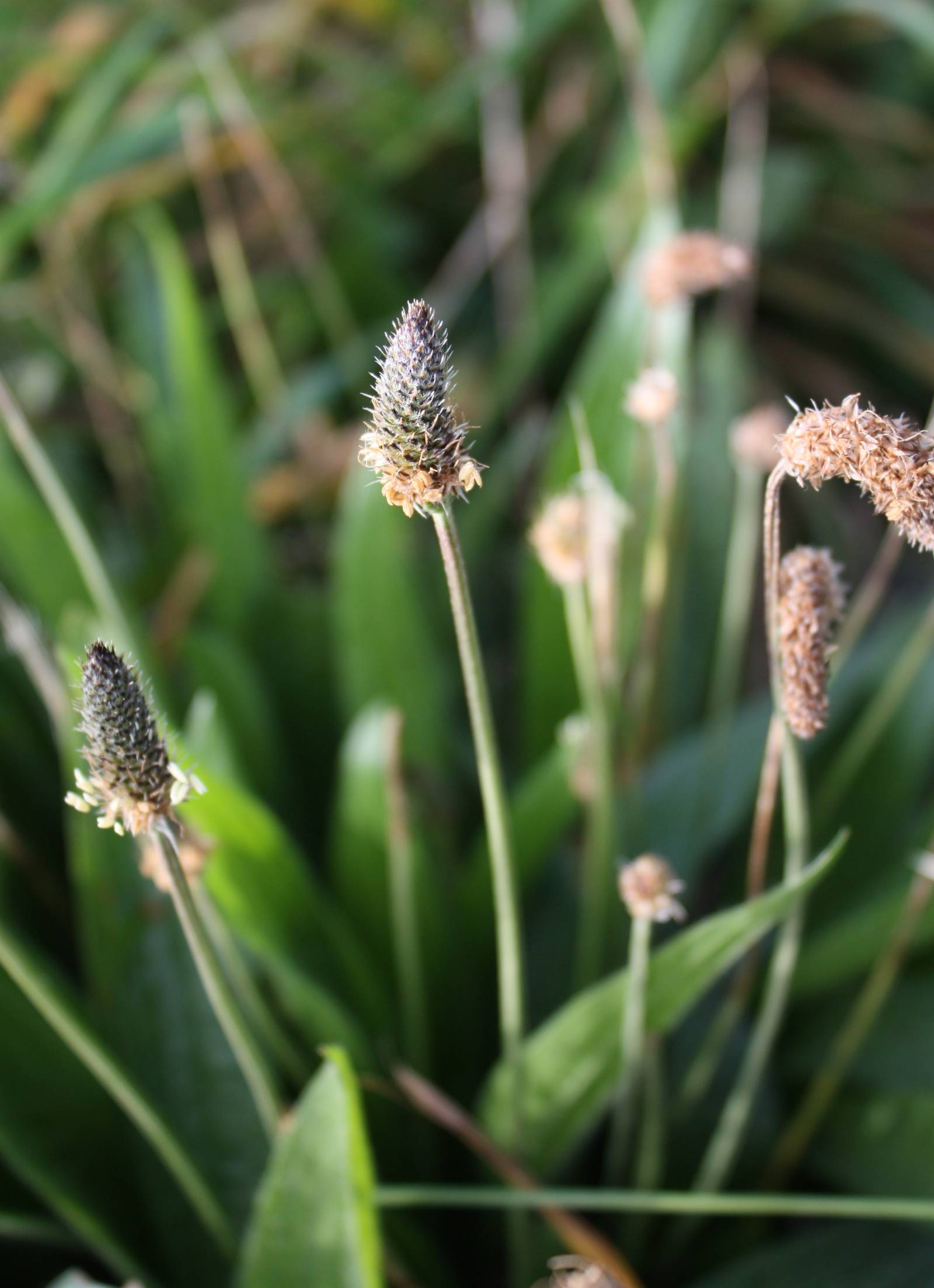
Ribwort plantain (Plantago lanceolata) grows on almost every lawn, every roadside, every meadow – and most people walk right over it every day. Yet it is one of the best-known cough herbs in folk medicine – its leaves have traditionally been used for irritated coughs.
Active compounds and their traditional uses
Ribwort plantain contains:
- Aucubin & catalpol – anti-inflammatory, antibacterial
- Mucilage – forms a protective layer over irritated mucous membranes
- Tannins – astringent, promotes wound healing
- Silica – strengthens mucous membranes and connective tissue
- Flavonoids – antioxidant, anti-inflammatory
Traditional uses: coughs, irritated cough, bronchitis, sore throat, insect bites, small wounds, skin irritation.
What to look for
Typical features of ribwort plantain:
- Lance-shaped leaves with characteristic parallel longitudinal ribs (5–7 of them)
- Leaves form a ground-level rosette
- When torn apart, the ribs pull out like threads – a typical feature of the plantains
- Flower stalk: a long stem with a cylindrical flower head
Broadleaf plantain (Plantago major) looks similar and is traditionally used in the same way – you can treat both alike.
Careful with young rosettes: The ground-level rosette of young plants can be mistaken for that of foxglove (Digitalis purpurea) – a highly poisonous plant whose cardiac glycosides can be fatal. Foxglove leaves are softly hairy and feel felty, and they lack the parallel longitudinal ribs with their pull-out threads. The thread test is one feature, not a free pass – always check several features together, and leave standing anything you cannot place with certainty.
When & how to harvest
Best harvest time: April to October, young leaves in spring are the tenderest and mildest.
What to harvest: Young, medium-sized leaves – not the oldest outer ones (tough) and not the very smallest inner ones (spare the plant). Only take a few leaves per plant.
Where: Meadows, roadsides, gardens. Not directly next to busy dog-walking paths or roads.
Use as a medicinal herb
Making cough syrup
Cold infusion (the gentlest method):
- Wash fresh leaves and pat dry
- Chop the leaves finely or pass through a meat grinder
- Layer them with brown sugar or honey in a jar (1:1)
- Seal the jar, let it steep in the fridge for 2–4 weeks
- Strain – done
Shelf life: Several months in the fridge with sugar, 3–6 months with honey.
Usual amount: 1 tsp several times a day (for children, use sugar instead of honey – no honey for children under 1 year).
Quick version: Briefly boil the leaves in water, strain, sweeten with honey. Keeps only a few days in the fridge.
For insect bites
Crush a fresh leaf and place it directly on the bite – an old household trick that is said to ease itching and swelling.
If there are signs of an allergic reaction – difficulty breathing, swelling in the mouth or throat, dizziness or hives all over the body – this is no longer a case for home remedies: call the emergency services straight away.
Tea for cough and sore throat
1–2 tsp dried leaves, steep covered for 7–10 minutes. Drink several times a day.
Applied externally to small wounds
Place fresh, crushed leaves on small wounds, grazes or skin irritation.
Use in the kitchen
Young leaves are edible – slightly bitter, nutty:
- Finely chopped into herb quark or salad
- In wild herb smoothies
- Briefly steamed as a wild vegetable
Drying & storage
Dry the leaves individually or in thin layers at max. 40°C. Do not stack them too thick – they mold easily.
Stored dark and dry: keeps 1 year.
Tip: dried ribwort plantain loses some of its potency – for cough syrup, use fresh leaves whenever possible.