Drying Fruit: Apple Rings, Pear Chips & Fruit Leather
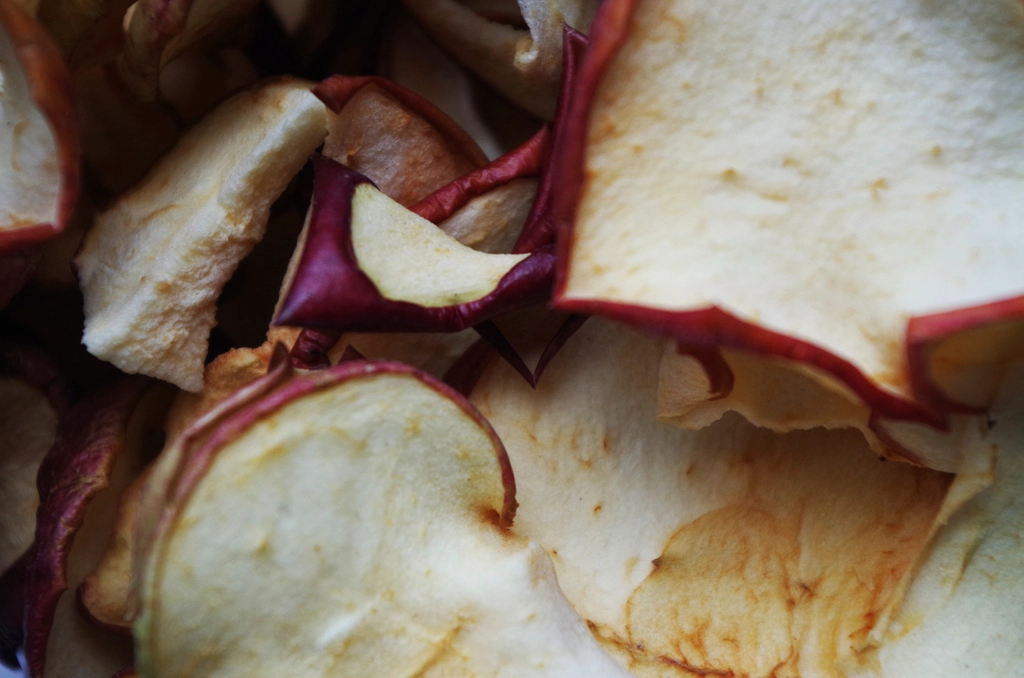
An apple tree in the garden means one thing above all come autumn: more apples than you can eat fresh. Along with canning, drying is the most elegant solution – and it produces snacks that make any store-bought dried fruit look pale by comparison: no sulfur, no added sugar, just fruit.
Preparation Is Key
- Use ripe but firm fruit – generously cut away any bruises
- Wash, pat dry; for apples and pears remove the core (a corer is worth having)
- Cut evenly: slices or rings about 5 mm thick – uneven thickness means uneven drying
- Lemon bath against browning: the juice of one lemon per liter of water, dip the fruit for 2–3 minutes, let drain. This keeps the light color and adds a subtle flavor note
Apple Rings – the Classic, Step by Step
- Core the apples and cut into 5 mm rings
- Lemon bath, drain, place on the drying racks (don't overlap!)
- Dry at 55–60 °C: 6–8 hours in a dehydrator, more like 7–9 in the oven (door slightly ajar)
- Doneness test: the ring bends leathery but doesn't break, and feels dry – no moist core when you cut through it
If you like them crispy like chips: cut thinner (2–3 mm) and dry a bit longer.
Other Fruits at a Glance
| Fruit | Preparation | Temperature | Duration |
|---|---|---|---|
| Pears | 5 mm slices, lemon bath | 55–60 °C | 6–10 hrs. |
| Plums/damsons | halve, pit, skin side down | 60 °C | 10–14 hrs. |
| Strawberries | halved or sliced | 55 °C | 8–10 hrs. |
| Bananas | 5 mm slices, lemon bath | 60 °C | 8–10 hrs. |
| Grapes | halved (whole ones take forever) | 60 °C | 12–18 hrs. |
Fruit Leather – the Candy from Your Dehydrator
Fruit leather is puréed fruit, dried paper-thin – perfect for fruit with blemishes and using up leftovers:
- Purée the fruit (e.g. an apple-berry mix), round it out with a little honey if you like – usually unnecessary
- Spread onto parchment paper or the dehydrator's fruit-leather sheet: 3–4 mm thick
- Dry at 55 °C for about 6–8 hours, until the surface is no longer sticky
- Cut into strips and roll up while still warm – and there you have your homemade "fruit gummy"
Conditioning, Storing, Enjoying
As with all dried food: after cooling, condition it for a week in a large jar (shake daily, watch for condensation), then store airtight and in the dark. Properly dried, your dried fruit keeps for 6–12 months – in theory. In practice the jar is usually empty long before that.
By the way: dried fruit is concentrated fruit – including its sugar. Unbeatable as a hiking or school snack, but a handful counts as a serving.
Conclusion
Drying fruit is the perfect beginner project: little effort, few ways to go wrong, great results. When the harvest overflows in autumn, an afternoon turns it into a winter stock that needs no jars, sugar, or freezer space.