Meadowsweet – the fragrant queen of the meadow
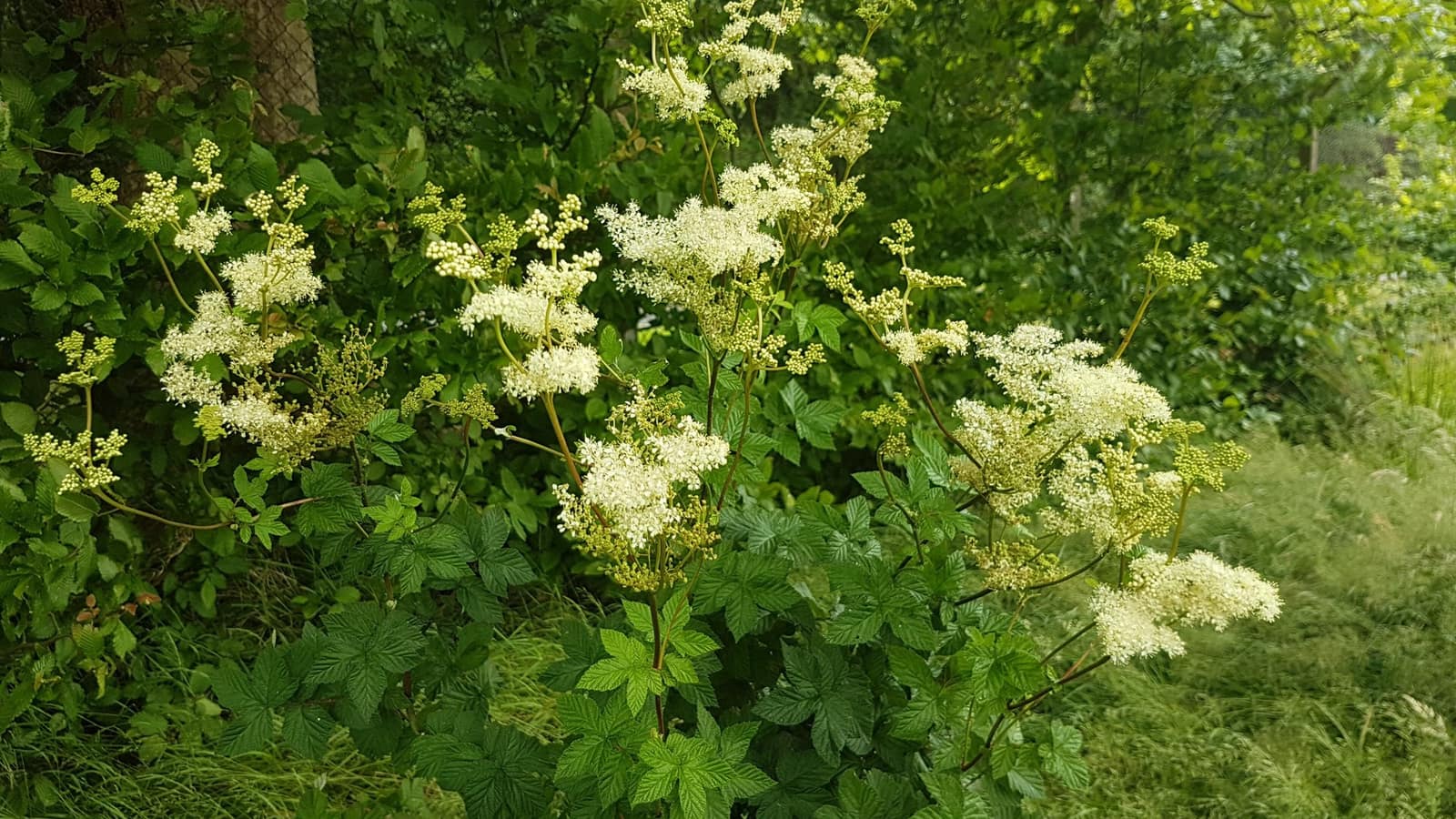
Foto: Lee Raye, CC0
Pictures



⚠️ Before you use meadowsweet
- Meadowsweet contains salicylates. According to the monograph of the European Medicines Agency (EMA), it should not be used if you are hypersensitive to salicylates.
- The EMA does not recommend use in children and adolescents under 18.
- If you already take salicylates or other non-steroidal anti-inflammatory drugs (NSAIDs), the EMA advises using meadowsweet only on medical advice.
- Only pick what you can identify with certainty, and not from ditches next to sprayed fields.
Along streams, ditches and damp meadows, meadowsweet stands out from afar in high summer: according to the LfL Bavaria, its creamy-white flower heads, up to 1.5 metres tall, rise above the other meadow plants – the French name "Reine des prés" means "queen of the meadow".
Features
According to the LfL Bavaria:
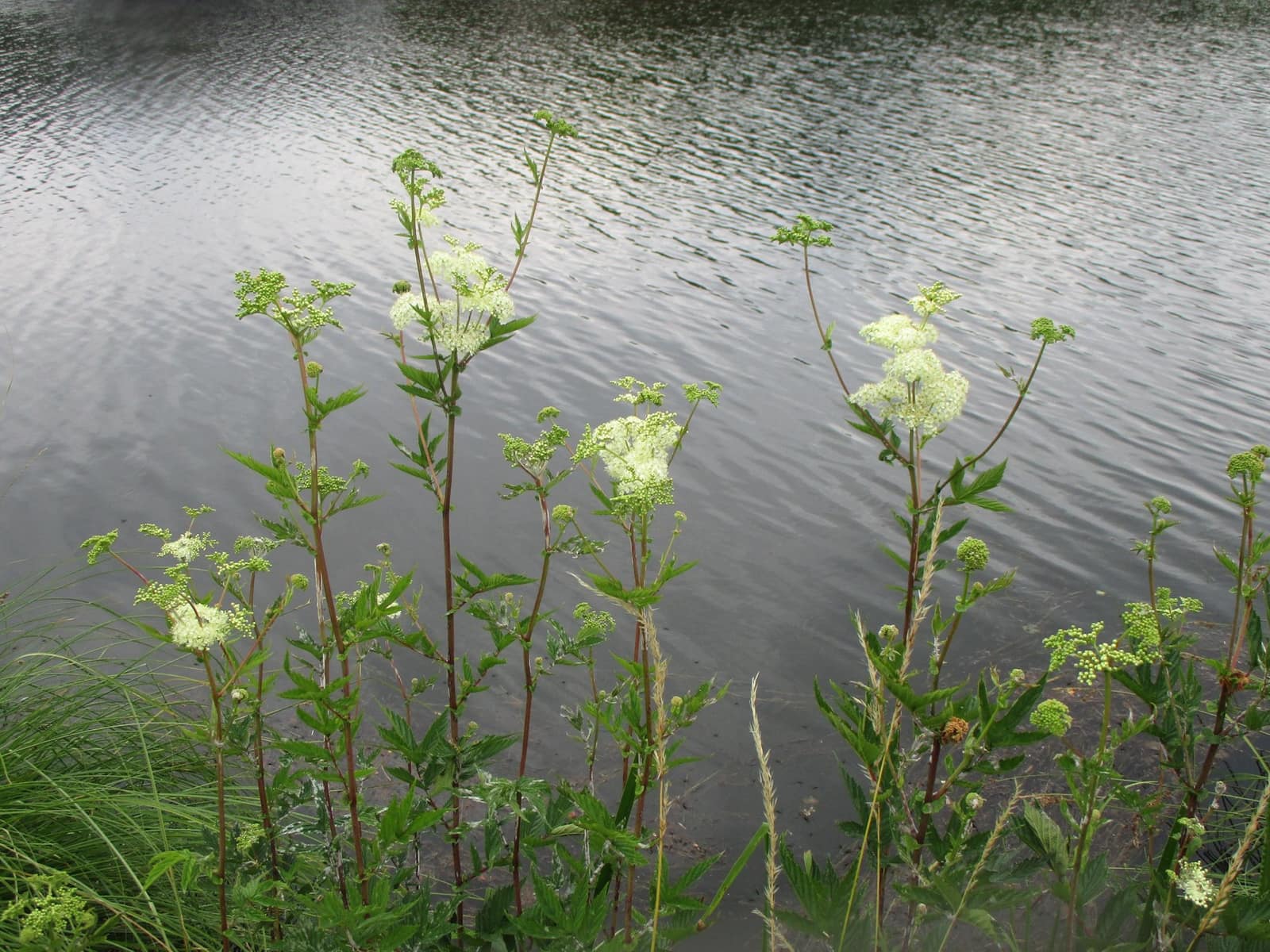
- Habitat: Damp, nutrient-rich water margins, wet meadows and fen meadows
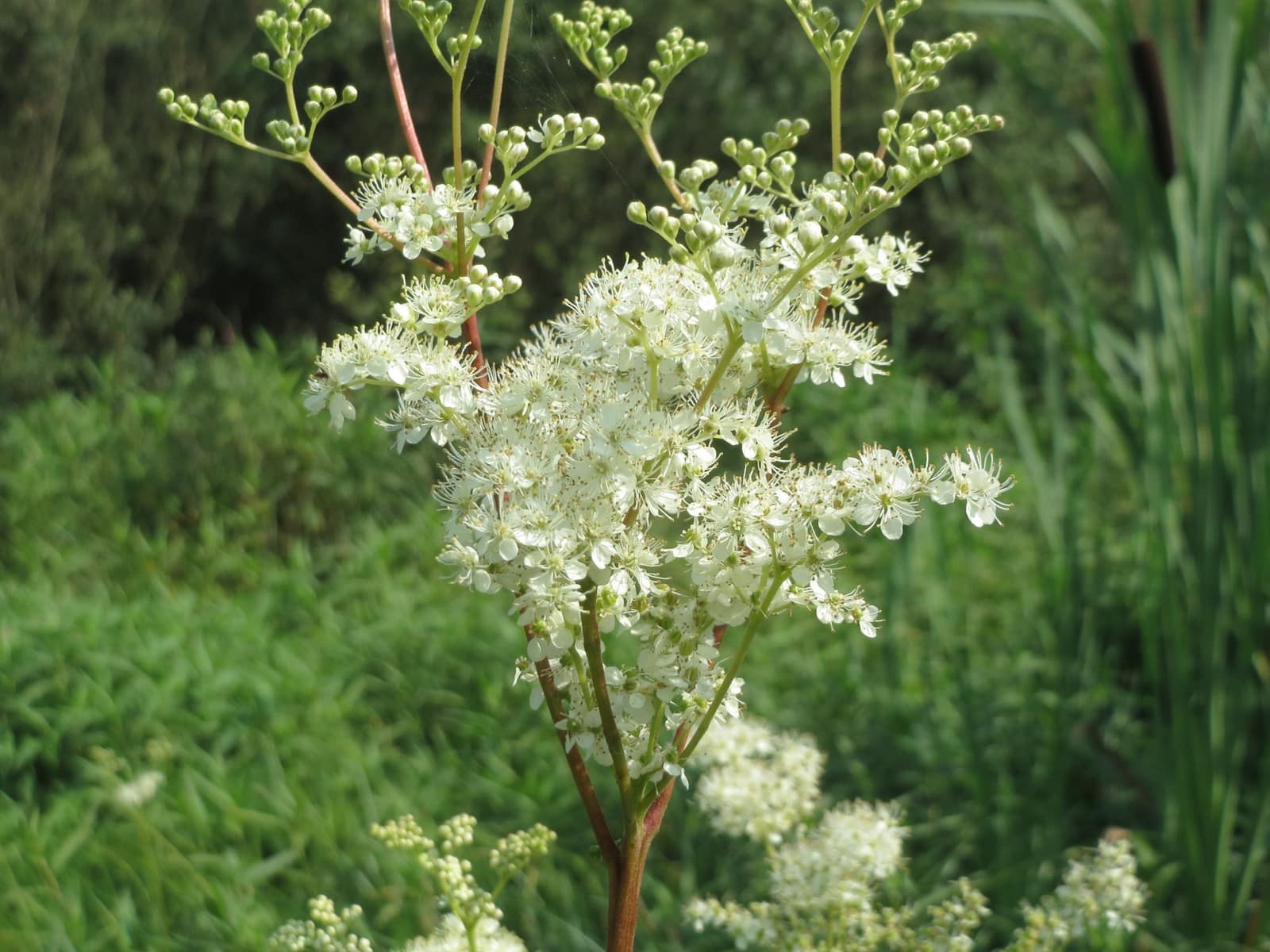
- Stem: Upright and tinged reddish
- Leaves: Odd-pinnate; smaller leaflets sit between the larger, toothed ones. Upper side dark green, underside often whitish and felty
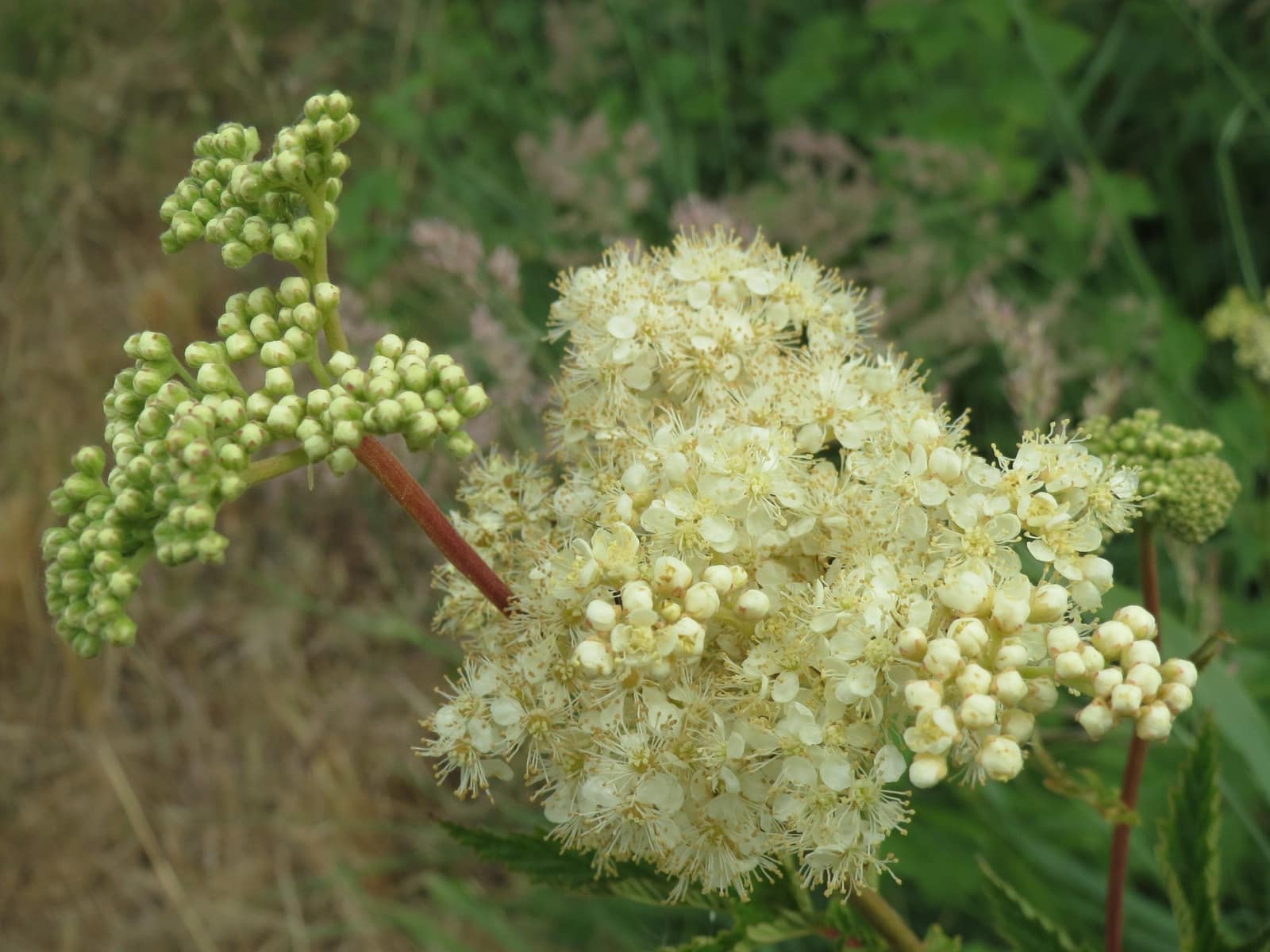
- Flowers: Creamy white, from June to August
- Fruits: Spirally twisted
- The older the plant, the more "medicinal" its smell and taste become
Poisonous neighbour by the water: According to the Bonn Poison Centre, the very poisonous cowbane (Cicuta virosa) grows in flowing water and among sedges – an umbellifer with white flowers in umbels (July/August) and two- to three-times pinnate leaves. So always check all the features of meadowsweet together – reddish stem, small leaflets between the large ones, whitish felty leaf underside – and do not pick if in doubt.
Use
- Kitchen: According to the LfL, the young leaves suit salads, the flowers drinks, desserts and jellies and as a garnish; leaves and flowers can also be used fresh or dried for tea. According to the LfL, the German name comes from "sweet mowing" – hay containing meadowsweet smelled sweet – and the flowers were once used to flavour beer and mead.
- Folk medicine: The EMA lists meadowsweet herb as a traditional herbal medicinal product for the supportive treatment of common colds and the relief of minor joint pain. According to the EMA, this classification is based exclusively on long-standing use, not on efficacy studies.
Sources
- European Medicines Agency (EMA): Community herbal monograph on Filipendula ulmaria (L.) Maxim., herba, EMA/HMPC/434881/2010, as of 12 Jul 2011, accessed 6 Oct 2026
- Bavarian State Research Center for Agriculture (LfL): Essbare Wildkräuter: Mädesüß, as of Nov 2022, accessed 6 Oct 2026
- Poison Information Centre NRW / Bonn: Wasserschierling, accessed 6 Oct 2026
The sources support individual statements in this article. The organisations named have neither reviewed nor endorsed it.