Growing, Harvesting & Storing Potatoes
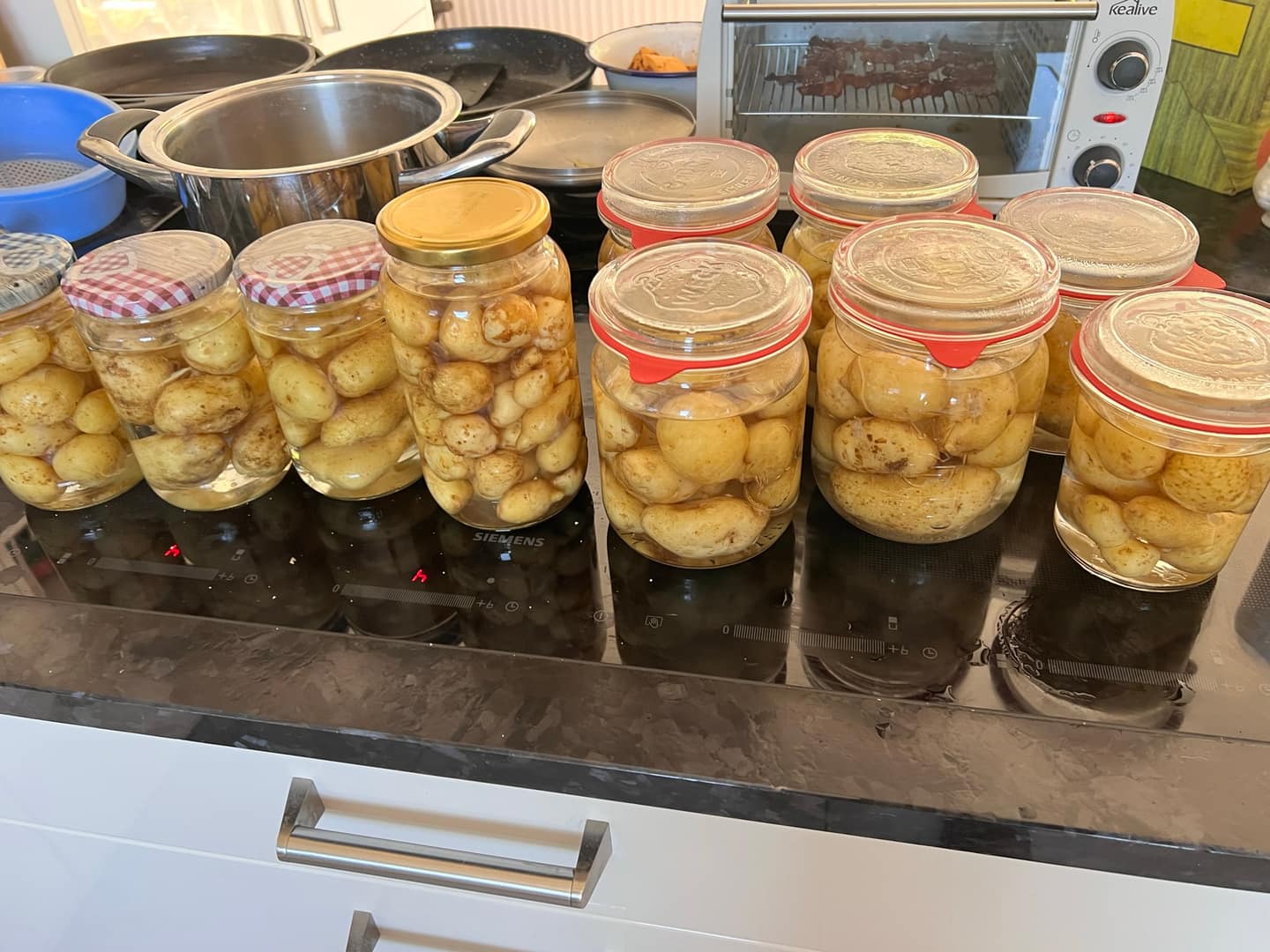
Hardly any crop delivers as much yield per square meter as the potato – and hardly any keeps so long in storage. For self-sufficient growers, it's therefore the foundation of the winter pantry.
Planting
- Timing: from mid-April, once the soil reaches around 8 °C (rule of thumb: when the dandelions bloom)
- Pre-sprouting pays off: lay seed potatoes out in a bright spot at 10–15 °C 4–6 weeks beforehand – this brings up to 2 weeks' head start on harvest
- Spacing: 30–35 cm within the row, 60–70 cm between rows, 10 cm deep
- Soil: loose, humus-rich, no fresh manure fertilizing (promotes scab)
Care
- Hilling: once the foliage is 20 cm tall, mound soil up to half its height – repeat several times. This increases yield and prevents green tubers
- Watering: only during prolonged dry spells, especially during flowering (when the tubers form)
- Colorado potato beetle: collect regularly by hand, including the orange egg clusters on the undersides of leaves
Harvest
- Early potatoes: from June, once the foliage finishes flowering – use immediately, not suitable for storage
- Storage potatoes: only once the foliage has completely died back (September/October). By then the skin is firm
- Trick: after digging, let them dry on the bed for 2–3 hours, but no longer – light turns the tubers green
Proper storage
- Dark, cool, airy: ideally 4–8 °C in a cellar, in wooden crates or jute sacks – never in plastic
- Don't wash: clinging soil protects against drying out
- Check regularly: remove rotten tubers immediately, break off sprouts
- Don't store next to apples: their ripening gas makes potatoes sprout faster
If you don't have a cellar, you can also can potatoes – but not casually: potatoes are low-acid, and in a water bath the spores of Clostridium botulinum survive any processing time. The jar only becomes safe in a pressure canner (121 °C). Without one, the BfR recommends heating to 100 °C twice, one to two days apart – this lowers the risk considerably but does not eliminate it. And in every case: heat right through before eating. Details: "Safe Canning: Avoiding Botulism"
Always cut away green spots generously (solanine!), and discard tubers that are heavily green.