Pickling Cucumbers: Cornichons, Dill Pickles & Spiced Pickles
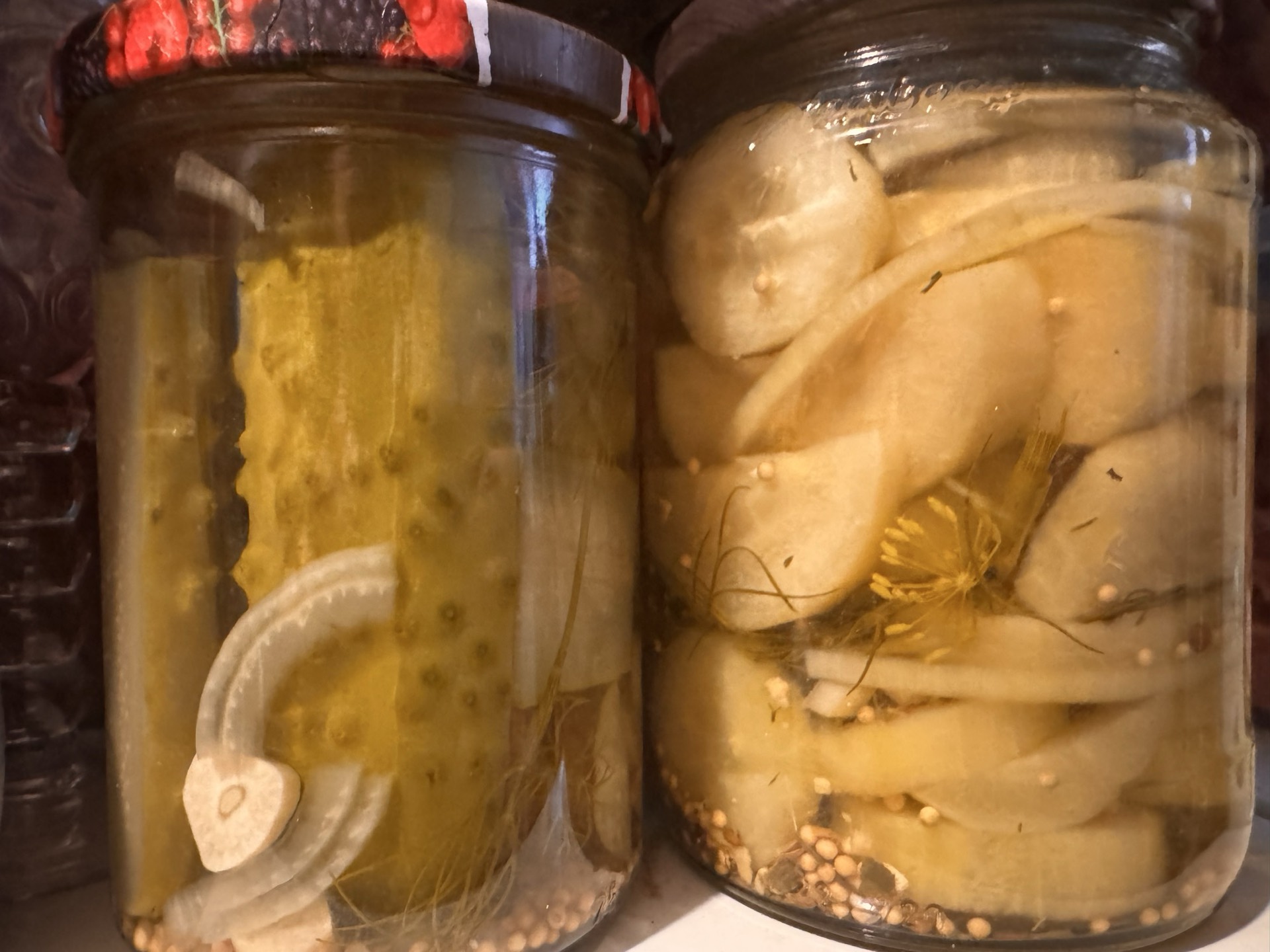
Pickling Cucumbers: Cornichons, Pickles & Spiced Gherkins
Pickled cucumbers are a pantry classic – crisp, tangy, and versatile. Whether as a side for a slice of bread, in a salad, or with grilled food: homemade pickles are unbeatable. This article shows you the most important methods and recipe variations – from the quick vinegar pickle to the traditional lacto-fermented cucumber.
Which Cucumber to Use?
Not every cucumber is suited to pickling. Slicing cucumbers are too watery and turn mushy when pickled. You need:
Pickling cucumbers
- Shorter, thicker-skinned varieties (e.g. 'Delikateß', 'National', 'Vorgebirgstrauben')
- Firm, crisp texture holds up well during pickling
- Best harvested at 5–8 cm long (cornichons) or 8–12 cm (dill pickles)
Freshness is key: Ideally pickle cucumbers the same day you harvest them, or the day after. The longer they sit, the softer they get.
The Three Classic Methods
1. Vinegar Brine (Quick & Shelf-Stable)
The best-known method. The cucumbers are pickled in a vinegar-water-sugar-salt brine and processed.
Basic recipe for about 4 jars of 500 ml:
Ingredients:
- 1.5 kg pickling cucumbers
- 500 ml white wine vinegar (6% acidity)
- 500 ml water
- 2 tbsp salt (not iodized!)
- 3 tbsp sugar
- Per jar: 1 tsp mustard seeds, 1–2 dill stems, 2–3 peppercorns, 1 garlic clove, optionally a bay leaf
Preparation:
- Wash the cucumbers well, trim the ends (helps the brine soak in)
- Sterilize jars and lids (boil for 10 min. or heat in the oven at 120 °C)
- Put the spices and dill into the jars
- Pack the cucumbers in tightly
- Bring the brine to a boil: heat vinegar, water, salt, and sugar until everything is dissolved
- Pour the hot brine over the cucumbers – leave at least 1 cm of headspace
- Seal immediately
- Process in a water bath: 10 min. at 90 °C for safety
Shelf life: 12+ months in a cool, dark cellar
2. Lacto-Fermented Pickles (Cloudy, Naturally Fermented)
The traditional method – no heat, no added acid, but fermentation by lactic acid bacteria. These pickles stay raw and alive and have a completely different flavor from vinegar pickles.
Basic recipe:
Ingredients:
- 1 kg pickling cucumbers
- 1 liter water
- 30 g salt (not iodized! Iodine inhibits fermentation)
- Dill (flower heads are ideal)
- A horseradish leaf (its tannins prevent softening)
- Garlic, mustard seeds, black pepper
Preparation:
- Brine: dissolve the salt in cold water (do not boil)
- Wash the cucumbers, trim off the stem end (it contains enzymes that cause softening)
- Line the jar/vessel with the spices and herbs
- Layer in the cucumbers – finish with the horseradish leaf
- Fill up with the cold brine, all cucumbers must be submerged
- Weigh down with a weight (cucumbers must not float above the brine)
- Let ferment at room temperature (18–22 °C) for 3–5 days
- Move to a cool spot (fridge or cellar)
Signs of good fermentation: cloudy brine, a slight fizz, small bubbles – that's exactly what you want!
Shelf life: 4–6 weeks in the fridge; use up promptly once opened
3. Quick Pickles (No Canning Required)
If you're short on time: quick pickles are ready within 24 hours and keep in the fridge for 2–4 weeks. Not suited for long-term storage, but ideal for small batches.
Ingredients for 1 jar:
- 500 g pickling cucumbers (sliced or cut into sticks)
- 200 ml apple cider vinegar
- 200 ml water
- 1 tsp salt
- 2 tsp sugar
- Spices of your choice
Preparation:
- Briefly bring the brine to a boil, let cool
- Put the cucumbers in a clean jar, pour the brine over them
- Chill – ready after 12–24 hours
Cornichons: The Small and Delicate Kind
Cornichons are miniature pickled cucumbers harvested at no more than 5–6 cm long. They need a special cucumber variety ('Cornichon de Paris', 'Petit Vert de Paris').
What's different in preparation:
- Pickle them immediately after harvesting
- Rub with salt and let sit for 1–2 hours, then rinse (draws out water for extra crunch)
- Classic French brine: white wine vinegar, tarragon, pearl onions, peppercorns
Spice Ideas: Endless Variations
The basic recipe can be varied to taste:
| Variation | Special ingredients |
|---|---|
| Dill-garlic | Plenty of dill flowers, 3–4 garlic cloves, mustard seeds |
| Sweet and sour | Onions, more sugar, bay leaf, cloves |
| Spicy | Chili, ginger, horseradish |
| Asian-style | Rice vinegar, sesame, ginger, a little soy sauce |
| Herb brine | Tarragon, basil, rosemary |
Common Mistakes and How to Avoid Them
Cucumbers turn soft
- Cucumbers were harvested too ripe (too large)
- Stem end wasn't trimmed off (enzymes)
- Not enough tannins → add a horseradish leaf, grape leaf, or oak leaf to the jar
Brine is cloudy (with vinegar pickles)
- A normal effect from released starch
- If the brine smells moldy: throw it away!
Cucumbers taste too sour
- Reduce the vinegar or increase the sugar
- White wine vinegar instead of spirit vinegar = milder
Storage & Shelf Life
Canned vinegar pickles keep for 1–2 years stored cool and dark. When opening: the brine should be clear and smell typically sour. Cloudiness, mold, or an odd smell = when in doubt, throw it out.
Tip: Always write the canning date on the jar. And: keep opened jars in the fridge and use up within 4 weeks.
Conclusion
Pickled cucumbers are a perfect beginner project for home canning: simple, quick, and with an immediately visible result. A row of homemade cucumber jars in the cellar isn't just practical – it's a great feeling to be able to enjoy the taste of summer all year round.