Chamomile – Europe's Best-Known Medicinal Plant
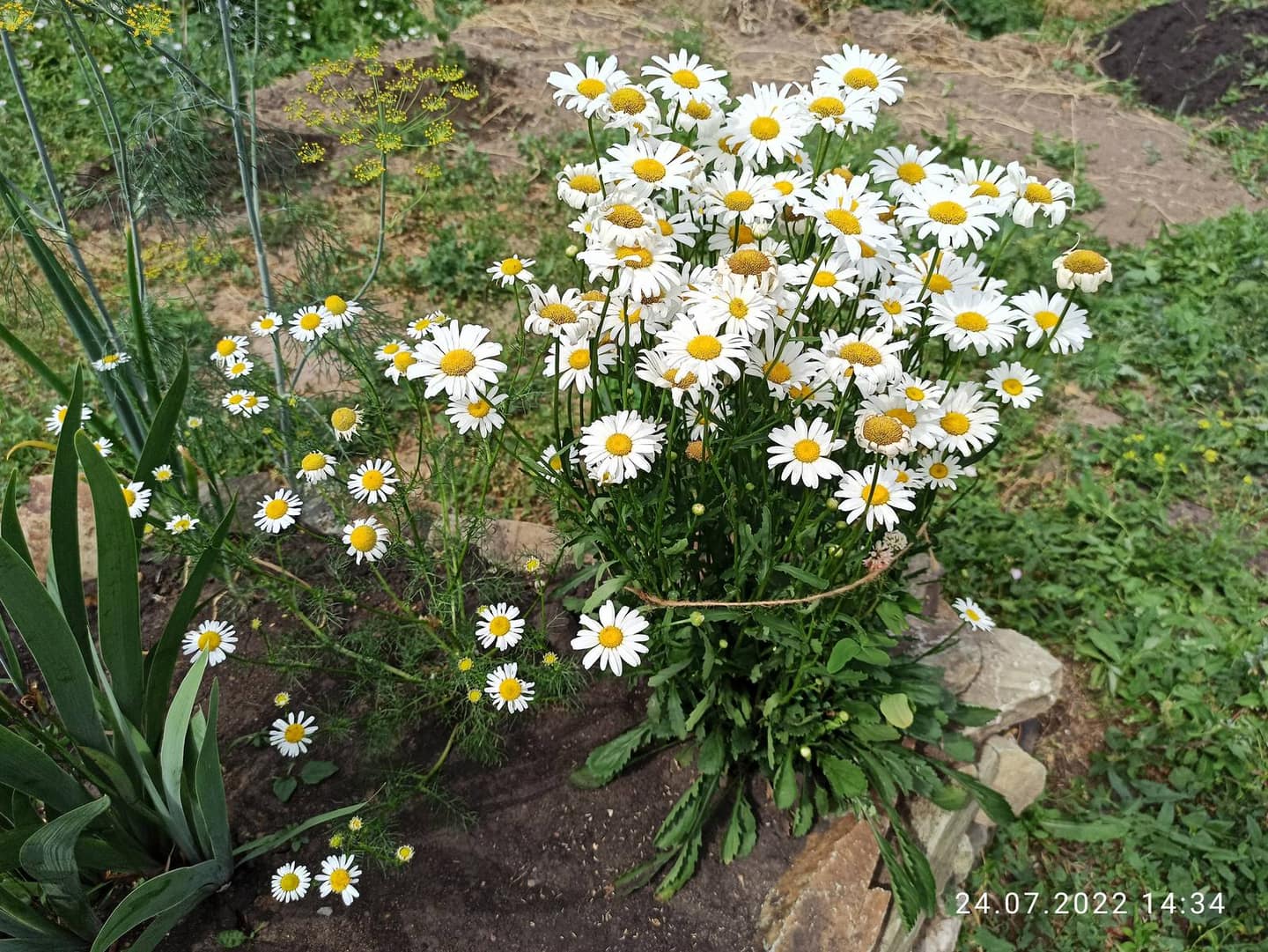
Chamomile (Matricaria chamomilla) is one of the oldest medicinal plants in Europe. It grows wild in fields and along roadsides, but is also easy to grow in the garden – and unfolds its full power only when you know the right time to harvest.
Active Compounds and Their Traditional Uses
Chamomile contains:
- Chamazulene – forms only during drying, anti-inflammatory
- α-bisabolol – wound-healing, antispasmodic
- Apigenin – calming, mildly sleep-promoting
- Essential oils – antibacterial, digestion-promoting
Traditional uses: stomach cramps, bloating, inflammation of the mouth and throat, skin problems, sleep problems, colds. If you react allergically to other daisy-family plants such as mugwort or arnica, you may not tolerate chamomile either. Persistent symptoms should be checked out by a doctor.
⚠️ Risk of Confusion
There are several chamomile-like plants. The key feature of true chamomile (Matricaria chamomilla):
Break open the flower head – it is hollow and cone-shaped. In all look-alike plants (e.g. scentless mayweed, corn chamomile), it is solid throughout. True chamomile also has an intensely aromatic smell – the look-alikes barely smell or smell unpleasant.
When & How to Harvest
The harvest time is crucial – and the most common mistake:
Harvest when the white petals are horizontal or point slightly downward – not while they still stand upright (too early), and not once they hang down strongly (too late, active compound content drops sharply).
Best harvest time: May to July, on dry mornings after the dew.
How: Pick flower heads individually or comb them off with a rake comb. Only harvest fully opened flowers.
Where: Wild stands along roadsides, fields, waste ground. Don't forage near roads or fertilized fields.
Growing in the Garden
Chamomile is undemanding and self-seeds if you let it.
Location: Sunny, well-drained poor soil – the poorer, the more aromatic. Sowing: Direct into the bed from March, a light germinator – don't cover with soil, just press down. Care: Hardly needed. Don't over-fertilize, it promotes leaves instead of flowers.
Use
Tea – 1–2 teaspoons dried flowers, steep covered for 5–10 minutes. Covering is important – otherwise the essential oils escape with the steam.
Steam bath – for colds or skin problems: flowers in hot water, towel over your head, inhale for 10 minutes. Keep your eyes closed while doing so – and never put chamomile in the eye, neither as an eye bath nor as a compress.
Chamomile tincture – steep flowers in high-proof alcohol (at least 40%) for 4–6 weeks, then strain. For external use on skin problems.
Chamomile oil – steep flowers in olive oil, cold, in a sunny spot for 4–6 weeks. For massages and skin care.
Drying & Preserving
Dry flowers spread thin as quickly as possible – at max. 35°C, since higher temperatures destroy the essential oils. Store airy, shaded, and dry.
Well dried and stored in the dark: 1–2 years shelf life.
Tip: Flowers are fully dried when they rustle to the touch and the flower base feels dry – not while it still springs back.