Rosehips – Picking, Deseeding, Processing
Rosehips – Picking, Deseeding, Processing
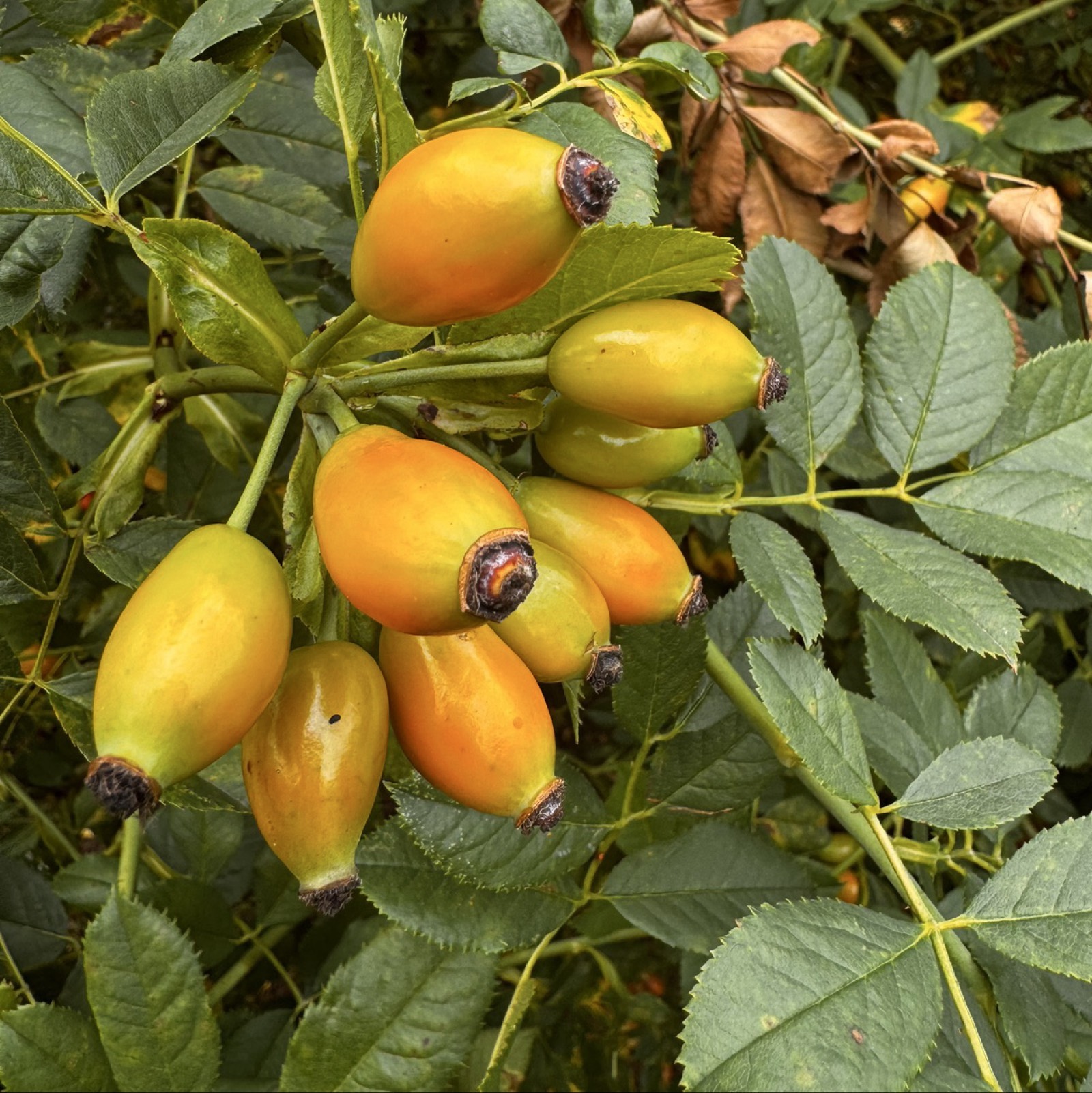
As the foraging season draws to a close, they're still glowing in every hedge: rosehips, the fruits of wild roses. With up to twenty times more vitamin C than lemons, they're probably the most underrated wild fruit of all – and they often hang on well into winter.
Identifying & Harvesting
- All rosehips are edible – the fruits of every rose species. The most productive is the dog rose (Rosa canina) with its elongated, bright red fruits
- Not every red fruit in the hedge is a rosehip: cotoneaster carries similar red fruits and is mildly poisonous. Rosehips grow on thorny shoots with pinnate leaves and are packed with hairy nutlets inside – cotoneaster has thornless twigs, small undivided leaves and only a few hard stones per fruit
- Season: From September/October; after the first frosts they become softer and sweeter
- Ripeness test: The fruit gives slightly to thumb pressure, but isn't mushy
- Choosing a location: Don't forage right next to busy roads
The Core Problem
Inside sit little nuts with fine hairs – the notorious "itching powder." They irritate skin and mucous membranes and have to come out (or stay out):
- Process fresh: Halve the fruits and scrape out the seeds along with the hairs using a small spoon – gloves help
- The purée trick saves work: Cook whole fruits until soft and pass them through a food mill or fine sieve – seeds and hairs stay behind
Processing
- Rosehip paste: The strained purée cooked down with a little sugar – base for jam, sauces, and the North German "rosehip soup"
- Tea: Halved, deseeded fruits dried at max. 40°C (oven with a wooden spoon in the door, or dehydrator), stored dark and airtight
- Preserving vitamins: Vitamin C is heat-sensitive – only briefly heat the purée, don't pour boiling water over tea
Why It's Worth the Effort
Rosehips are free, grow everywhere, and bear fruit in a year when there's otherwise hardly anything left to gather. A single afternoon at a good hedge fills your tea supply for the whole winter.