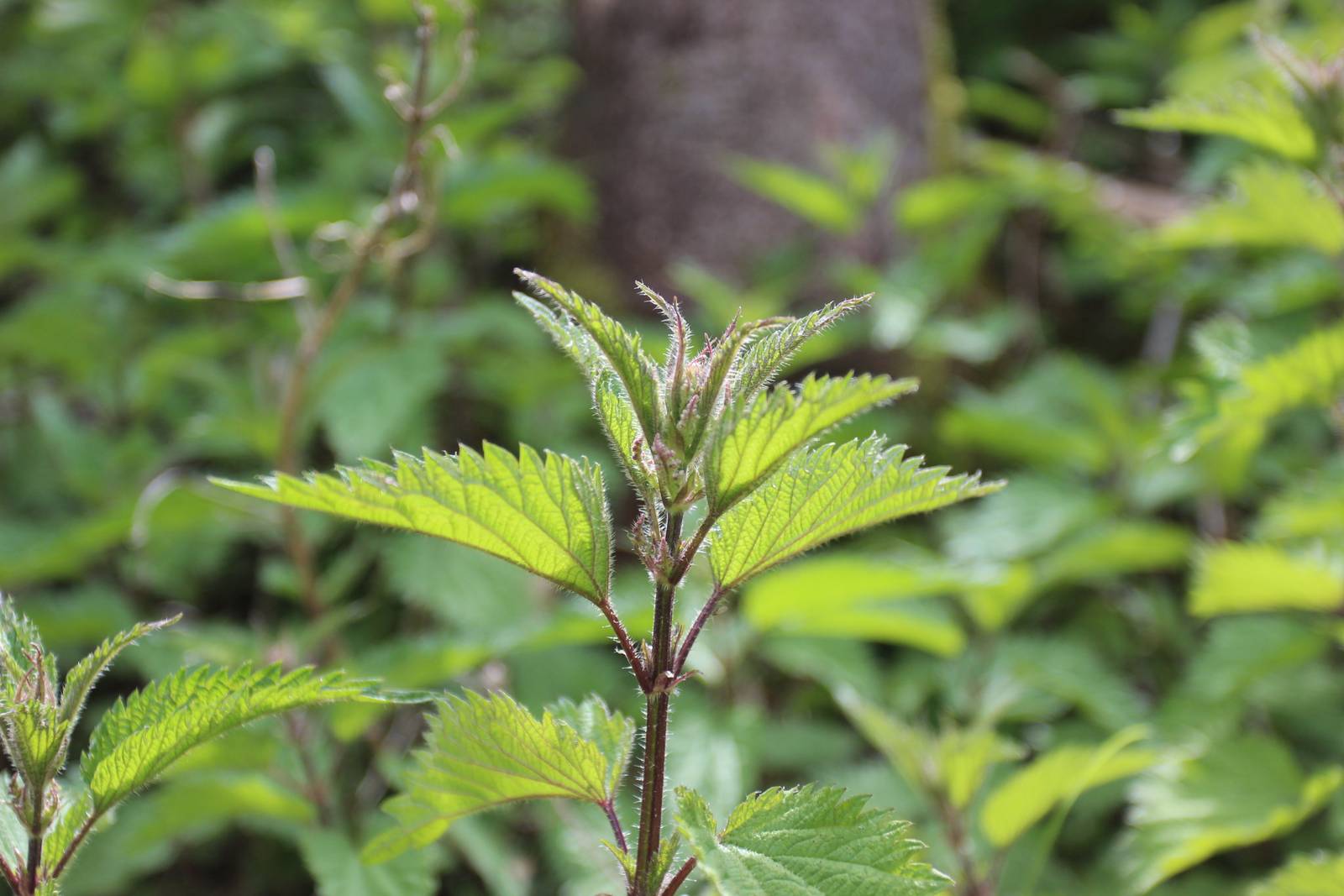
Stinging Nettle – Wild Vegetable, Medicinal Plant and Garden Fertiliser
Active Compounds & Effects
Nettles are rich in:
- Iron
- Vitamin C – supports iron absorption
- Calcium, magnesium, potassium
- Flavonoids – credited with anti-inflammatory effects
When & Where to Harvest
Best harvest time: March to May (young shoots), a second chance in autumn after cutting back.
Where: Compost-rich, nitrogen-rich soils – forest edges, streams, garden corners. Don't forage directly along roads or on fertilized fields.
What to harvest: Only the top 4–6 leaves of young shoots.
⚠️ Important: Use Only Young Shoots
Older nettle leaves after flowering should no longer be eaten. They contain cystoliths – crystalline calcium deposits that make the leaves hard and gritty. The idea that they burden the kidneys is often repeated but not proven. Rule of thumb: if the plant is flowering or setting seed, it's no longer suitable for the kitchen. When in doubt, leave it out.
Harvesting Safely Without Getting Stung
Wearing gloves is a must. Over time you can learn to grasp nettles from below (the stingers point upward), but for beginners: gloves.
Use in the Kitchen
Nettle soup – the classic. Briefly blanch young shoots (this neutralizes the stinging hairs), then use like spinach.
Tea – dried or fresh, steep for 2–3 minutes. Mineral-rich – traditionally drunk as a diuretic infusion.
Smoothie – blanch fresh leaves, then they blend easily.
Pesto – instead of basil: nettles + Parmesan + nuts + olive oil + garlic. According to the BfR, keep home-made herbs in oil in the fridge and use by the next day – freeze it if you want to keep some.
As Plant Fertilizer
Nettle liquid manure is an underrated insider tip:
- Roughly chop nettles, fill a bucket a third full
- Top up with water
- Let sit for 1–2 weeks, stirring daily
- Dilute with water 1:10, pour directly onto the soil
Smells intense, works excellently – especially for tomatoes and squash.
Drying & Preserving
Dry leaves at 30–40°C (dehydrator or oven with fan, door slightly open). Stored dark and dry, keeps for at least 1 year.
Notes from the EMA monograph
The European Medicines Agency (EMA) lists nettle leaf as a traditional herbal medicinal product. For its use it states, among other things:
- do not use when reduced fluid intake has been advised (e.g. severe heart or kidney disease)
- use in children under 12 has not been established
- with joint pain accompanied by swelling, redness or fever, see a doctor
The monograph applies to tested preparations – home-gathered herb is not dosed more precisely.
Gathering: what German nature conservation law allows
Anyone may carefully take wild herbs, flowers and fruits in small quantities for personal use from places not subject to an access ban (Section 39(3) BNatSchG). Protected areas often have stricter bans, and specially protected species have their own rules.
Sources
- European Medicines Agency (EMA): Community herbal monograph on Urtica dioica L.; Urtica urens L., folium, as of EMA/HMPC/508015/2007, accessed 5 Oct 2026
- German Federal Institute for Risk Assessment (BfR): Rare but avoidable: questions and answers about botulism, as of 12 Nov 2025, accessed 5 Oct 2026
- Federal Nature Conservation Act (BNatSchG): § 39, accessed 5 Oct 2026
The sources support individual statements in this article. The organisations named have neither reviewed nor endorsed it.