Rosehips – Picking, Deseeding, Processing
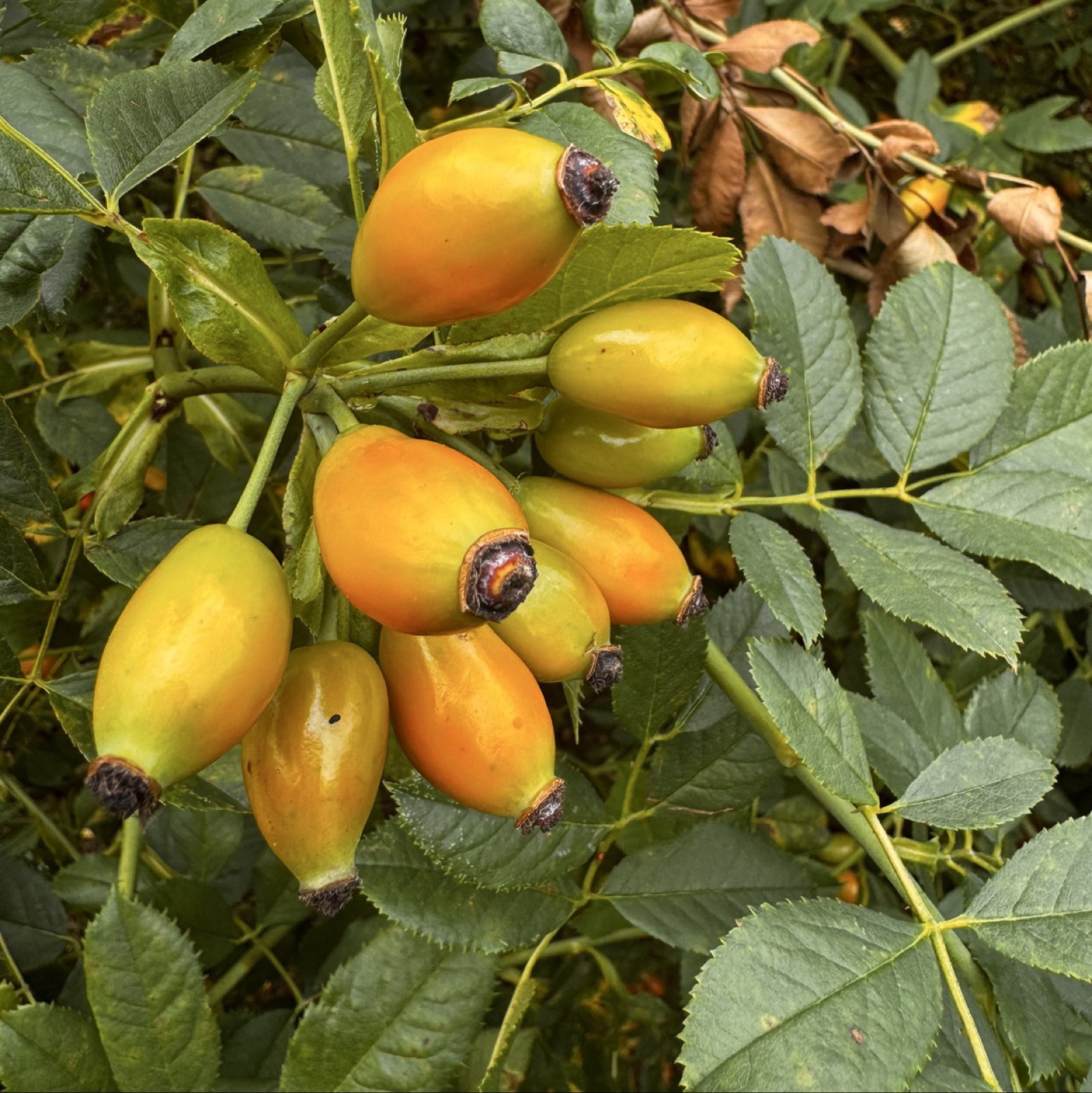
Rosehips – Picking, Deseeding, Processing
As the foraging season draws to a close, they're still glowing in every hedge: rosehips, the fruits of wild roses. With up to twenty times more vitamin C than lemons, they're probably the most underrated wild fruit of all – and they often hang on well into winter.
Identifying & Harvesting
- Best gather dog rose – according to the Bonn Poison Centre it is non-toxic. The most productive is the dog rose (Rosa canina) with its elongated, bright red fruits
- Not every red fruit in the hedge is a rosehip: cotoneaster carries similar red fruits and is mildly poisonous. Rosehips grow on thorny shoots with pinnate leaves and are packed with hairy nutlets inside – cotoneaster has thornless twigs, small undivided leaves and only a few hard stones per fruit
- Season: From September/October; after the first frosts they become softer and sweeter
- Ripeness test: The fruit gives slightly to thumb pressure, but isn't mushy
- Choosing a location: Don't forage right next to busy roads
The Core Problem
Inside sit little nuts with fine hairs – the notorious "itching powder." They irritate skin and mucous membranes and have to come out (or stay out):
- Process fresh: Halve the fruits and scrape out the seeds along with the hairs using a small spoon – gloves help
- The purée trick saves work: Cook whole fruits until soft and pass them through a food mill or fine sieve – seeds and hairs stay behind
Processing
- Rosehip paste: The strained purée cooked down with a little sugar – base for jam, sauces, and the North German "rosehip soup"
- Tea: Halved, deseeded fruits dried at max. 40°C (oven with a wooden spoon in the door, or dehydrator), stored dark and airtight
- Preserving vitamins: Vitamin C is heat-sensitive – only briefly heat the purée, don't pour boiling water over tea
Why It's Worth the Effort
Rosehips are free, grow everywhere, and bear fruit in a year when there's otherwise hardly anything left to gather. A single afternoon at a good hedge fills your tea supply for the whole winter.
Gathering: what German nature conservation law allows
Anyone may carefully take wild herbs, flowers and fruits in small quantities for personal use from places not subject to an access ban (Section 39(3) BNatSchG). Protected areas often have stricter bans, and specially protected species have their own rules.
Sources
- Poison Information Centre NRW / Bonn: Hagebutte (Rosa canina), accessed 5 Oct 2026
- Federal Nature Conservation Act (BNatSchG): § 39, accessed 5 Oct 2026
The sources support individual statements in this article. The organisations named have neither reviewed nor endorsed it.